PrintAvera Collection
Calm the Chaos of Family Life
Printable planners for busy families, tired moms, and growing kids.
There is a particular kind of tiredness that has nothing to do with sleep. It is the low hum of remembering everything for everyone, of being the one who knows when the library books are due, which child hates the green cup, and that you are almost out of bread again. This is the mental load, and if you are the one carrying it, you already know it never really clocks off. Calming the chaos of family life is rarely about becoming a different, tidier person. It is about getting all of that invisible remembering out of your head and into a system that holds it for you, so your mind is finally allowed to rest.
Most families are not disorganised because anyone is failing. They are disorganised because the plan lives inside one exhausted person's memory, and memory is a terrible place to store a household. When the whole week depends on you recalling every appointment, every meal, and every after-school pickup, one busy Tuesday can quietly topple the lot. A shared system changes the maths entirely. Once the information lives somewhere everyone can see it, the load stops belonging to one person and starts belonging to the family. That is the quiet shift these tools are built for: less carrying, more sharing, and a home that runs on something steadier than a tired parent's willpower.
This guide is written for the busy mum, the frazzled dad, and the growing kids who are more capable than they are usually given credit for. We will look at building a family command centre so the whole household reads from the same page, at meal planning that ends the daily dread of what's for dinner, at cleaning without the overwhelm, including gentler ADHD-friendly approaches, and at routines that finally hold on an ordinary morning. Along the way you will meet the tools made for exactly this work, from The Busy Mom's Planner to a proper meal planner printable, so the structure does the remembering and you get to be present for the people it is all for.
New Arrivals
Coming Soon to This Collection
Fresh designs are on the way. Follow the PrintAvera Etsy shop to be the first to see them land.
Kids Morning Routine Chart
Cleaning Schedule Printable
Recipe Binder Printable
Shop the Collection
Kids & Family Organization Printables
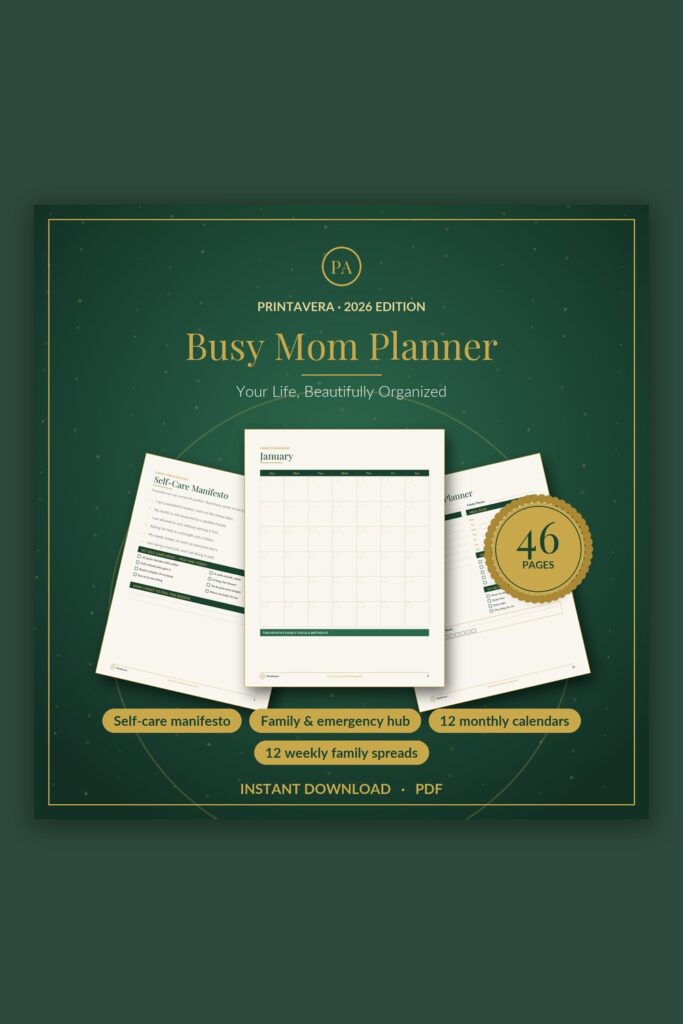
Busy Mom Planner Printable
Your whole family in one calm, beautiful command center – from chaos to calm, mama.
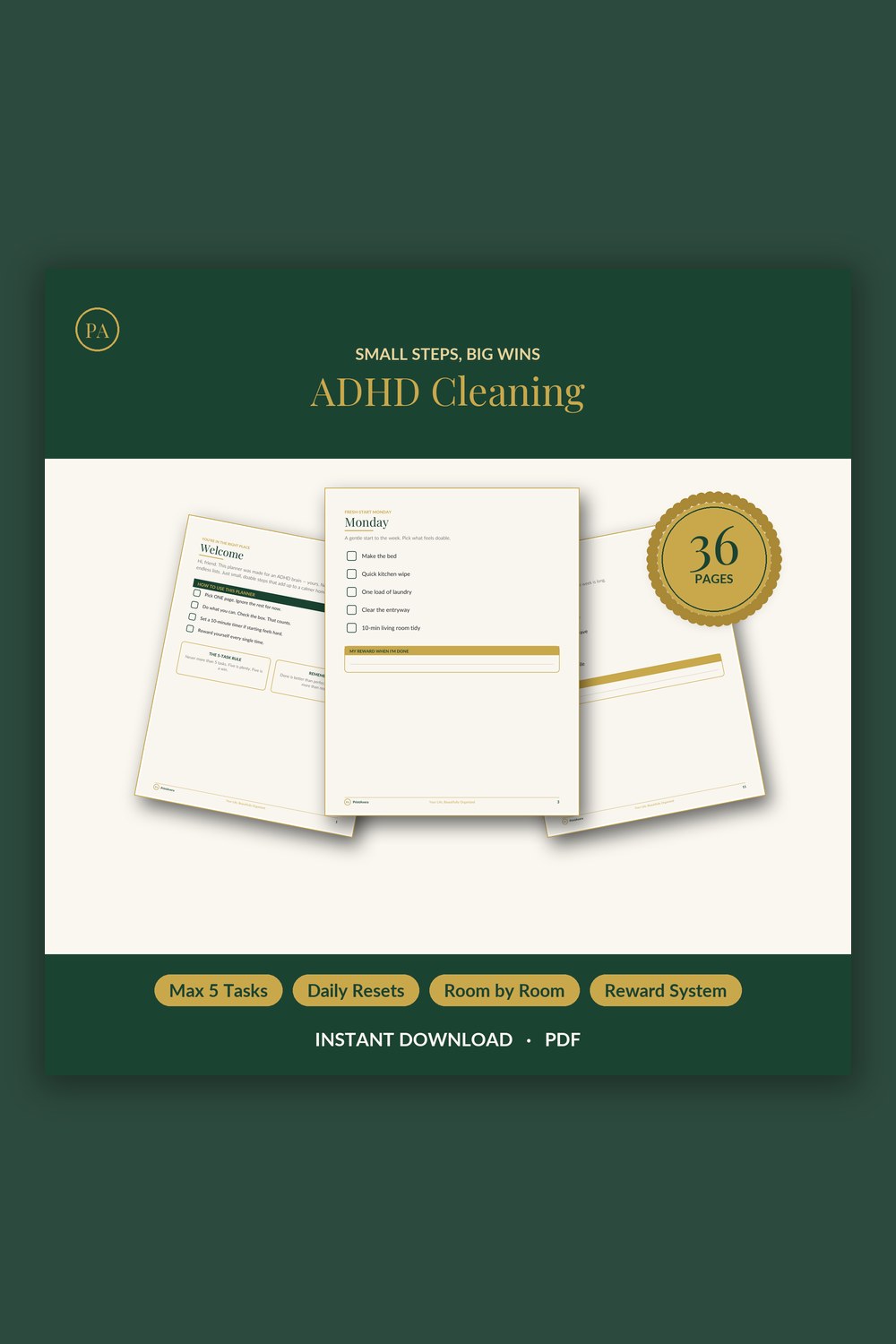
ADHD Cleaning Planner
A shame-free cleaning planner built for the ADHD brain – small steps, big wins, never more than 5 tasks a page.
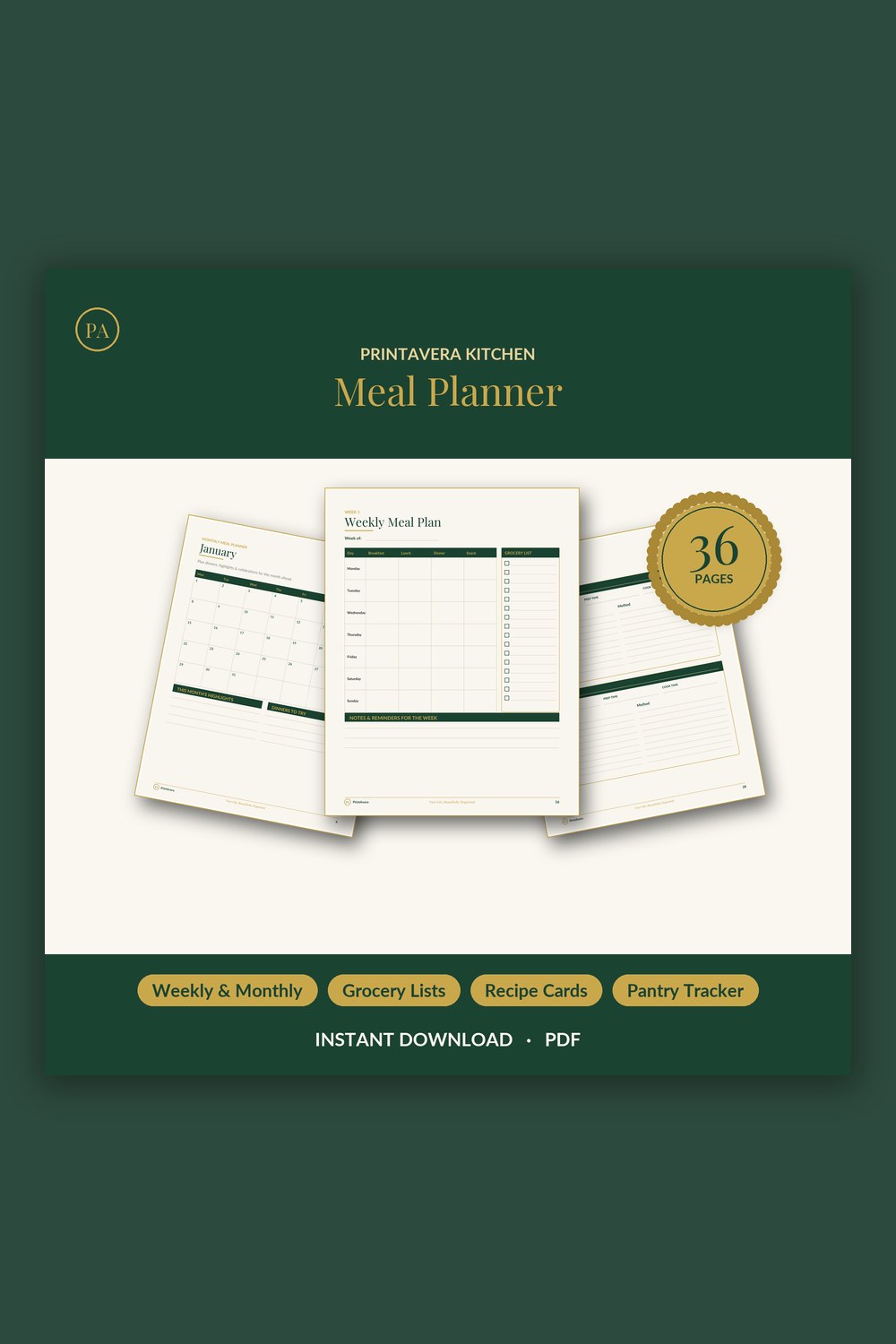
Meal Planner Printable
The Complete Meal Planner — nourish your body and simplify your life
Kids Morning Routine Chart
A kids routine chart printable that finally makes mornings calm, with visual, tickable checklists in four age levels for children 3…
Cleaning Schedule Printable
A cleaning schedule printable that finally makes a tidy home feel doable: daily, weekly, monthly and seasonal schedules,…
Recipe Binder Printable
A complete recipe binder printable that finally gathers every family recipe into one organised, beautiful place

Grocery List Printable Bundle
A complete grocery list printable bundle that gathers every kind of shopping list your kitchen needs into one calm set: an…
The Complete Guide
The invisible mental load and why a shared system helps
The mental load is the endless, mostly unseen work of managing a household: the noticing, the planning, the remembering, the anticipating of needs before they become emergencies. It is deciding what everyone eats, tracking who has grown out of their shoes, and holding the running list of things that must happen this week. Much of it falls, still, to mums, and much of it is invisible precisely because it happens quietly and well. The trouble is that carrying it all in your head is exhausting in a way that is hard to explain to anyone who has never done it. You are not doing too little. You are, if anything, remembering far too much.
You are not doing too little; you are simply remembering far too much, all on your own.
The first real relief comes from writing it down. When a plan lives only in your mind, it demands constant, low-level attention, a background process that never quite switches off. The moment it goes onto paper or into a shared home management binder, your brain is allowed to stop guarding it. This is not about being more organised for its own sake. It is about protecting your attention so there is something left over for the actual living. A family planner or a well-made mum planner is really just a place to set the load down, where you and everyone else can pick up only the piece that is theirs.
A shared system also quietly rebalances who carries what. When the week's plan is visible to the whole household, your partner no longer has to ask what needs doing, and older children can see their own responsibilities without being reminded five times. The Busy Mom's Planner is designed around exactly this idea, giving you one calm place to hold the meals, the appointments, the chores, and the small mental notes that usually clatter around at midnight. The goal is not a perfectly run home. It is a home where the remembering is shared, so no single person is quietly holding it all together on their own.
- Empty your head onto paper first; a carried plan never lets your mind rest.
- Keep the household plan somewhere visible so it stops being one person's secret job.
- Name who owns each task, so responsibility is shared rather than silently assumed.
- Treat the planner as a place to set the load down, not another thing to perfect.
Building a family command centre everyone can read
A command centre is simply one agreed spot where your family's information lives, so nobody has to hold the whole week in their head. It might be a corner of the kitchen, a stretch of wall by the back door, or a single binder that stays put on the counter. The exact form matters far less than the principle: one place, seen by everyone, kept current. Many families build theirs around a family organization wall or an entryway command center, the natural chokepoint where everyone passes through, drops their bags, and can glance at what today actually holds before they rush back out of the door.
One place, seen by everyone, kept current, turns a hundred small interruptions into a single quiet look.
The most useful command centre answers the questions that otherwise land on you all day long. Where is everyone meant to be, and when? What are we eating tonight? Whose turn is it to do what? A shared family calendar handles the where and when, a visible meal plan answers the eternal what's for dinner, and a simple chore list settles the who. Colour-coding each family member helps enormously, because a single glance tells everyone whose swimming kit needs packing without a word being said. The point of a home command center is to turn a hundred small interruptions into one quiet look at the wall.
Start smaller than you think you should. A common mistake is building an elaborate hub with a dozen sections, admiring it for a week, then abandoning it because keeping it current became a chore in itself. Begin with just the calendar and the meal plan, the two things that ease the most daily friction, and let it earn its place before you add more. A home management binder gives you room to grow into contacts, school notes, and household admin over time. The command centre that actually helps is not the most impressive one. It is the one plain enough that everyone keeps using it.
- Choose one high-traffic spot, like the kitchen or the entryway, and keep it there.
- Start with only a family calendar and a meal plan; add sections once those stick.
- Colour-code each person so one glance shows whose kit and appointments are whose.
- Keep it current with a two-minute daily look, not an elaborate weekly overhaul.
Reader Favourite
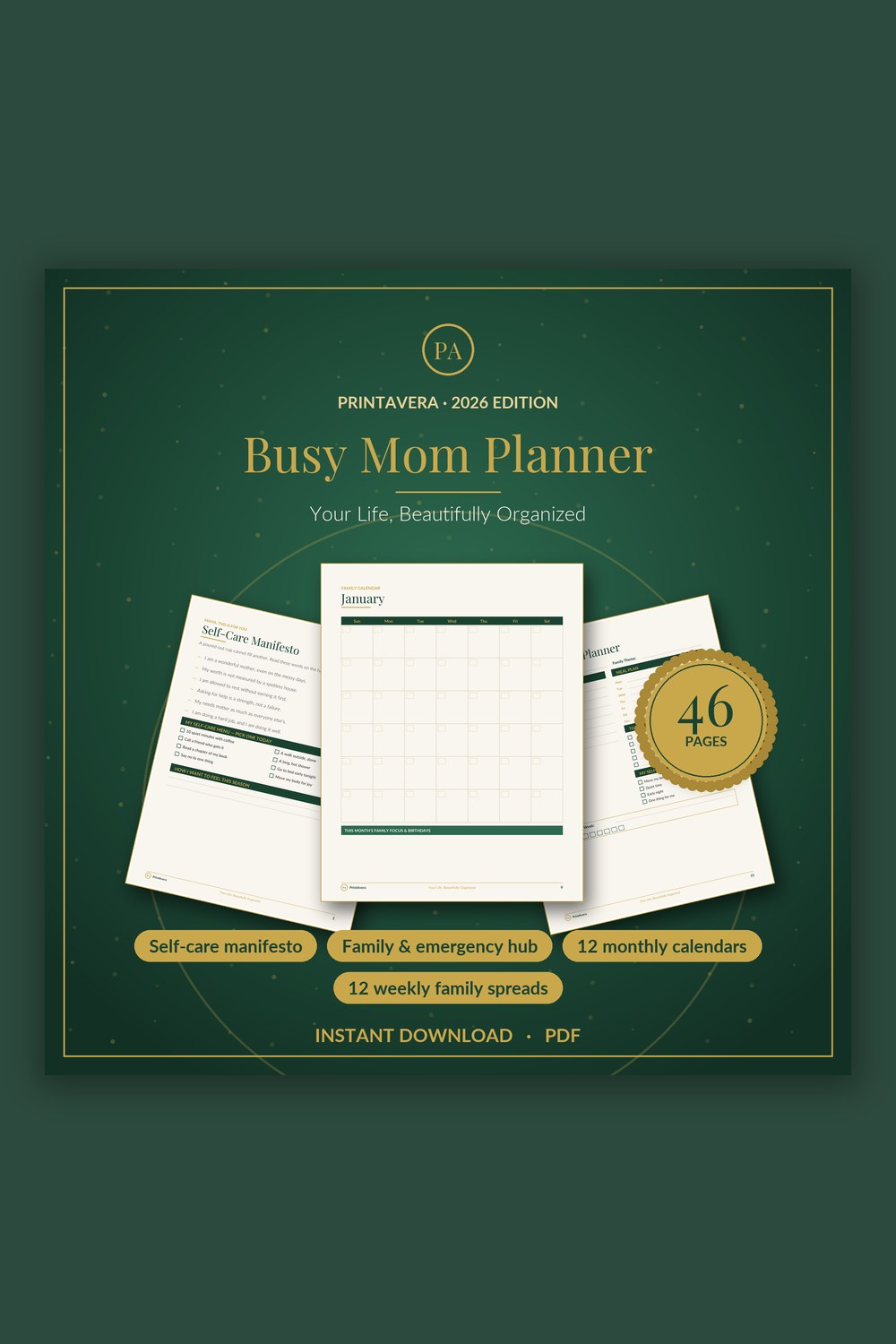
Busy Mom Planner Printable
Your whole family in one calm, beautiful command center – from chaos to calm, mama.
Meal planning that ends the daily what's for dinner
Few small things drain a parent quite like the five o'clock question of what's for dinner, arriving exactly when energy is lowest and small people are hungriest. Deciding daily, on the spot, is the hardest possible way to feed a family, because every evening becomes a fresh negotiation with an empty fridge. A weekly meal plan moves that decision to a calmer moment, once, in advance, when you can think clearly. You are not committing to becoming a batch-cooking machine. You are simply choosing seven dinners while you are not standing exhausted in front of the open fridge at half past five.
Choose the meals when you are calm, not when you are standing exhausted in front of an open fridge.
A good rhythm is a short weekly session where you sketch the week's dinners and build your grocery list straight from it. A meal planner printable sits alongside the plan so that the meals and the shopping flow from the same page, which means you buy what you will actually cook and stop drifting home with three bags and no plan. Theme nights lighten the mental load even further: a pasta night, a something-on-toast night, a leftovers night. When Wednesday is always the easy one, half the week decides itself, and the Meal Planner is built to hold exactly this kind of gentle, repeatable structure.
Keep the plan realistic and forgiving, because a rigid menu is the first thing to collapse on a hard day. Build in one flexible slot for the evening that simply goes sideways, and lean on a short list of family meals everyone already eats rather than chasing something new each night. A weekly meal plan calendar you can see on the wall also lets the whole household stop asking, since the answer is already there in plain sight. The aim was never restaurant variety. It is ending the daily scramble, so the last hour before dinner feels less like a crisis and more like something you have already handled.
- Plan the week's dinners in one calm session, not seven exhausting on-the-spot decisions.
- Build your grocery list straight from the plan so you buy exactly what you will cook.
- Use theme nights, like pasta or leftovers, so half the week quietly decides itself.
- Keep one flexible slot for the day that goes sideways, and forgive the plan when it does.
Cleaning without the overwhelm, including ADHD-friendly ways
A messy house has a way of feeling like a moral failing, when it is really just a sign that people are living there. The overwhelm rarely comes from the cleaning itself; it comes from staring at everything at once and having no idea where to begin. A weekly cleaning schedule solves this by cutting the whole mountain into small, assigned pieces, so no single day carries all of it. Monday might be bathrooms, Tuesday floors, and the weekend left mostly free. Nothing ever becomes a five-hour catastrophe, because nothing is ever allowed to build up that far in the first place.
Shame has never once cleaned a kitchen; a gentle scaffold that lowers the bar always will.
For brains that find traditional routines slippery, and that includes many with ADHD, the usual advice can quietly make things worse. Long checklists become paralysing, and a broken streak can feel like permission to abandon the whole thing. Gentler approaches work far better: setting a timer for ten minutes and stopping when it rings, tidying one visible surface rather than a whole room, and building tiny anchors like a quick reset before bed. The ADHD Cleaning Planner is designed around this reality, breaking tasks into pieces small enough to actually start and forgiving the days that simply do not happen, because starting is the hard part and shame has never once cleaned a kitchen.
Whatever your brain is like, the trick is to lower the bar until beginning feels almost too easy. Body doubling, cleaning alongside someone else or even on a video call, turns a dreaded task into a shared one. Music, a single focused surface, and permission to do a good-enough job rather than a perfect one all matter more than any spotless ideal. A cleaning schedule is not a verdict on your worth as a parent. It is a gentle scaffold that catches the mess before it grows, so tidying stays a small daily habit instead of an exhausting event you keep putting off until it feels impossible.
- Split the week so each day owns a small zone, and nothing ever piles into a marathon.
- Set a ten-minute timer and stop when it rings; starting matters more than finishing.
- Tidy one visible surface at a time rather than facing a whole overwhelming room.
- Try body doubling, cleaning alongside someone, to make a dreaded task feel shared.
Find your perfect Kids & Family Organization printable
Each design is an instant digital download — buy it, download it, and start today. Print at home or use it on any tablet.
Routines and helping kids own their own mornings
The mornings that actually hold are not the ones run by a parent barking the same five reminders on repeat. They are the ones where the routine itself does the reminding, so children can see what comes next without being chased. A morning that reliably works usually rests on two quiet foundations: as much as possible prepared the night before, and a visible sequence the child can follow on their own. When shoes, bags, and the next day's clothes are ready by the door in the evening, the morning has far less to go wrong, and everyone leaves the house a little less frayed.
Let the chart do the reminding, so you can stop being the nagging voice and start being the calm one.
Children own a routine far more willingly when they can see it than when they are simply told it. A visible chart turns you from the nagging voice into a calm question: what does your chart say is next? That small shift hands responsibility gently back to the child and takes the daily conflict out of your hands. Keep the steps few and concrete, use pictures for little ones who cannot yet read, and let them tick or move each step themselves, because the small satisfaction of marking it done is a genuine reward. A routine planner that lives at their eye level, not yours, is the one they will actually use.
Evenings deserve the same gentle structure, since a calm morning is very often built the night before. A short wind-down sequence, tidy the toys, lay out tomorrow, a story, then bed, signals to a child's body that the day is ending, and it quietly loads the launchpad for the next one. Expect the routine to wobble, especially at first, and resist the urge to scrap it the moment it slips. Children are learning a skill, not passing a test, and the aim is never a perfect chart. It is a family where the small rhythms carry more of the day, so you spend less of your energy managing and more of it simply being together.
- Prepare what you can the night before so the morning has far less room to go wrong.
- Give children a visible chart at their eye level so the routine, not you, does the reminding.
- Keep steps few, concrete, and tickable, and use pictures for children who cannot yet read.
- Build a short evening wind-down that quietly loads the launchpad for a calmer morning.
Frequently Asked Questions
What actually is the mental load, and how do these planners help?
The mental load is the constant, largely invisible work of running a household: the planning, remembering, and anticipating that mostly happens in one parent's head, often a mum's. It is exhausting precisely because it never switches off, quietly demanding attention even when nothing is being done. A family planner or home management binder helps by giving that load a home outside your mind, so your brain can finally stop guarding it. Once the week's meals, appointments, and chores are written somewhere visible, the remembering can be shared with your partner and children rather than carried alone. It will not do the work for you, but it does let you set the heaviest, most invisible part of it down.
How do I set up a family command centre without it taking over?
Start far smaller than you expect to. Choose one high-traffic spot, often the kitchen or the entryway command center where everyone passes through, and begin with only two things: a shared family calendar and a visible meal plan. Those two ease the most daily friction, so let them prove themselves before you add contacts, school notes, or chore lists. Colour-coding each family member helps a single glance answer whose kit or appointment is whose. The most common mistake is building an elaborate family organization wall, admiring it for a week, then abandoning it because keeping it current became a chore. A plain command centre everyone actually uses beats an impressive one nobody maintains.
How do I meal plan when my week is unpredictable and my family is fussy?
Keep the plan flexible and lean on what already works. You do not need seven inventive new dinners; a short rotation of family meals everyone eats is far more sustainable. Sketch the week in one calm session, build your grocery list straight from it, and use theme nights, like pasta or leftovers night, so half the week decides itself. Always leave one flexible slot for the evening that goes sideways, because a rigid menu is the first thing to collapse on a hard day. A weekly meal plan calendar on the wall also lets everyone see the answer to what's for dinner, so you stop being asked. The goal is ending the daily scramble, not achieving restaurant variety.
Cleaning overwhelms me completely. Where do I even begin?
The overwhelm almost always comes from facing everything at once, so the fix is to stop doing that. A weekly cleaning schedule cuts the whole house into small daily pieces, one zone at a time, so nothing ever builds into a five-hour catastrophe. Beyond that, lower the bar until starting feels easy: set a ten-minute timer and stop when it rings, or tidy just one visible surface rather than a whole room. Beginning is the hard part, so make beginning tiny. A cleaning schedule is not a judgement on you as a parent; it is a gentle scaffold that catches the mess before it grows, keeping tidying a small daily habit instead of a dreaded, ever-looming event.
Are there gentler, ADHD-friendly ways to keep a home running?
Yes, and they often work better for everyone. Traditional routines can be slippery for ADHD brains, where long checklists paralyse and one broken streak feels like permission to give up entirely. Gentler approaches help far more: break every task into pieces small enough to actually start, use short timers, tidy one surface rather than a whole room, and try body doubling by cleaning alongside someone else. The ADHD Cleaning Planner is built around this reality, forgiving the days that simply do not happen rather than punishing them. Please treat these as organisational and routine-support tools to use alongside, never instead of, any professional guidance you rely on. They are here to reduce friction and shame, not to diagnose or fix anything.
How do I get my kids to actually own their morning routine?
Make the routine visible so the chart does the reminding instead of you. Children follow a sequence they can see far more willingly than one they are simply told, so give them a chart at their own eye level, with few, concrete steps and pictures for those who cannot yet read. Let them tick or move each step themselves, because the small satisfaction of marking it done is a real reward. Prepare what you can the night before, shoes, bags, and clothes by the door, so the morning has less room to go wrong. When the routine wobbles, and it will, resist scrapping it. Your child is learning a skill, not passing a test, and a routine planner they own quietly hands the responsibility back to them.
How are these planners delivered, and what is coming soon?
Most items are instant digital downloads, so after checkout you receive a file to save and use straight away, with no waiting for shipping. Printables can be printed at home or at a copy shop as often as you like, which makes them easy to refresh each new season or as your children grow. Alongside favourites like The Busy Mom's Planner, the ADHD Cleaning Planner, and the Meal Planner, we have new arrivals coming soon: a Kids Morning Routine Chart to hand mornings back to your children, a Cleaning Schedule Printable to keep the whole house on a gentle rhythm, and a Recipe Binder Printable to gather the family meals you actually cook into one calm, reusable place.
Why PrintAvera?
Every PrintAvera design is created in-house to a five-star standard — considered layouts, calm forest-green and gold styling, and typography chosen to make every page feel intentional. Each one is an instant digital download you can print at home or use on any tablet in minutes. Beautiful enough that you will actually want to use it, every single day.
Explore More Collections