PrintAvera Collection
A Quiet Space for Your Mind
Printable journals and trackers designed for anxiety, mental wellness, and emotional clarity.
If your mind has been loud lately, running the same worry on a loop at two in the morning, you are not broken and you are not failing at anything. Anxiety is one of the most human experiences there is, an old alarm system doing its earnest, clumsy best to keep you safe. The trouble is that a mind built to watch for danger does not always know the difference between a real threat and an unanswered email, so it rings the bell just as loudly for both. This is meant to be a quiet space to set some of that down. Not to fix you, because you are not a problem to be solved, but to help you find a little more room around the noise.
Most of us do not need to be told to calm down, and we certainly do not need one more thing to be good at. What actually helps, when your thoughts are swarming, is somewhere to put them. A worry that stays in your head can circle forever, gathering weight as it goes, but the same worry written on a page tends to shrink to its real size. This is why so many people reach for a journal when things feel heavy, and why a simple mental health tracker or tracking journal can steady a week you would otherwise only endure. It is not about analysing yourself into the ground. It is about giving the noise a place to land so that you can breathe.
This guide is built around that gentler idea, that clarity comes not from thinking harder but from getting things out of your head and into the light. We will look at what anxiety really is and why naming it loosens its grip, how to reframe an anxious thought in the plain language of CBT, how to empty a racing mind and come back to the present, how to notice your own patterns with a gentle mood tracker, and how to build a daily practice small enough to survive a hard week. Along the way you will meet tools made for exactly this quiet work, from the Anxiety Journal + CBT Worksheets to a Mood Tracker Printable, so that some of the weight is carried for you while you get to simply be a person again.
Shop the Collection
Anxiety & Mental Wellness Printables
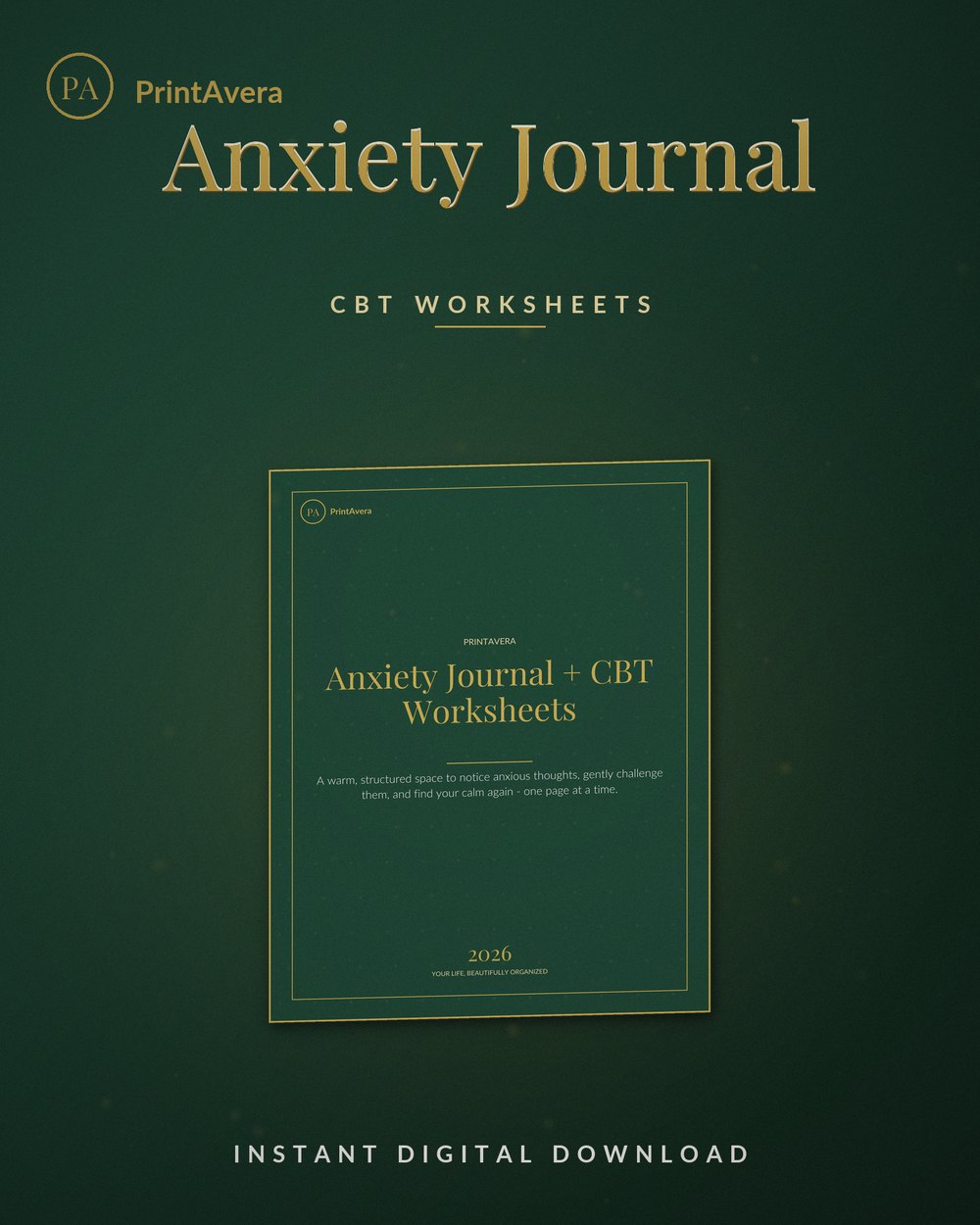
Anxiety Journal + CBT Worksheets
An anxiety journal printable built around CBT-informed thought records, so you can catch anxious thoughts, weigh them fairly and…
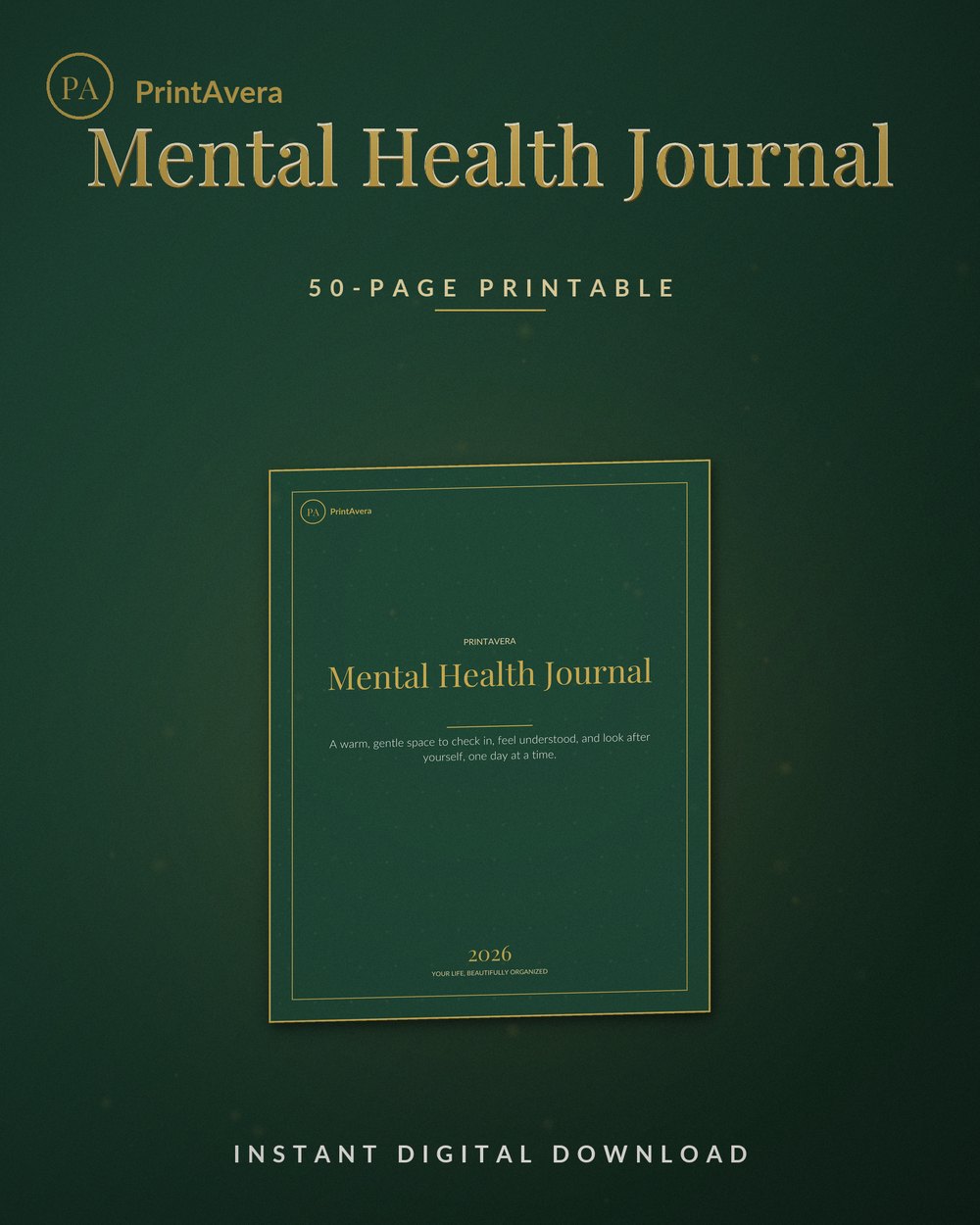
Mental Health Journal
A warm, 50-page mental health journal printable to check in with your mood, calm anxious thoughts, and care for yourself with…
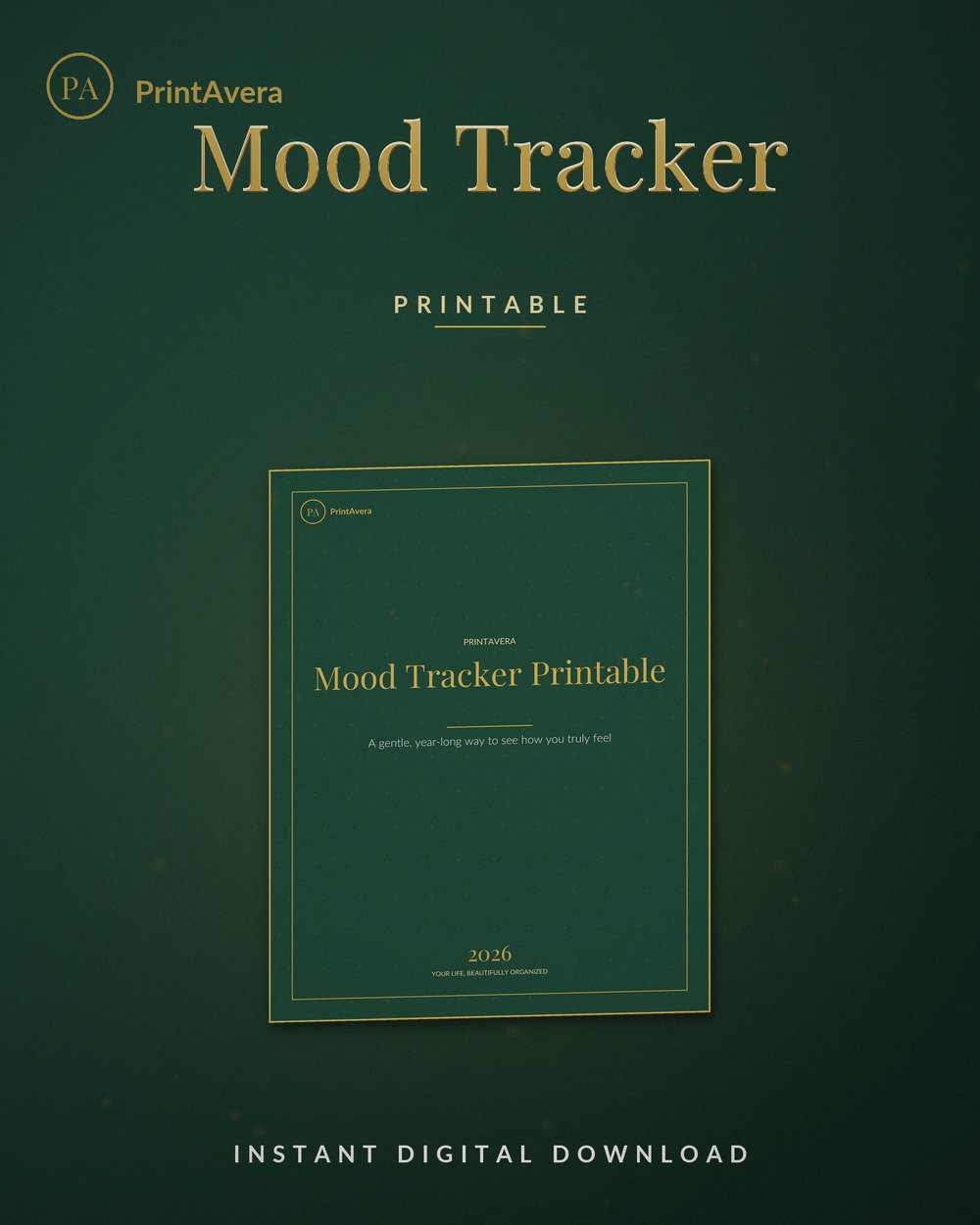
Mood Tracker Printable
A warm, year-long mood tracker printable to see how you truly feel, one gentle day at a time
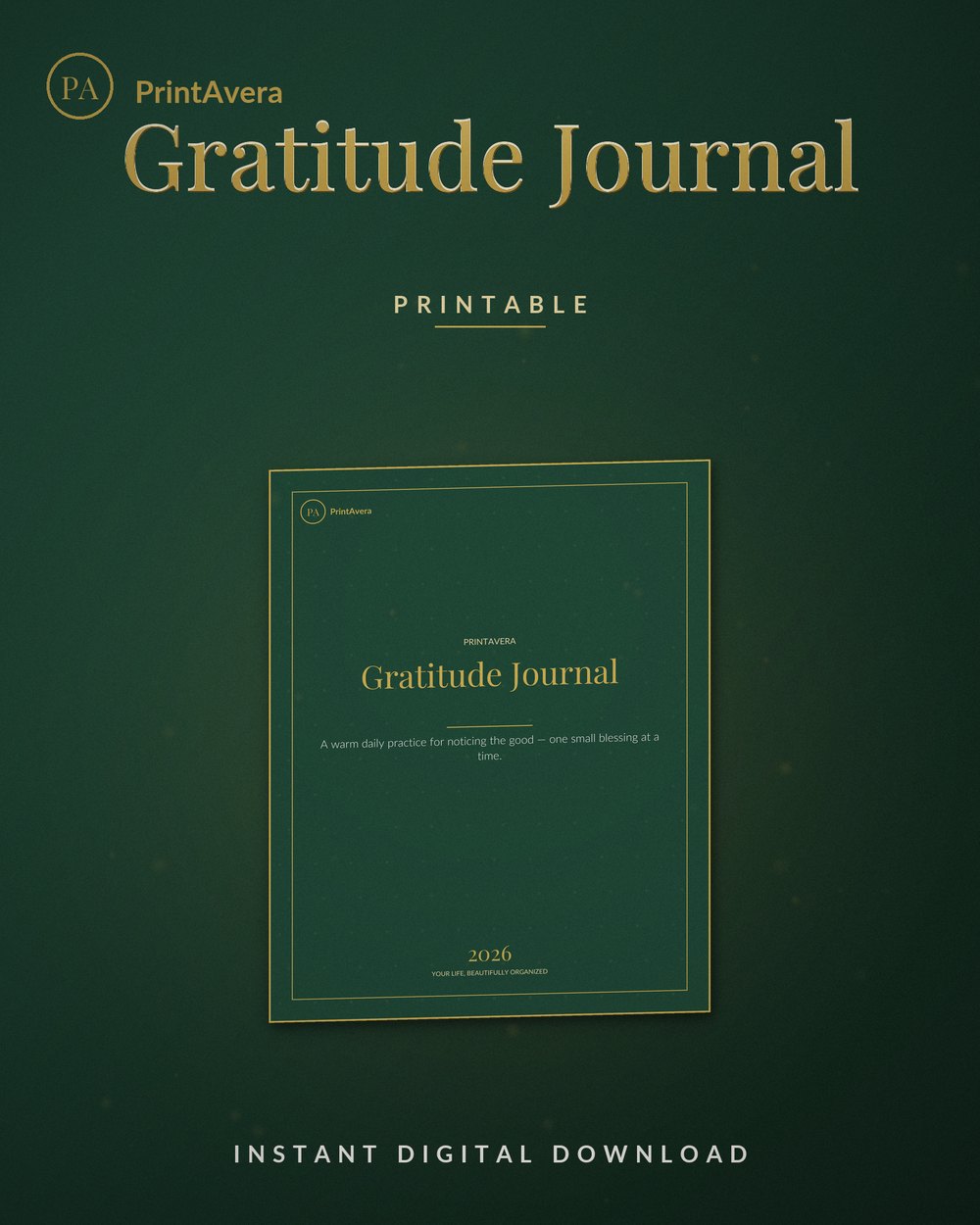
Gratitude Journal Printable
A warm, complete gratitude journal printable that turns noticing the good into a gentle daily habit
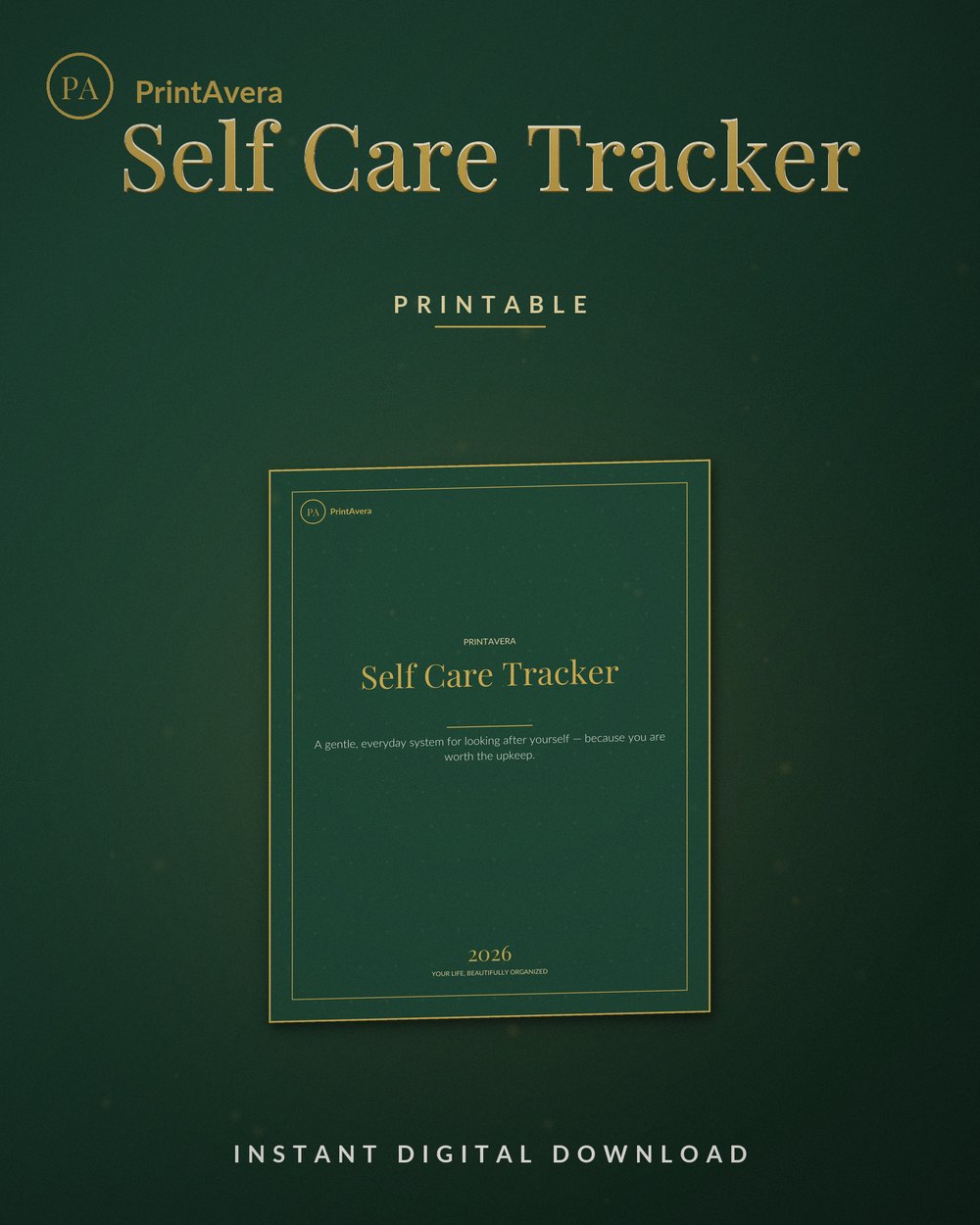
Self Care Tracker Printable
A warm, complete self care tracker printable that turns looking after yourself into a gentle daily habit
The Complete Guide
What anxiety actually is, and why getting it onto paper helps
Anxiety, stripped of the clinical language, is your body preparing for a threat that your thinking mind cannot always locate. The heart quickens, the breath goes shallow, the stomach tightens, and attention narrows to scan for whatever is wrong. In a genuine emergency this is a gift, the surge that helps you act without hesitating. The difficulty is that the same system fires just as readily for a difficult conversation, a looming deadline, or a worry with no shape at all, and it cannot tell the two apart. Understanding this changes something quietly important. You are not weak, and you are not overreacting. You are running a very old piece of survival software on a modern life it was never designed for, and that software is, in its own anxious way, trying to look after you.
A worry kept in your head can loop forever; the same worry on a page tends to shrink to its real size.
Left inside the mind, a worry has a strange kind of freedom. It can loop endlessly, mutate, borrow from every other worry, and never once be examined in daylight. Rumination feels like problem-solving, which is exactly what makes it so convincing, but it rarely reaches a conclusion; it simply wears a deeper groove. Writing interrupts that loop. The moment a fear becomes a sentence on a page, it stops being a vast, shapeless dread and turns into a specific thing with edges you can actually look at. Often it turns out to be smaller than it felt, or to contain a next step you could not see while it was still swirling. A Mental Health Journal is really just a reliable place to do this, turning the fog into something you can read back and hold at arm's length.
This is where a little structure earns its keep, not as another rule to follow but as a scaffold to lean on when your own mind is too tired to hold the shape of the day. The Anxiety Journal + CBT Worksheets pairs open space for whatever is on your chest with gentle prompts that guide you toward the questions worth asking, so you are never left staring at a blank page in the exact moment blankness feels unbearable. Some people prefer the lighter rhythm of a habit tracker journal, quietly marking the small steadying acts that keep a hard week from unravelling. Either way the point is the same: give the noise somewhere to go, and let the paper remember for you on the days when remembering is the hardest thing of all.
- Remember the racing heart and tight chest are an old alarm, not proof of real danger.
- Write the worry down to shrink it from a vast dread into a specific, workable thing.
- Notice when you are ruminating rather than solving, and move the thought onto paper.
- Let a journal hold the day's weight so your tired mind does not carry all of it alone.
Reframing an anxious thought, the CBT way
Cognitive behavioural therapy sounds intimidating, but its central idea is quietly liberating: it is often not the event itself that distresses us, but the story we tell ourselves about it. Two people can face the same unanswered message and feel completely different things, because one reads it as they are simply busy and the other as I have done something wrong. The feeling follows the thought. Anxiety is especially fond of a handful of these thought traps, the mind's small exaggerations: catastrophising, where the worst case becomes the only case; mind-reading, where you are certain you know what others think; and all-or-nothing thinking, where a single slip means total failure. Simply learning to recognise their names makes them far easier to catch in the act, and a thought you can name is a thought you can question.
A thought is only a thought, not a prophecy, and you are always allowed to question it.
Reframing is not forcing yourself to think positively, which rarely works and often feels like lying to yourself. It is gentler and more honest than that: you catch the anxious thought, hold it up to the light, and ask whether it is actually true. What is the evidence for this? What is the evidence against it? If a friend said this to me, what would I tell them? Then you look for a thought that is not cheerier but simply more accurate. Everything is falling apart becomes I have handled hard things before, and I can handle this too. The CBT worksheets in the Anxiety Journal + CBT Worksheets walk you through exactly this sequence, so the reframe becomes a repeatable practice rather than something you must somehow remember in the middle of a spiral.
Done once, a reframe brings a little relief. Done regularly, it slowly rewires the reflex, so that catching a spiralling thought becomes almost automatic and the kinder, truer version arrives a beat sooner each time. This is why keeping a written record matters so much; a mental health tracker journal lets you look back and notice that the fear which felt utterly certain last Tuesday never actually came to pass. That evidence, gathered in your own handwriting, is far more persuasive than any reassurance offered by someone else. None of this is about silencing anxiety or pretending it away. It is about no longer taking every anxious thought as gospel, and learning, slowly and with some patience, that a thought is only a thought, not a prophecy you are obliged to obey.
- Notice the story you are telling about an event, not only the event itself.
- Name the thought trap: catastrophising, mind-reading, or all-or-nothing thinking.
- Ask what you would tell a friend, then find a thought that is truer, not just cheerier.
- Keep a written record so past worries that never happened become gentle evidence.
Reader Favourite
Anxiety Journal + CBT Worksheets
An anxiety journal printable built around CBT-informed thought records, so you can catch anxious thoughts, weigh them fairly and…
Emptying a racing mind and coming back to the present
When anxiety is at full volume, reframing can feel like too much, because the mind is simply too crowded to think clearly at all. On those days the first task is not to analyse but to empty. A worry dump is exactly what it sounds like: you set a timer for a few minutes and write down every single thing rattling around your head, unfiltered, in no particular order, without stopping to judge or solve any of it. The big fears, the petty irritations, the message you forgot to answer, the vague sense of dread that has no name. The goal is not tidiness. It is evacuation. Getting it all onto the page is like opening the windows in a stuffy room, and the mind, no longer straining to hold every thread at once, can finally begin to loosen its grip.
The goal of a worry dump is not tidiness. It is evacuation.
Once the swirl is on the page, it becomes far easier to handle, because you can finally see it rather than only feel it. Some people like to glance back over the list afterwards and gently sort it: what here can I actually do something about, and what is simply outside my hands? The things you can act on become small, concrete next steps; the things you cannot are, at the very least, named and set down instead of endlessly circling. The Anxiety Journal + CBT Worksheets keeps space for precisely this, a place to dump first and then, only when you are ready, to sift. On the hardest days you need not sort a single thing. The emptying alone is enough, and the sorting can wait for a calmer hour that will come.
Where the worry dump clears the mind, grounding brings you back into your body and the present moment, which is almost always safer than the imagined future anxiety is so busy rehearsing. The simplest technique is to name five things you can see, four you can hear, three you can touch, two you can smell, and one you can taste; it sounds almost too plain to work, and yet it gently pulls attention out of the spiral and into the room you are actually sitting in. Slow breathing helps too, especially making the out-breath longer than the in, which quietly signals to the body that the emergency has passed. Noting these small resets in a daily habit tracker turns them from things you merely know about into things you actually reach for when it matters most.
- Set a timer and empty every worry onto the page, unfiltered and unsorted.
- Afterwards, gently split the list into what you can act on and what you cannot.
- Ground yourself with five things you can see, four you can hear, three you can touch.
- Lengthen your out-breath to quietly signal to your body that the emergency has passed.
Noticing your patterns with a gentle mood tracker
Anxiety rarely arrives out of nowhere, even when it feels exactly like that. More often there are quiet threads running underneath: the poor night's sleep that frays the following afternoon, the particular week each month that reliably feels heavier, the meeting or the person or the skipped meal that tips a manageable day into a hard one. The trouble is that we are far too close to our own lives to spot these patterns as they happen. This is where a mood tracker gently earns its place. By marking how you feel each day, ideally alongside a small note on sleep, food, or what you asked of yourself, you slowly build a map of your own inner weather, and a map makes it possible to prepare for the storms rather than only weather them once they land.
A mood tracker turns feelings you are too close to name into a map you can finally read.
The key is to keep it light enough that the tracking never becomes another source of pressure. A single colour for each day is often plenty; you do not need to write an essay about your worry to learn something from it. Many people love the simplicity of a weekly mood tracker, a quick daily mark that takes only seconds, while others enjoy a bullet journal mood tracker or a whole year in pixels, a grid where a year of feeling slowly reveals itself in colour. The Mood Tracker Printable is built for exactly this gentle noticing, and adding a brief emotion tracker, or just a line on your energy beside your mood, often surfaces the connections that matter most. Approach it the way a friend asks how you slept, never as an exam you might somehow fail.
The purpose of all this noticing is never the data for its own sake. It is the small, kind adjustments the patterns quietly allow. When you can see on the page that your hardest days tend to follow late nights, you can protect an earlier bedtime before the difficult stretch arrives, rather than collapsing after it. When a particular trigger keeps showing up, you can meet it with a plan instead of surprise. A mental health tracker works best like this, sitting alongside your other tools and showing you which small acts of care genuinely move the needle and which triggers deserve a gentler boundary. And on the days the page stays blank, that is information too, usually a quiet sign that you needed rest far more than you needed another record.
- Mark your mood daily, ideally beside a note on sleep, food, or what the day asked of you.
- Keep it light: one colour a day on a weekly mood tracker is often more than enough.
- Watch for repeating triggers so you can meet them with a plan instead of surprise.
- Let a blank day count as its own message that you needed rest, not another record.
Find your perfect Anxiety & Mental Wellness printable
Each design is an instant digital download — buy it, download it, and start today. Print at home or use it on any tablet.
Building a gentle daily practice, gratitude and self care included
Everything gentle we have covered works best not as an emergency measure but as a quiet daily rhythm, small enough to survive the weeks when you have almost nothing to give. The mistake most wellness plans make is being designed for the version of you who is already doing well, the one with energy and a clear head, which is precisely the person who needs them least. A practice only truly earns its keep if a tired, foggy, tearful version of you could still manage it. Not thirty minutes of journalling, but one honest line. Not a flawless routine, but a single breath of gratitude before the day sweeps you off. A consistency tracker or a simple daily habit tracker gives these tiny acts a home, and marking one square on a hard day is a real and quiet act of self respect.
Gratitude has been oversold to the point of suspicion, handed out as a cheerful command to count your blessings and stop complaining, which is enough to make anyone bristle. Real gratitude is quieter and far more honest than that. It is not pretending the hard things are fine; it is training the mind, which anxiety keeps tilted toward threat, to also notice what is steady and good, so that the picture becomes truer rather than merely brighter. One genuine line at the end of the day is plenty: the warmth of a coffee, a message from a friend, the simple fact that a difficult hour has passed. A Gratitude Journal Printable makes that small practice easy to keep, and over the weeks it does not erase the worry so much as give it company, a little light held in the same frame as the shadow.
Self care belongs in the same honest register. It is not the bubble baths and expensive candles the marketing sells, but the plain upkeep that keeps a person running: eating before noon, going to bed at a reasonable hour, moving your body a little, saying no to the thing that would hollow you out. A Self Care Tracker Printable, or a broader wellness tracker, helps these small kindnesses happen on purpose rather than only when you happen to remember, which on an anxious day is rarely. And it is worth saying plainly: none of this is a cure, and it was never meant to be. These are gentle supports for living alongside anxiety, not a promise of banishing it. Some weeks your entire practice will be one deep breath and going to bed, and that still counts fully. Beginning again, gently, is the whole of the skill.
- Design your daily practice for your worst day, so it still holds when you need it most.
- Let one honest line of gratitude count, noticing the good without denying the hard.
- Treat self care as plain upkeep, not a reward you must earn once everything is done.
- On the flattest days, one deep breath and an early night is a complete practice.
Frequently Asked Questions
What exactly is anxiety, and is it normal to feel this way?
Anxiety is your body's old alarm system preparing you for a threat, complete with a quickened heart, shallow breath, and a mind that narrows to scan for danger. In a real emergency it is genuinely useful; the difficulty is that the same system fires just as readily for an email, a deadline, or a worry with no clear shape, and it cannot always tell the difference. So yes, it is deeply normal, and feeling it does not mean anything is wrong with you. You are running a very old survival instinct on a modern life it was never built for. Understanding that alone can loosen its grip a little, because you stop treating a normal alarm as proof that something is truly, presently dangerous.
How can simply writing things down calm an anxious mind?
A worry kept inside the head has a strange freedom to loop, grow, and borrow from every other worry, never once examined in daylight. Rumination feels like problem-solving, which is what makes it so convincing, yet it rarely reaches a conclusion. Writing interrupts that loop. The moment a fear becomes a sentence on the page, it stops being a vast, shapeless dread and turns into a specific thing with edges you can look at, and it is almost always smaller than it felt. A Mental Health Journal, or a simple tracking journal, is really just a reliable place to do this. You are not analysing yourself to exhaustion; you are giving the noise somewhere to land so your mind can finally loosen its hold and rest.
What does CBT thought-reframing actually mean?
Cognitive behavioural therapy rests on a quietly freeing idea: it is often not an event that upsets us, but the story we tell ourselves about it. Reframing is the gentle practice of catching an anxious thought, holding it up to the light, and asking whether it is genuinely true. What is the evidence for it? What would I say to a friend who thought this? Then you look for a thought that is not more cheerful but simply more accurate. This is not forced positivity, which rarely works; it is honesty. The CBT worksheets in the Anxiety Journal + CBT Worksheets walk you through the steps, so that over time catching a spiralling thought becomes almost second nature, and a thought stops feeling like a prophecy you must obey.
What can I do the moment anxiety spikes?
When anxiety is at full volume, do not try to think your way out, because the mind is far too crowded for that. Start by emptying it. A worry dump means setting a short timer and writing down everything rattling around your head, unfiltered and unsorted, until the swirl is on the page instead of in your chest. Then bring yourself back to the present with grounding: name five things you can see, four you can hear, three you can touch, and slow your breathing so the out-breath is longer than the in, which signals to the body that the emergency has passed. The Anxiety Journal + CBT Worksheets keeps room for both. On the hardest days, the emptying alone is enough; the sorting can wait for a calmer hour.
How is a mood tracker meant to help without feeding my overthinking?
The whole difference lies in how you hold it. Used with curiosity, a mood tracker is a soft record of your inner weather, helping you notice that your heavy days often follow poor sleep, or that a certain week reliably feels harder. Used as a grade on your feelings, it just becomes one more way to feel you are doing life wrong. Keep it light: a single colour a day on a weekly mood tracker is plenty, with no essay required. The aim is gentle noticing, not analysis, so you can respond to a pattern early rather than push through it. The Mood Tracker Printable is built for exactly that, and if a day stays blank, that is fine too, usually a sign you needed rest more than a record.
Are these tools a substitute for therapy or professional mental-health care?
No, and it matters to say this gently and clearly. The Anxiety Journal + CBT Worksheets and the other tools here are CBT-informed self-help and reflection aids, meant to sit alongside professional care, never in place of it. They can help you notice patterns, calm a racing mind, and bring clearer thoughts to someone qualified, but they cannot diagnose, treat, or replace a doctor, therapist, or counsellor. If your anxiety feels overwhelming, or if things ever feel dark or unsafe, please reach out to a mental-health professional or a trusted support line. If you are in crisis, contact your local emergency services or a helpline right away. Think of these printables as a caring companion for the everyday, one that can help you have a clearer, kinder conversation with the people trained to support you properly.
How are these journals and printables delivered?
Most items are instant digital downloads, so once you have checked out you receive a file to save and use straight away, with no waiting for anything to arrive. Printables like the Mood Tracker Printable or the Self Care Tracker Printable can be printed at home or at a copy shop as often as you like, which means a fresh page whenever a new week or a hard season begins. Because the file stays yours, you can reprint and reuse it gently for years, printing only what you have the energy for. It is a quiet, low-pressure way to set up a kinder system for your mind the very same day you decide to begin.
Why PrintAvera?
Every PrintAvera design is created in-house to a five-star standard — considered layouts, calm forest-green and gold styling, and typography chosen to make every page feel intentional. Each one is an instant digital download you can print at home or use on any tablet in minutes. Beautiful enough that you will actually want to use it, every single day.
Explore More Collections