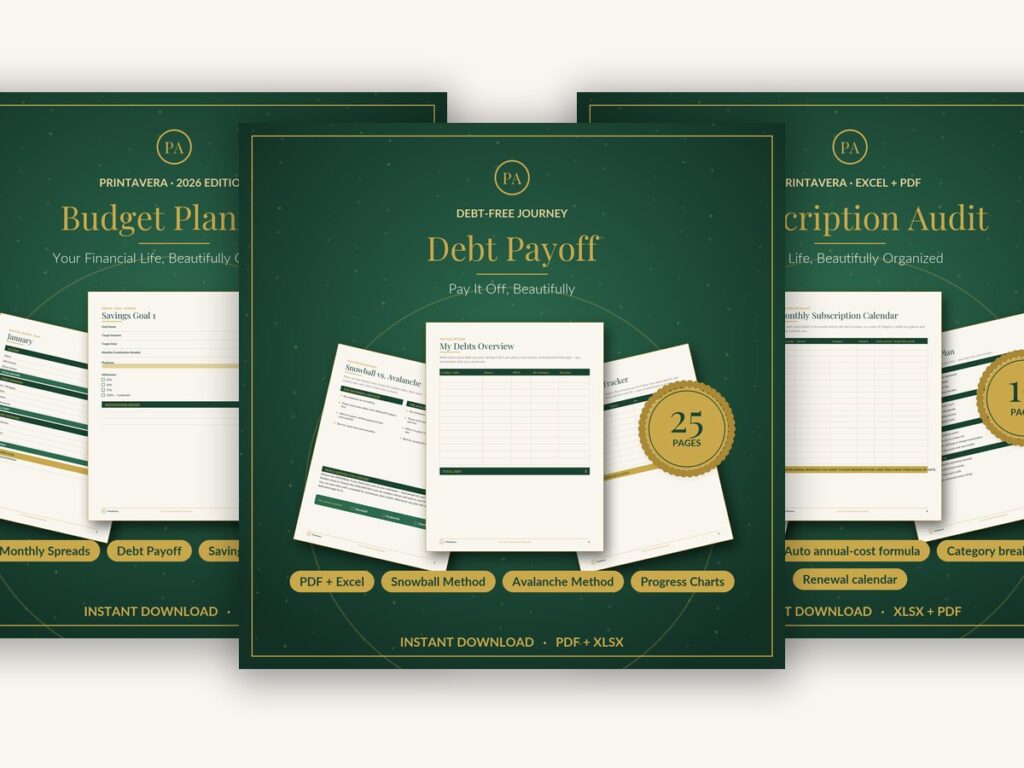
PrintAvera Collection
Budgeting & Debt Tools That Actually Get Used
Take control of your money with printable budget planners, debt payoff trackers and subscription audits designed to make every dollar feel intentional. Each one is crafted in our calm editorial style, so sitting down with your finances finally feels good instead of stressful.
Money can feel heavy to look at, especially when bills, debt, and a dozen small subscriptions all seem to pull in different directions. If you have been avoiding the numbers because they make your stomach tighten, you are in very good company, and the truth is gentler than the dread suggests. Most money stress is not really about the math. It is about not having a clear picture, so your mind fills the gaps with worst-case stories.
Here is the relief: you do not need to be good at maths, earn a lot, or have a perfect track record to turn this around. You need a calm, repeatable way to see what is coming in, what is going out, and what you would quietly love to change. That is it. The women who feel genuinely at ease with money are rarely the highest earners. They are the ones who look at it on purpose, in small doses, without flinching.
This guide walks through the budgeting methods that actually stick, two honest paths out of debt, how to find money leaking out in ways you barely notice, and how to build habits that make all of it feel automatic. Take what fits and leave the rest. You are allowed to do this your own way, at your own pace, and still get somewhere wonderful.
A Peek Inside
See the Quality for Yourself
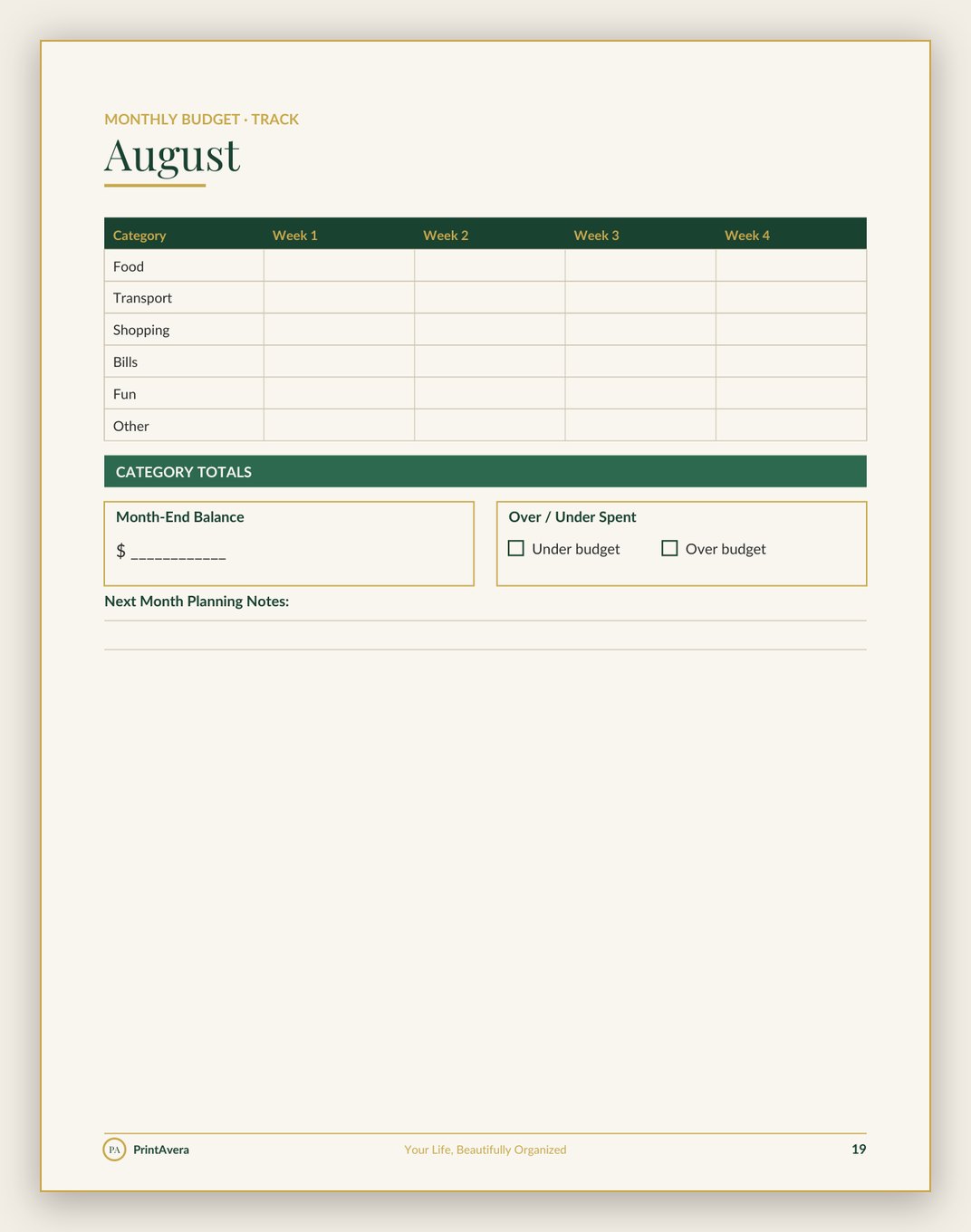
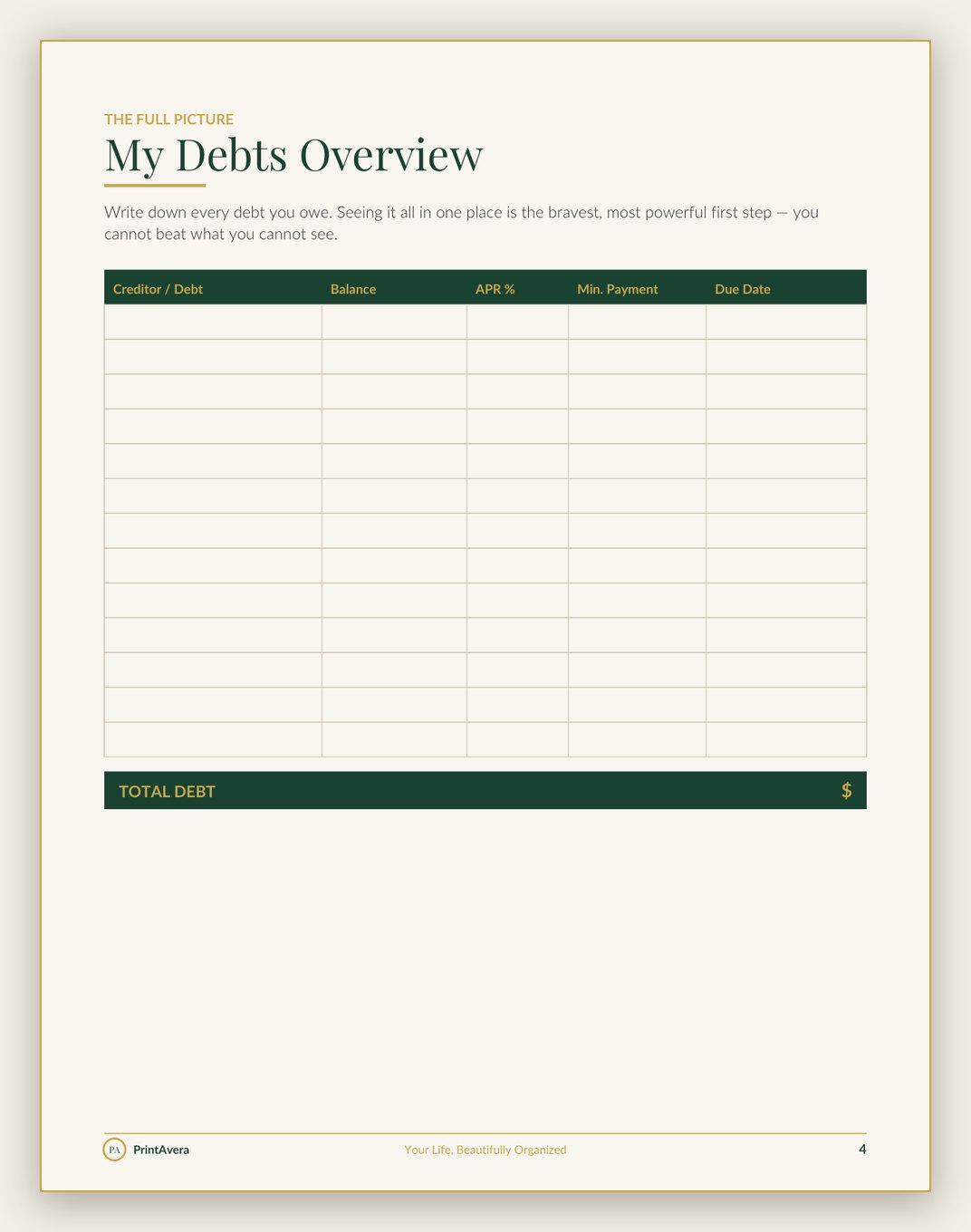
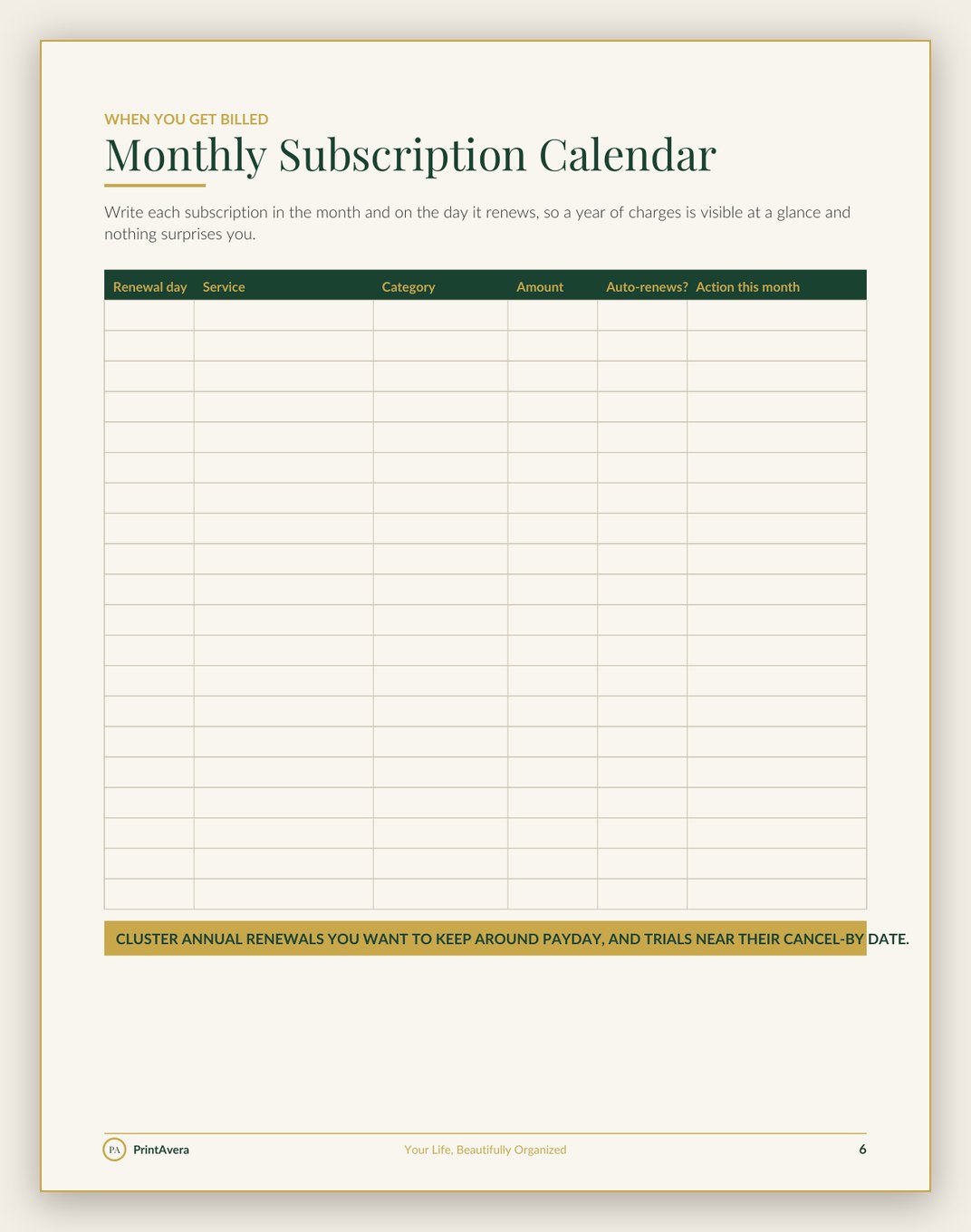
Real pages from this collection — every spread designed in our signature forest-green and gold style. See them all on Etsy →
Shop the Collection
Money, Budgeting & Debt
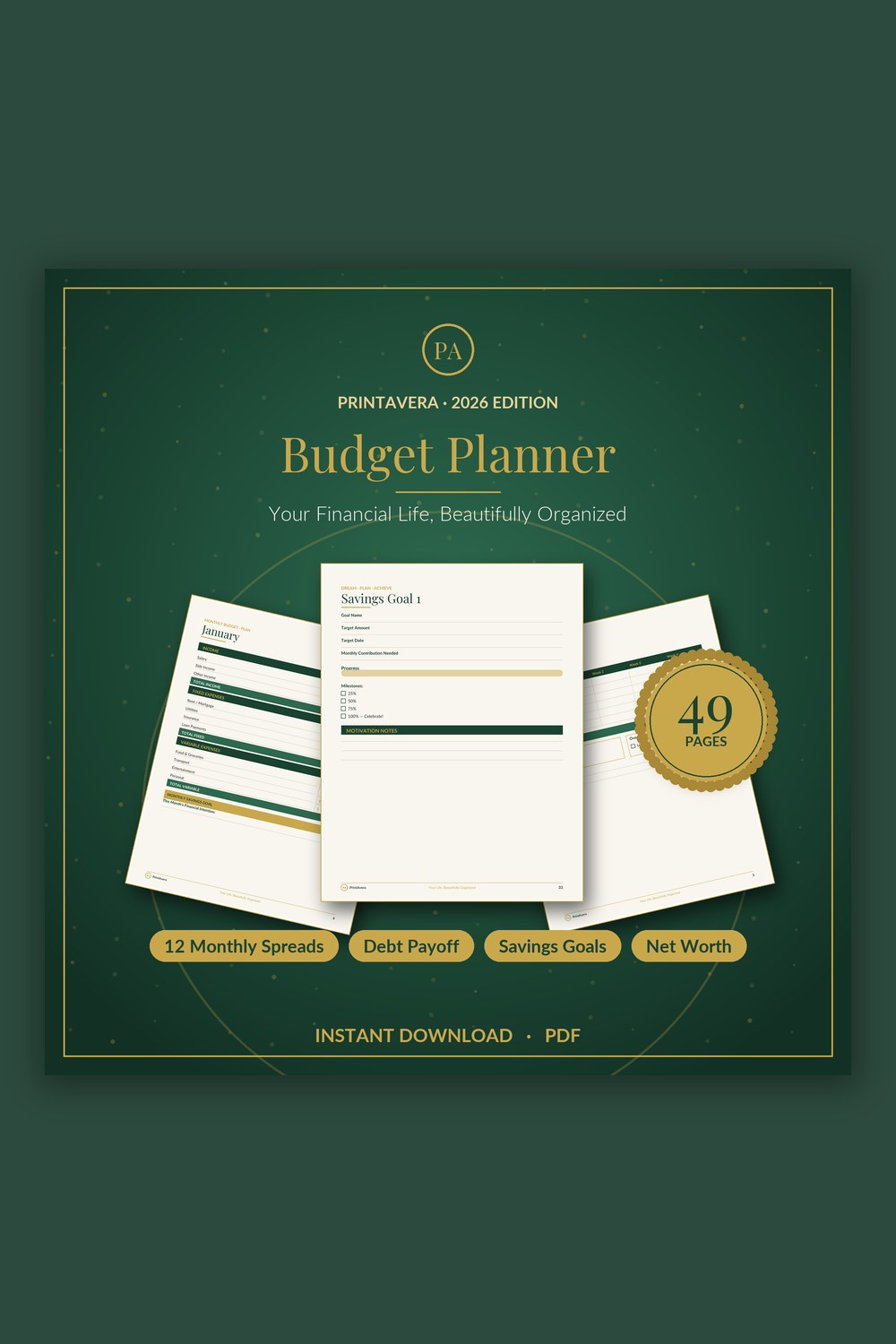
Budget Planner Printable
Budget Planner — your financial life, beautifully organized
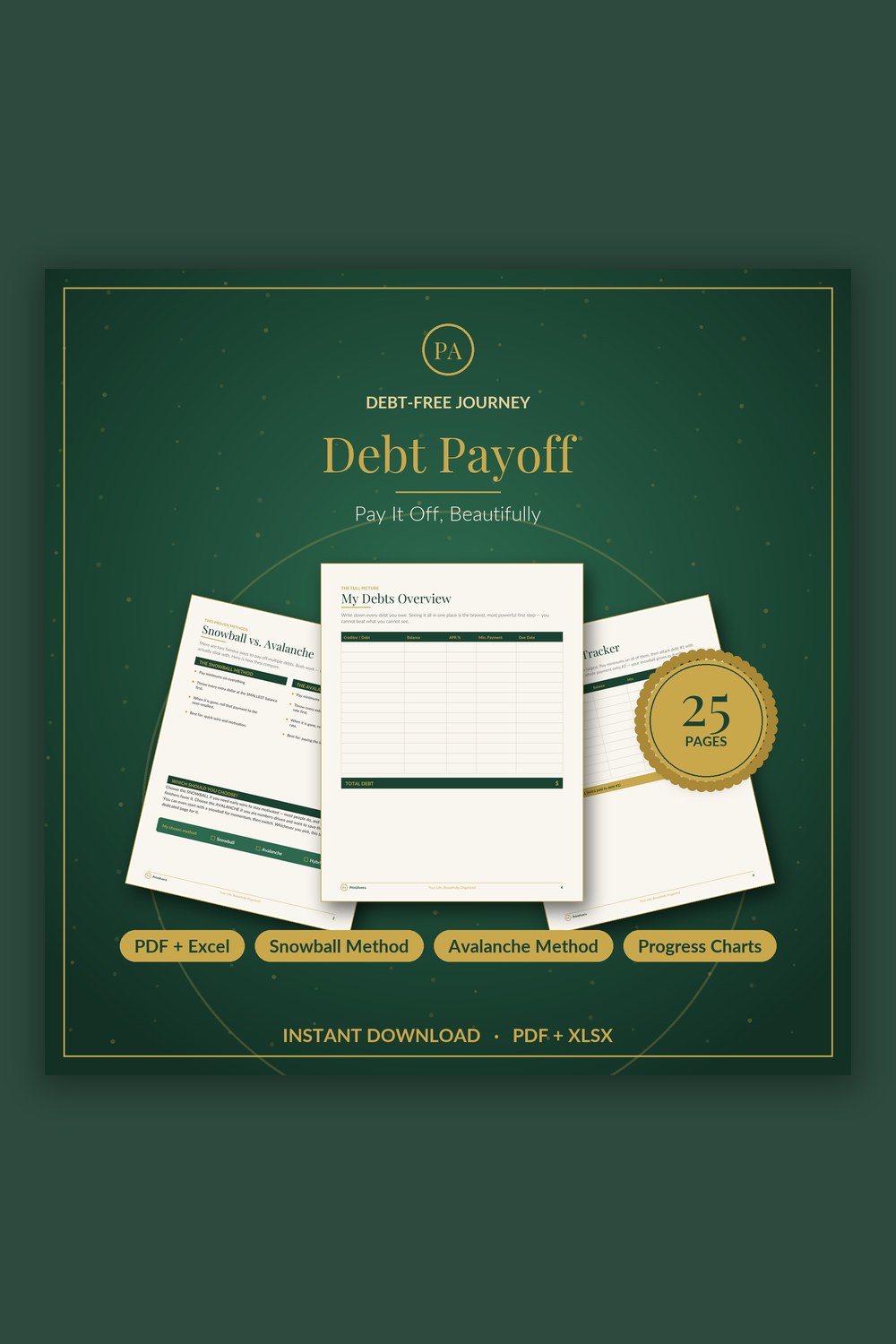
Debt Payoff Tracker
A calm, motivating debt-payoff planner that turns a scary balance into a clear plan you can actually finish.
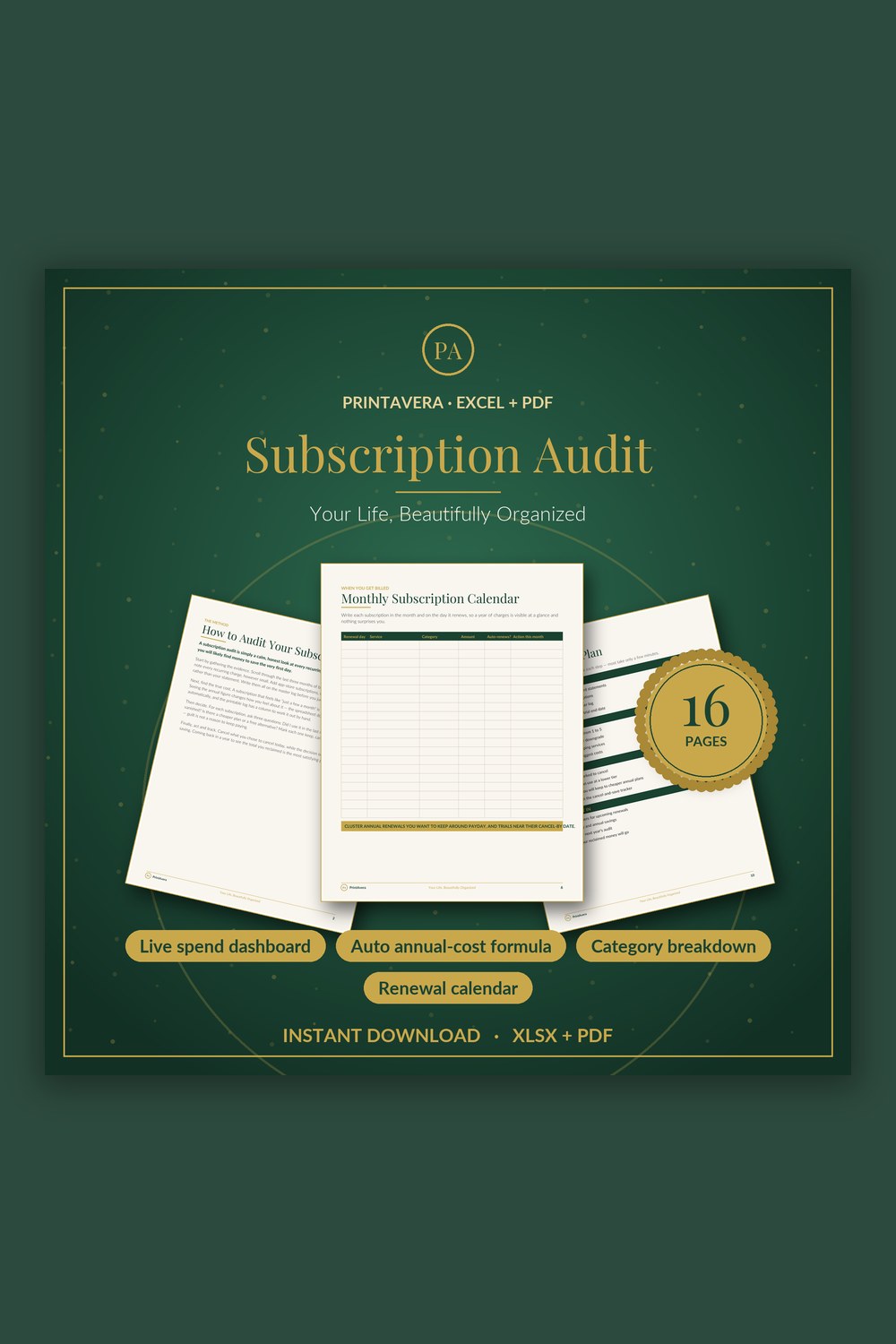
Subscription Tracker Template
See every subscription, what it truly costs you each year, and exactly which ones to cancel — with a live Excel dashboard and matching printable audit that pay for themselves the first month.
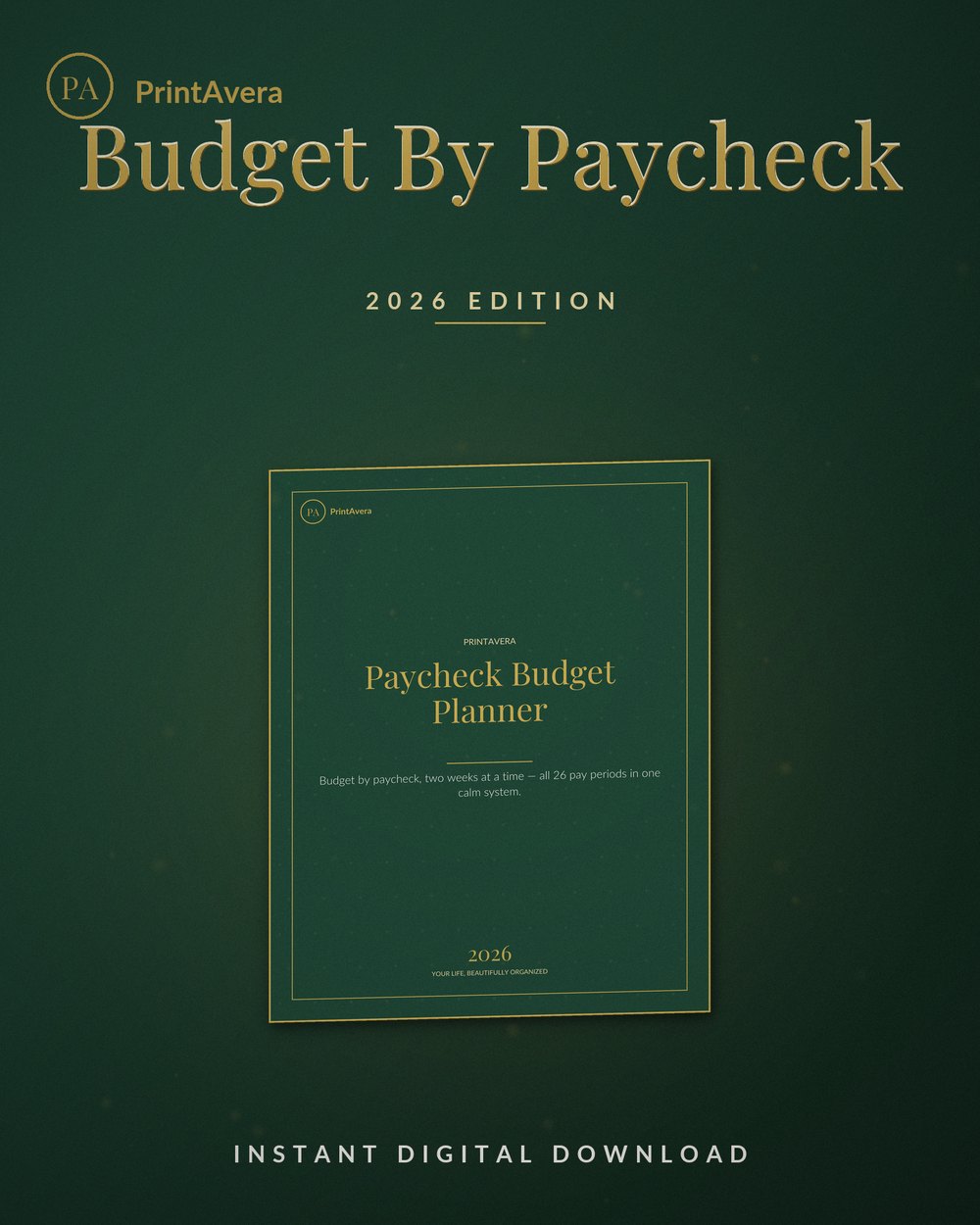
Paycheck Budget Planner
A biweekly budget printable that finally matches how you're actually paid — budget by paycheck, two weeks at a time
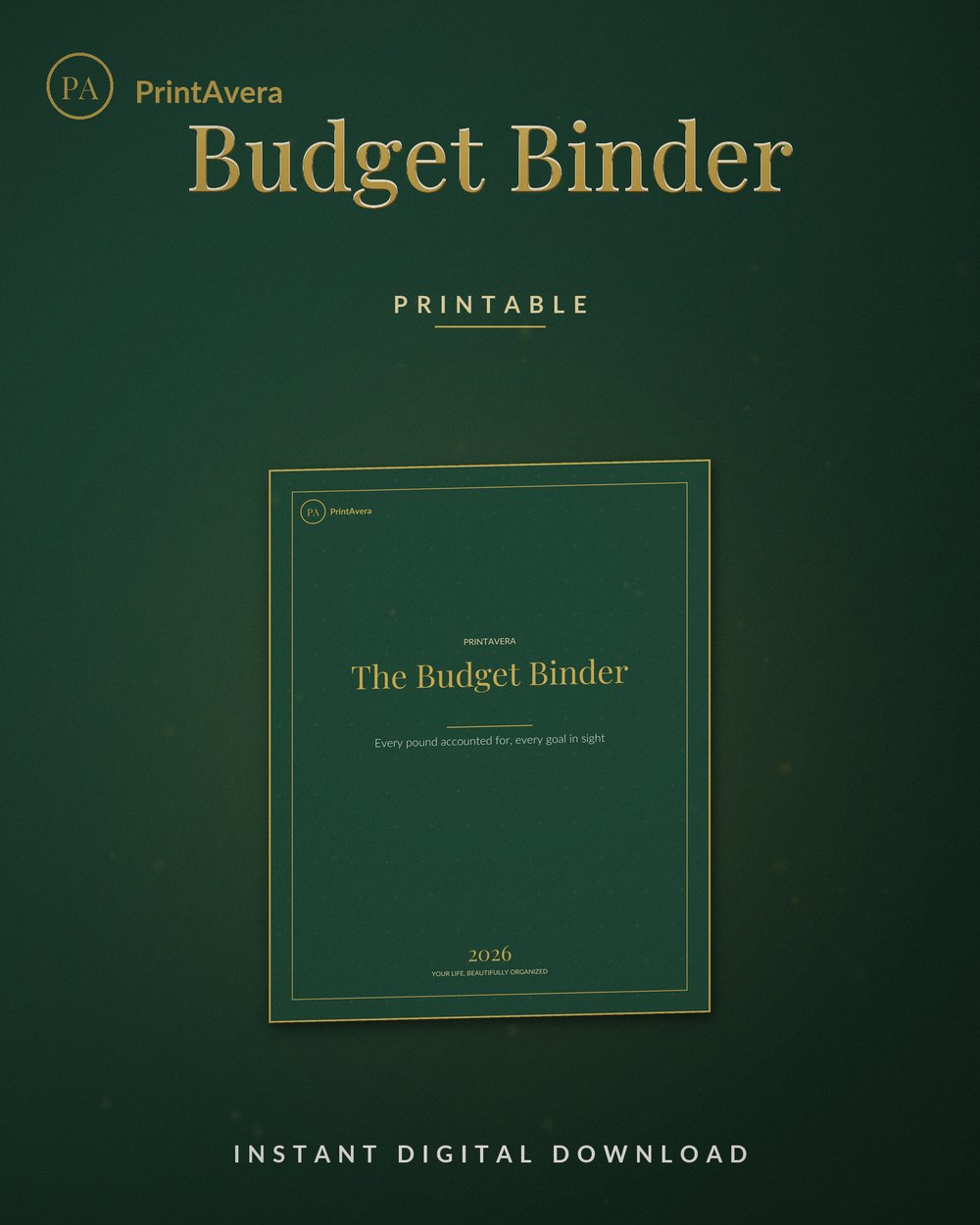
Budget Binder Printable
A complete budget binder printable that finally puts your whole financial life in one calm, organised place
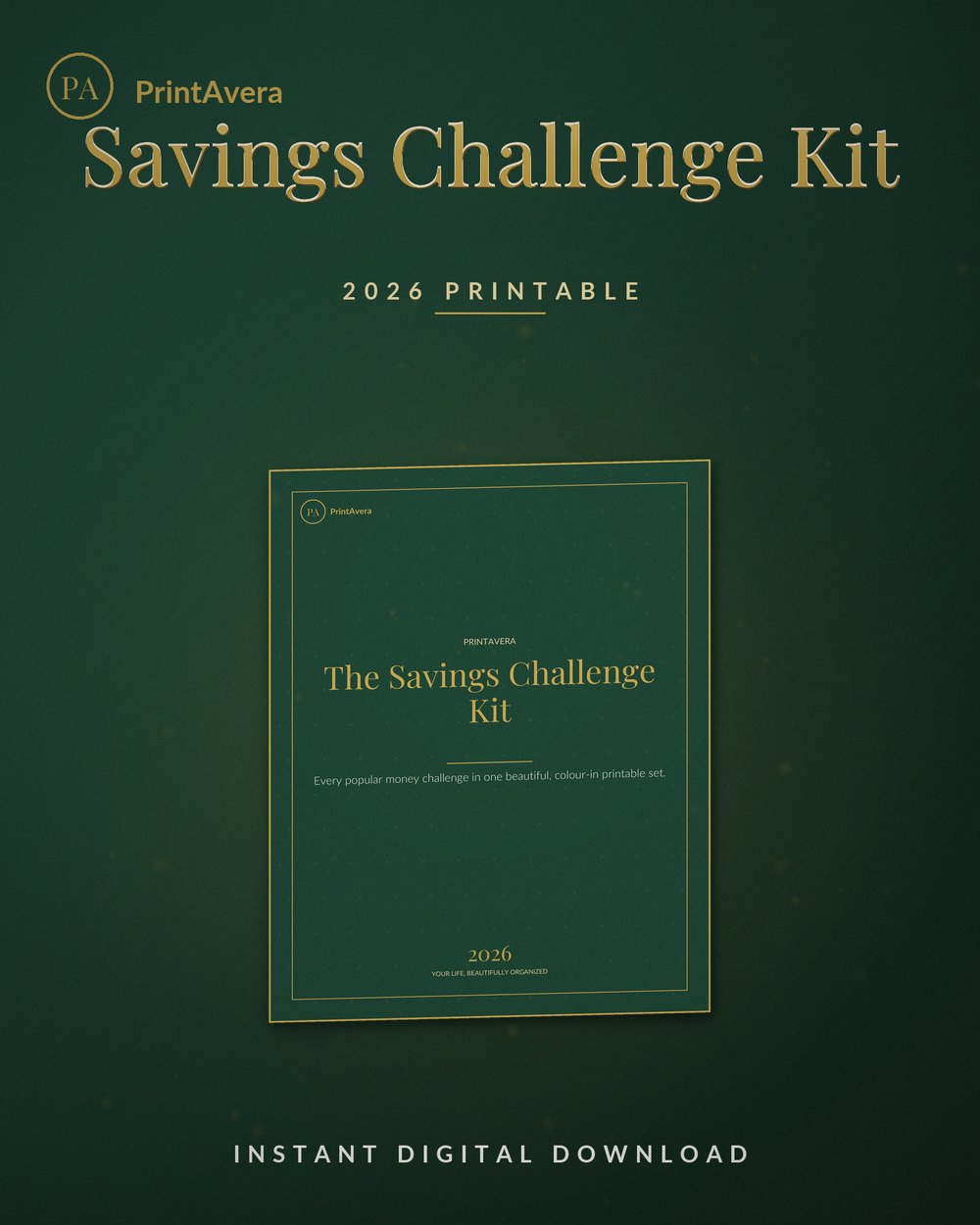
Savings Challenge Printable
A savings challenge printable kit with every popular money challenge in one place: 100-envelope, 52-week, 30-day, a 1,000…
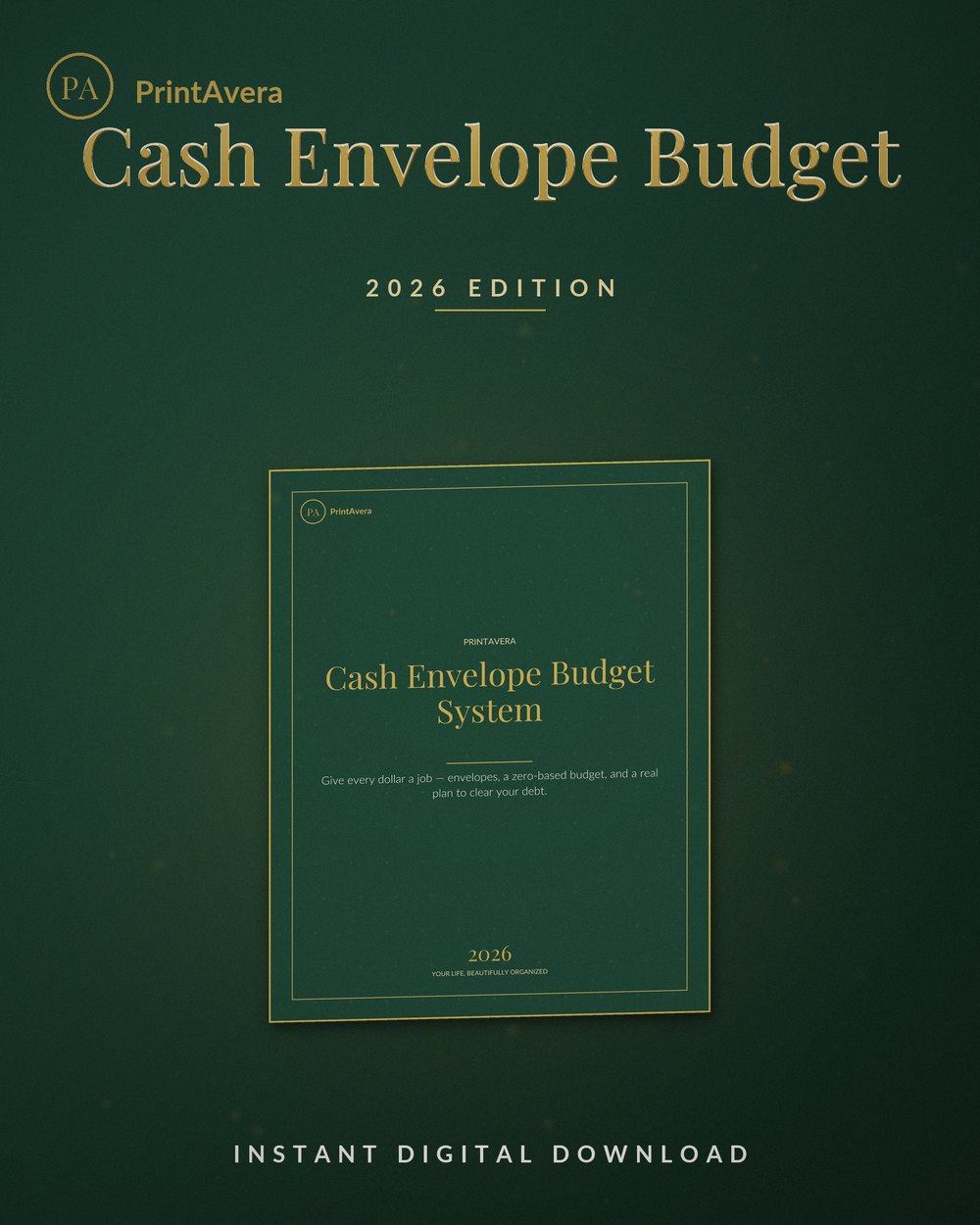
Cash Envelope Budget System
A complete cash envelope budget system inspired by the method popularised by Dave Ramsey — give every dollar a job
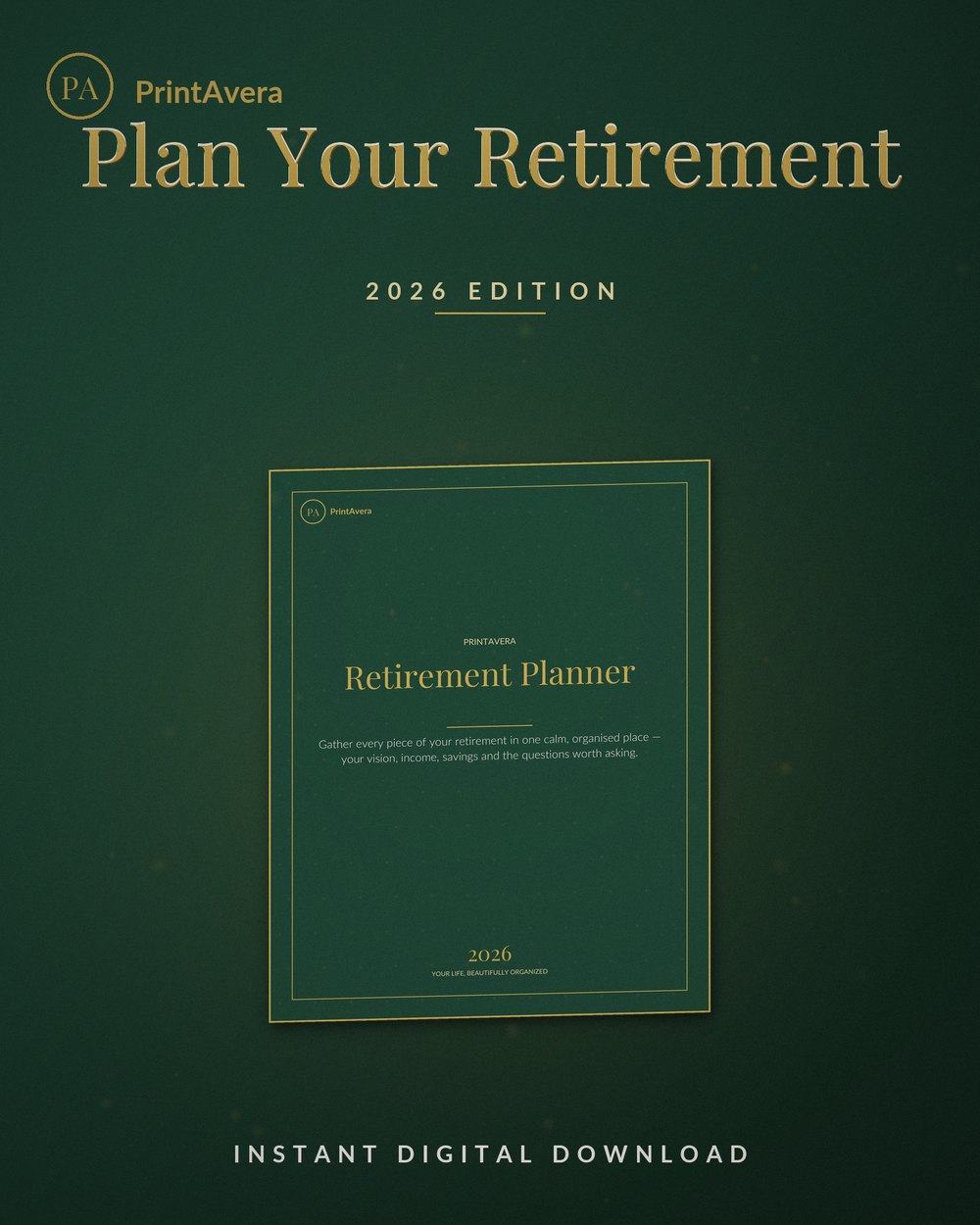
Retirement Planner
A retirement planner printable that gathers your whole picture in one calm place — vision, income sources, estimated expenses,…
The Complete Guide
Start With a Budget You Will Actually Keep
A budget is not a punishment or a strict diet for your wallet. It is simply a plan you make on purpose, so your money flows toward the things that matter to you instead of slipping away unnoticed. The best budget in the world is the one you will still be looking at next week, which means simple and forgiving beats elaborate and perfect every single time.
The best budget is the one you will still be looking at next week.
Begin by writing down your income and your fixed costs, the bills that stay roughly the same each month: rent or mortgage, insurance, phone, loan payments. Then look at your flexible spending, the groceries, takeout, and impulse buys, because that is where you hold the most power to adjust. The fixed costs are mostly decided already. The flexible money is where a budget quietly changes your life, a little at a time.
Two frameworks help most people get started. The 50/30/20 method splits your take-home pay into roughly half for needs, thirty percent for wants, and twenty percent for savings and debt, which is gentle and easy to remember. Zero-based budgeting goes further: you give every single dollar a job until your income minus your assignments equals zero, so nothing is left wandering around unaccounted for. A budget planner printable can hold all of this in one place, so you are not juggling sticky notes, a banking app, and your memory at midnight.
- List every source of income for the month, even small or irregular ones
- Separate fixed bills from flexible, changeable spending
- Pick one method to start: 50/30/20 for simplicity, zero-based for precision
- Give every dollar a job, including a guilt-free amount for fun
- Review for a few minutes weekly rather than once a month in a panic
Choosing a Debt Payoff Method: Snowball vs Avalanche
When you are paying off more than one debt, two well-loved approaches can keep you focused instead of frozen. The snowball method has you throw everything extra at your smallest balance first, while paying the minimum on the rest, then rolling that freed-up payment onto the next smallest debt. Because you watch whole accounts disappear quickly, it is deeply motivating, and motivation is often the real currency that gets debt paid.
Motivation is often the real currency that gets debt paid.
The avalanche method instead targets the debt with the highest interest rate first, regardless of its size. Mathematically, this usually saves you the most money and time, because you are starving the most expensive debt of the interest it feeds on. Neither method is wrong, and you are not failing if you choose the one that feels kinder. If early wins keep you going, snowball is on your side. If efficiency lights you up, avalanche is the cheaper road.
Whichever you choose, the magic ingredient is the rolling payment. Once a debt is gone, you resist the urge to absorb that money back into everyday spending and instead pour it onto the next target. That is what turns a slow trickle into momentum. A debt payoff tracker lets you color in or check off each shrinking balance, and that small visual reward is often exactly what carries people through the long middle stretch when willpower alone would fade.
- Snowball: smallest balance first, for quick wins and emotional momentum
- Avalanche: highest interest rate first, for the lowest total cost
- Always pay at least the minimum on every debt to protect your record
- Roll each finished payment onto the next debt instead of reabsorbing it
- Pick the method you will actually stick with, because consistency beats theory
Reader Favourite
Budget Planner Printable
Budget Planner — your financial life, beautifully organized
Find the Quiet Money Leaks
Subscriptions are the classic slow leak. A few dollars here for a streaming service, a forgotten app trial, a music plan nobody in the house remembers signing up for, and suddenly a meaningful slice of your month is gone before you have spent it on anything you actually chose. Most people genuinely underestimate how many active subscriptions they carry, because each one felt small and harmless on the day it started.
Set aside twenty quiet minutes and scan your last two or three bank and card statements line by line. Write down every recurring charge, then ask one honest question of each: did this earn its place in my life this month? Cancel what you do not love, and note the renewal dates of what you keep so a charge never ambushes you again. A subscription tracker template makes this a calm ten-minute review every quarter, because new subscriptions have a sneaky way of creeping back in the moment you stop watching.
Look beyond subscriptions, too. Bank fees, unused memberships, and small convenience markups all add up in the background. You are not trying to strip joy out of your life. You are reclaiming money that was leaking toward things you would not have chosen on purpose, and redirecting it toward what you actually want.
- Scan two or three recent statements for every recurring charge
- Ask of each subscription: did I genuinely use this in the last month?
- Note renewal dates so trials never convert to charges by surprise
- Recheck quarterly, because new subscriptions quietly creep back in
Build Sinking Funds So Big Costs Stop Surprising You
So much money stress comes from expenses that are not really emergencies at all, they are just predictable costs we refuse to look at in advance. Car registration, holiday gifts, the annual insurance bill, back-to-school supplies, a birthday season clustered in one month. None of these are surprises, yet they ambush the budget every year because we treat them as one-time shocks instead of recurring realities.
A sinking fund turns a frightening December bill into an easy January habit.
A sinking fund is the antidote, and it is beautifully simple. You take a known future cost, divide it by the months until it lands, and set that small amount aside each month so the money is quietly waiting when the bill arrives. Eight hundred dollars of holiday spending feels frightening in December and completely manageable as sixty-seven dollars tucked away from January. You are not finding new money, you are smoothing the lumps out of the money you already have.
Start with the two or three costs that always seem to derail you, and give each its own named fund. Whether you keep them as separate savings buckets in your bank or simply track the balances on paper, the relief is the same: when the expense arrives, it is already handled. A budget planner printable with a dedicated sinking-fund page makes it easy to see each fund filling up, which turns a source of dread into something almost satisfying to watch.
- List irregular but predictable costs: car, holidays, insurance, school, gifts
- Divide each total by the months until it is due to find your monthly amount
- Give every fund a clear name so the money stays earmarked
- Keep funds visible so you can see them filling up before the bill lands
Find your perfect Money, Budgeting & Debt printable
Each design is an instant digital download — buy it, download it, and start today. Print at home or use it on any tablet.
Budgeting on an Irregular or Unpredictable Income
If you freelance, work on commission, run a small shop, or pick up variable hours, the standard advice to budget your monthly salary can feel like it was written for someone else's life. Your income arrives in waves, generous one month and thin the next, and a rigid budget built on a good month will collapse the moment a quiet one arrives. The fix is to stop budgeting your hopes and start budgeting your floor.
Stop budgeting your hopes and start budgeting your floor.
Look back over the last six to twelve months and find your lowest realistic income, then build your essential budget around that number. Cover your true needs first, the rent, the utilities, the groceries, from money you can count on. Everything above that baseline, in the stronger months, gets assigned in order of priority: first to topping up a buffer, then to debt and sinking funds, and only then to the nicer extras. This way a great month funds the lean one instead of being spent as if every month will be great.
A buffer fund is the quiet hero of irregular income. The aim is to build a cushion large enough that you are always spending last month's earnings this month, which breaks the anxious cycle of waiting for a payment to clear before you can pay a bill. It takes a few strong months to get there, but once you do, the financial whiplash softens dramatically and you can finally plan past the next deposit.
- Budget your essentials around your lowest realistic month, not your best
- Assign surplus from strong months in priority order, not on impulse
- Build a buffer so you can spend last month's income this month
- Keep a simple priority list so windfalls have a plan before they arrive
Turn Good Intentions Into Lasting Money Habits
Knowing what to do with money and actually doing it week after week are two different skills, and the second is where real change lives. The secret is not more discipline or a stricter personality. It is lowering the effort each action takes until staying on track is easier than falling off. Habits stick when they are small, anchored to something you already do, and just a little bit rewarding.
The people who win with money are the ones who come back after a messy week.
Try a short, recurring money date with yourself, perhaps fifteen minutes every Sunday with a warm drink, where you glance at your spending, update your trackers, and pick one tiny thing to adjust. Anchor it to a ritual you enjoy so it stops feeling like homework. Automate what you can, savings transfers, bill payments, and debt minimums, so your good decisions happen even on the weeks you are too tired to think about them. The goal is a system that mostly runs itself.
Expect to wobble, and plan for it kindly. You will overspend some weeks, forget a review, or blow the budget on something that turned out to be worth it. None of that means you have failed; it means you are a human being with a real life. The people who win with money are simply the ones who return to the page after a messy week instead of giving up. Keep your budget planner, debt payoff tracker, and subscription tracker somewhere you will actually see them, and let visible progress quietly keep you going.
- Hold a short weekly money date anchored to something you enjoy
- Automate savings, bills, and minimum payments to remove willpower
- Track progress visibly so small wins keep you motivated
- Treat slip-ups as data, not failure, and simply return to the page
Frequently Asked Questions
How much of my income should go to needs, wants, and savings?
A common starting guideline is to aim for roughly half your take-home pay on needs, around thirty percent on wants, and twenty percent toward savings and debt. Treat it as a flexible frame rather than a strict rule, especially if your rent is high or your income varies from month to month. The percentages matter far less than the act of giving your money a deliberate plan. If your numbers do not fit the split, adjust the frame rather than abandon the budget.
Should I save money or pay off debt first?
Many people do a little of both, and that balance tends to feel the most sustainable. It usually helps to build a small starter emergency fund first, perhaps a few hundred to a thousand dollars, so an unexpected cost does not push you straight back into debt. After that cushion exists, focus your extra money on high-interest debt, since that interest typically grows faster than savings can. Once the expensive debt is gone, you can grow your emergency fund and longer-term savings with much more breathing room.
Snowball or avalanche, which debt method is actually better?
Avalanche, paying the highest interest rate first, is usually cheaper on paper and saves the most money over time. Snowball, paying the smallest balance first, gives you faster visible wins that keep your motivation alive. The best method is the one you will genuinely stick with until the last debt is gone, because a slightly more expensive plan you finish beats a cheaper one you abandon. If you are unsure, start with snowball for the early momentum and switch to avalanche once the habit is solid.
How do I stick to a budget when my income changes each month?
Base your essential budget on a lower, realistic estimate of your income rather than your best months. Cover your true needs first from money you can count on, then assign anything extra in order of priority as it actually arrives. In stronger months, set money aside to smooth out the leaner ones and slowly build a buffer. Over time, aiming to spend last month's income this month removes most of the stress of an unpredictable paycheck.
What is a sinking fund and do I really need one?
A sinking fund is money you set aside gradually for a known future cost, like car registration, holiday gifts, or an annual insurance bill, so it is ready when the bill lands. You take the total, divide it by the months until it is due, and save that small amount each month. It is one of the simplest ways to stop predictable expenses from feeling like emergencies. Most people only need a few funds, focused on the costs that always seem to catch them off guard.
What is the easiest way to find subscriptions I forgot about?
Scan your last two or three bank and card statements line by line, since trials and renewals love to hide in plain sight. Write down every recurring charge, mark anything you have not genuinely used recently, and cancel directly through each account or app store. Then note the renewal dates of the ones you keep so nothing converts by surprise. Repeating this quick review every few months keeps new subscriptions from quietly piling back up.
Are these planners instant downloads, and how do they work?
Yes, these are instant digital downloads, so you receive your files right after purchase with nothing shipped to you. You can print the budget planner, debt payoff tracker, and subscription tracker at home or at a copy shop, and many pages also work well on a tablet if you prefer to go paperless. Once downloaded, the files are yours to print and reuse as often as you like. There is no app to subscribe to and no recurring fee, just a tool you own outright.
Why PrintAvera?
Every PrintAvera design is created in-house to a five-star standard — considered layouts, calm forest-green and gold styling, and typography chosen to make every page feel intentional. Each one is an instant digital download you can print at home or use on any tablet in minutes. Beautiful enough that you will actually want to use it, every single day.
Explore More Collections