PrintAvera Collection
Tools for School, the Job Hunt & the Workplace
Stay on top of assignments, college applications, the job search and team building with planners and trackers made for students and professionals alike. Look organised, feel prepared and never miss a deadline.
There is a particular kind of tiredness that has nothing to do with the work itself. It is the low hum of trying to remember everything at once: the reading due Thursday, the recommendation letter you still need to request, the recruiter who said she would call back, the meeting you are supposed to lead on Monday. The tasks are usually manageable. It is the holding of them all in your head, all day, that wears you down.
Almost every season of school and working life is, underneath, a deadline-and-follow-through problem wearing different clothes. A semester of assignments, a stack of college applications, a quiet job search, a team that needs to feel more connected; each one rewards the same humble skill of getting things out of your mind and into a system you trust enough to stop checking obsessively.
This guide is for students, applicants, job seekers, and the people who lead small teams, often all at the same time. The promise is not a hundred new habits. It is one calm, repeatable way to see what matters, decide what to do next, and let your brain rest between sessions. Trade the scattered sticky notes and seven open tabs for a single page you actually glance at, and your energy goes back to the work instead of the worrying.
A Peek Inside
See the Quality for Yourself
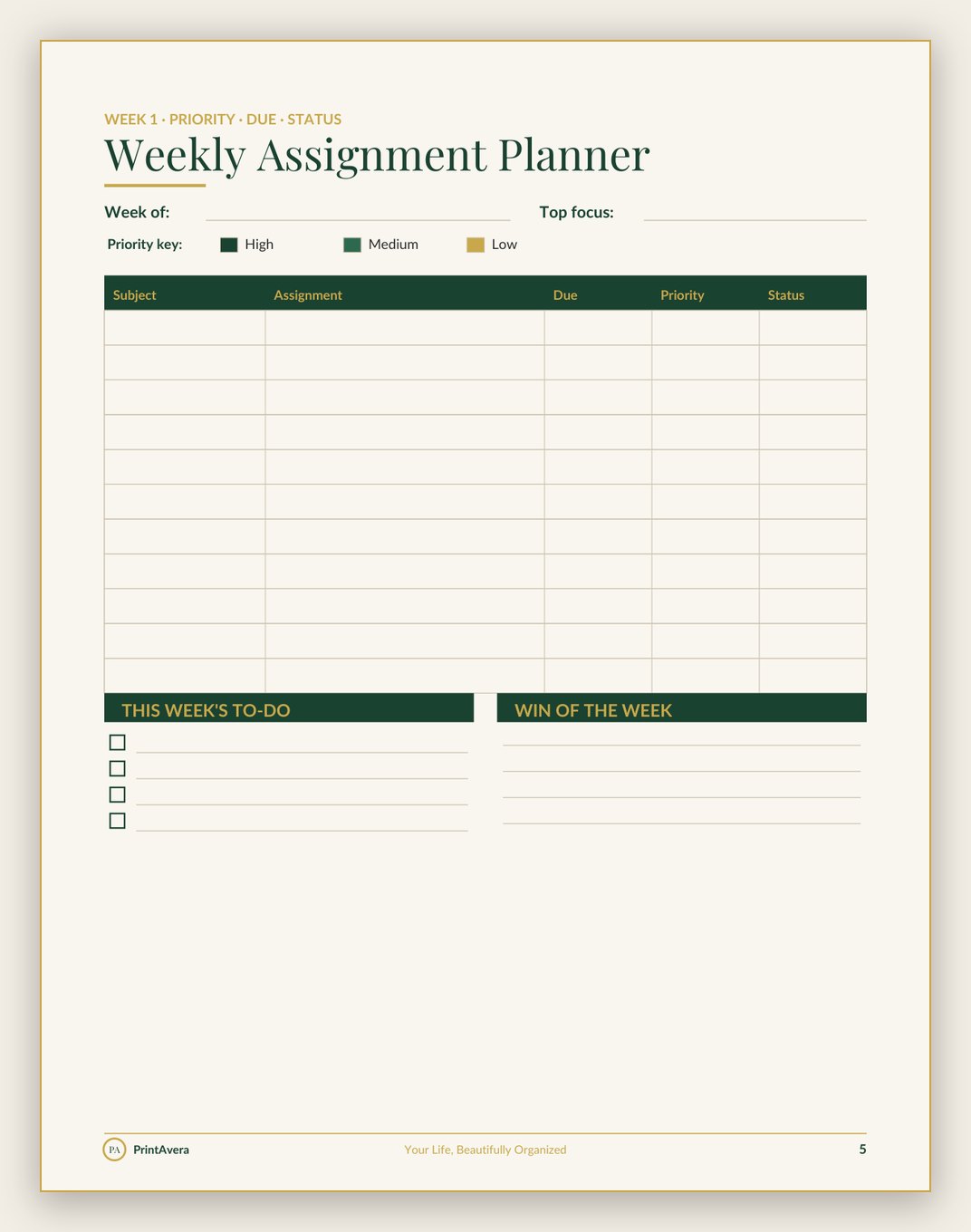
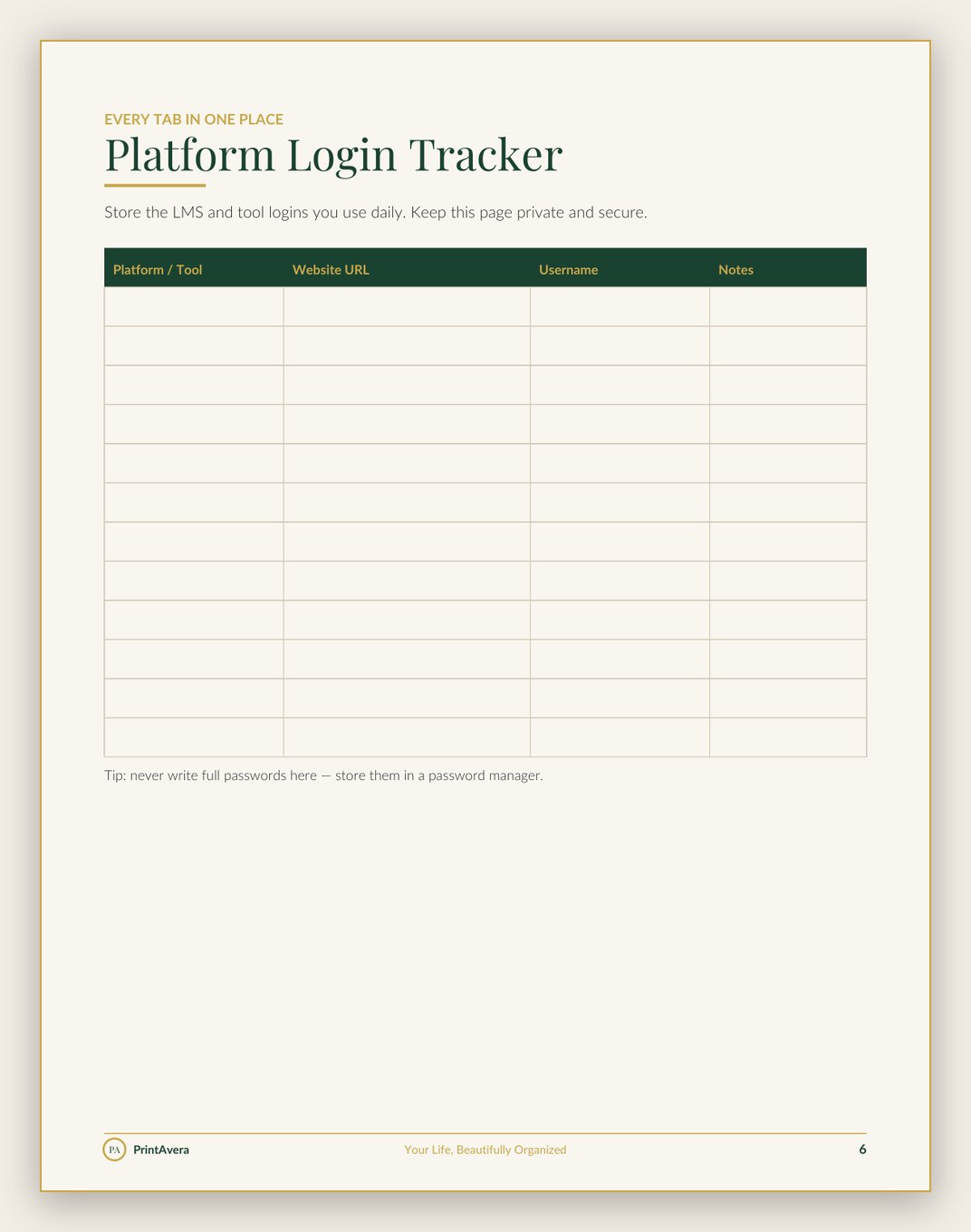
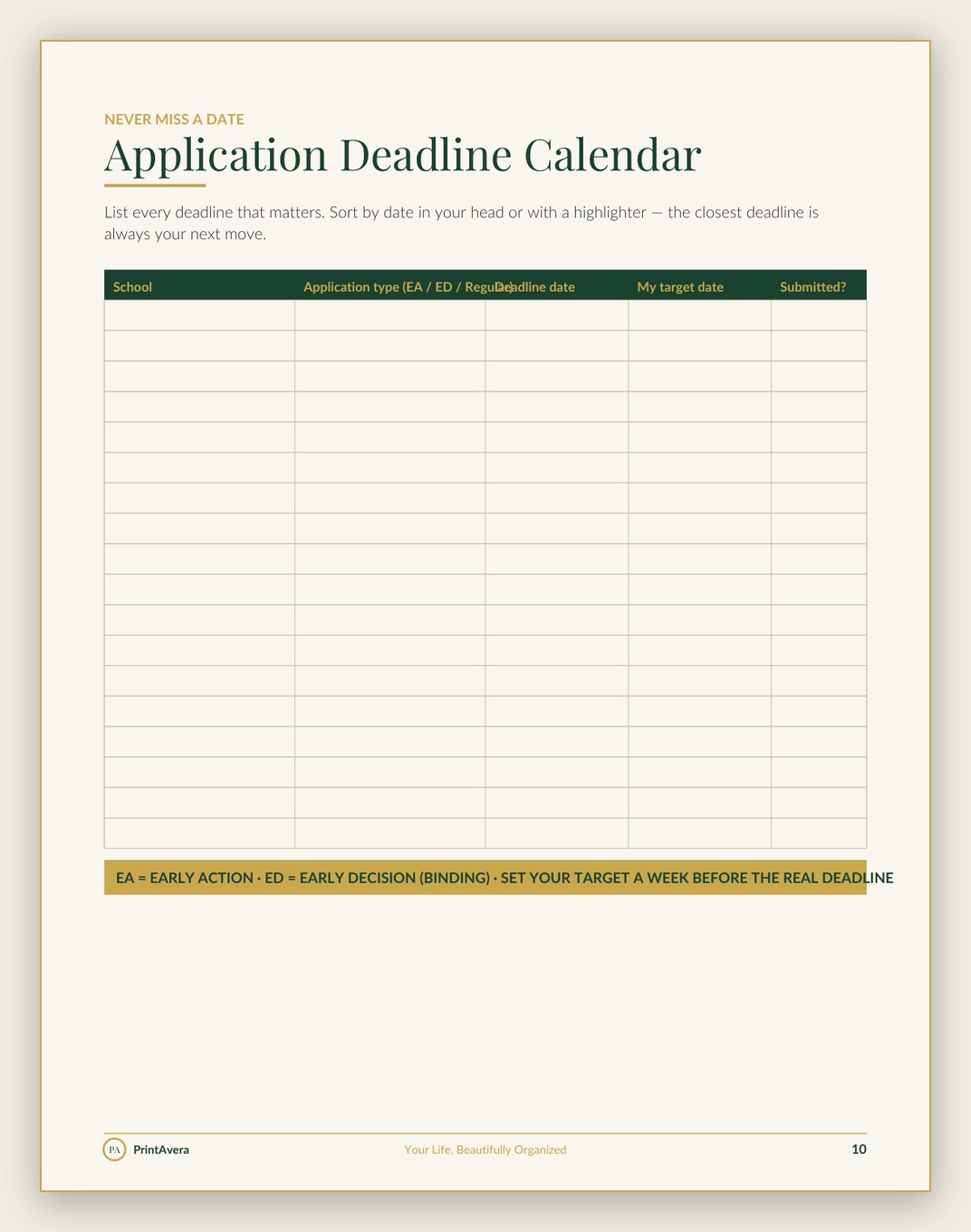
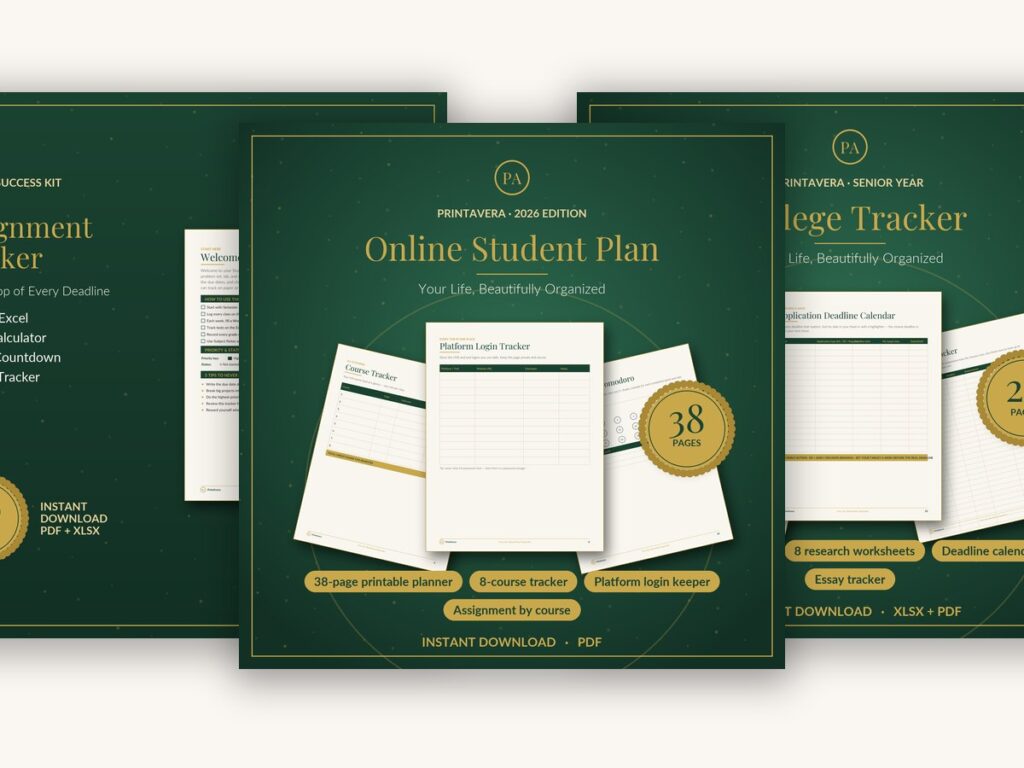
Real pages from this collection — every spread designed in our signature forest-green and gold style. See them all on Etsy →
Shop the Collection
School, Career & Workplace
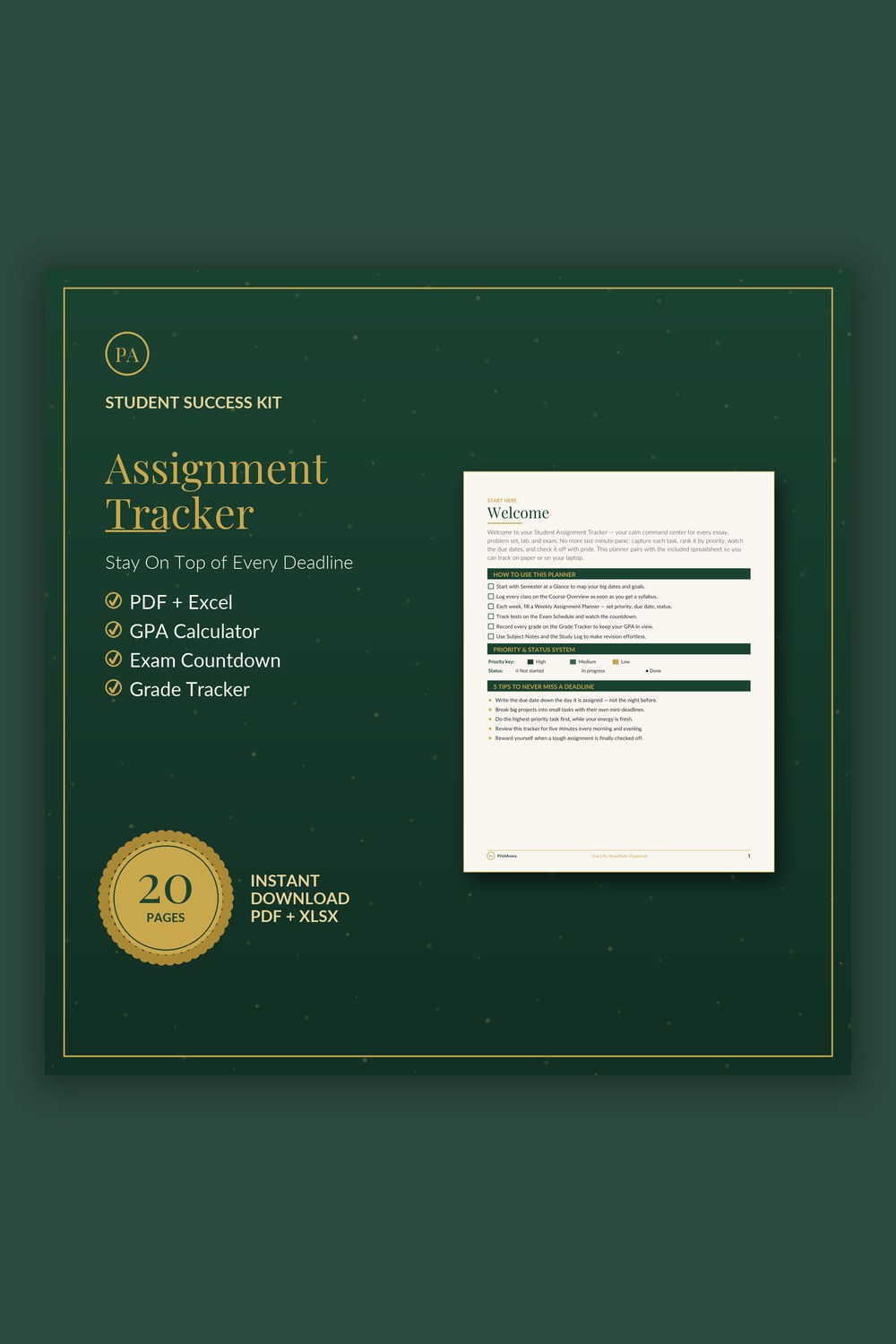
Assignment Tracker
Stay on top of every deadline with a calm, beautiful assignment tracker – a 20-page printable planner plus an auto-calculating Excel workbook.
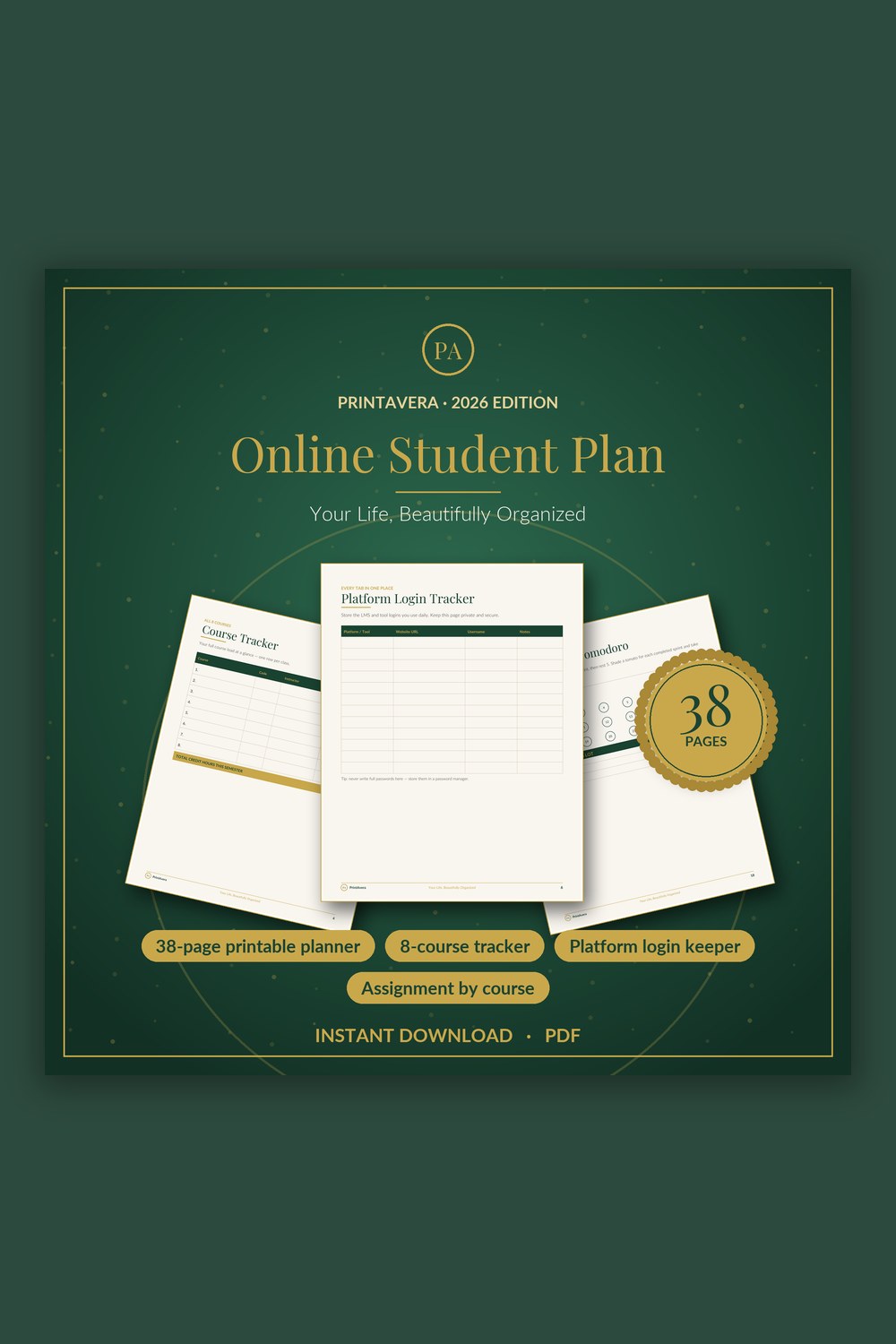
Online Student Planner Printable
Bring calm to life behind the screen with a beautiful 38-page printable planner that keeps every login, deadline, live class and grade in one organized place.
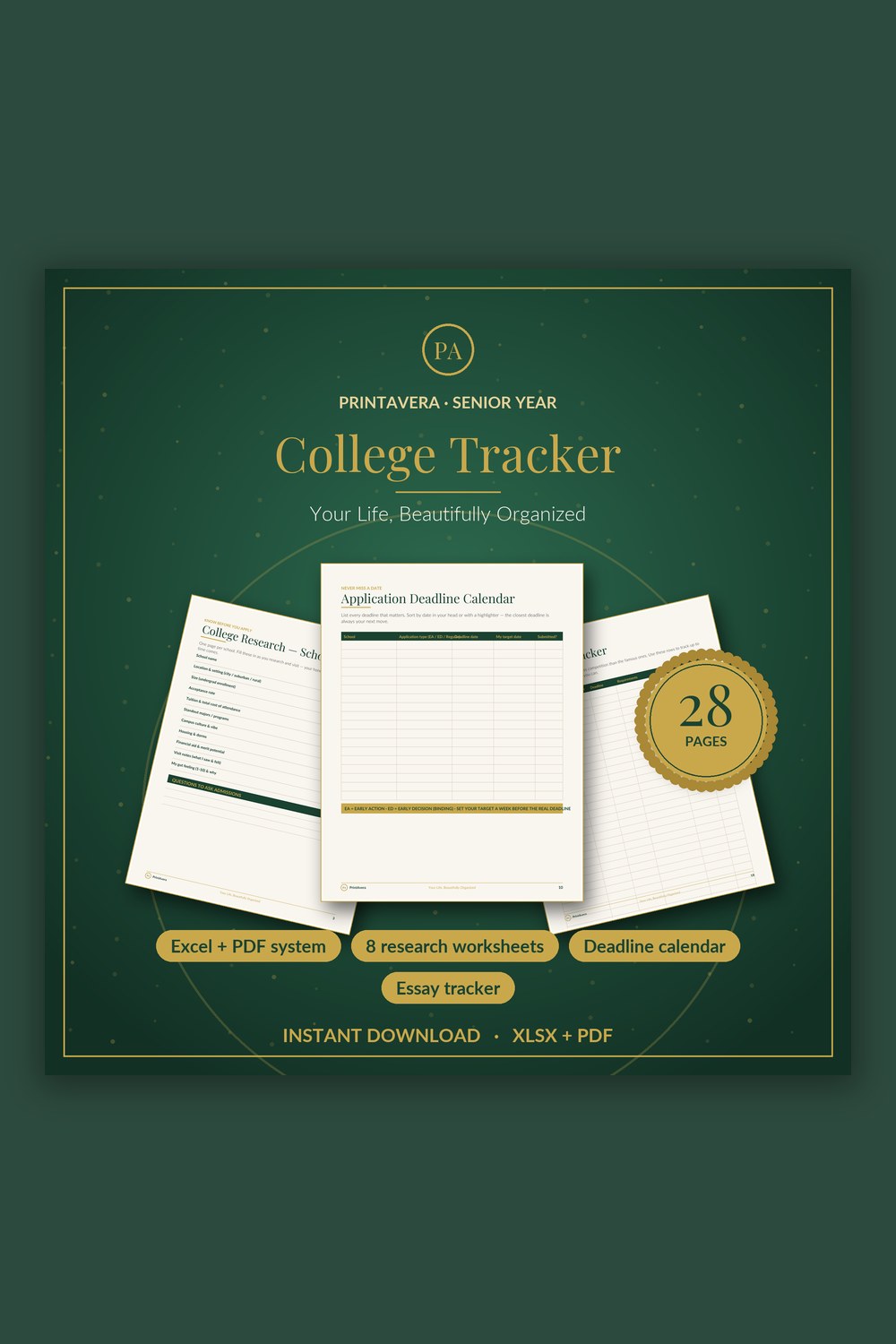
College Application Tracker
Every deadline, essay, recommendation and scholarship in one calm, organized place — a complete Excel and printable system that carries you from your first college list to deposit day with confidence.
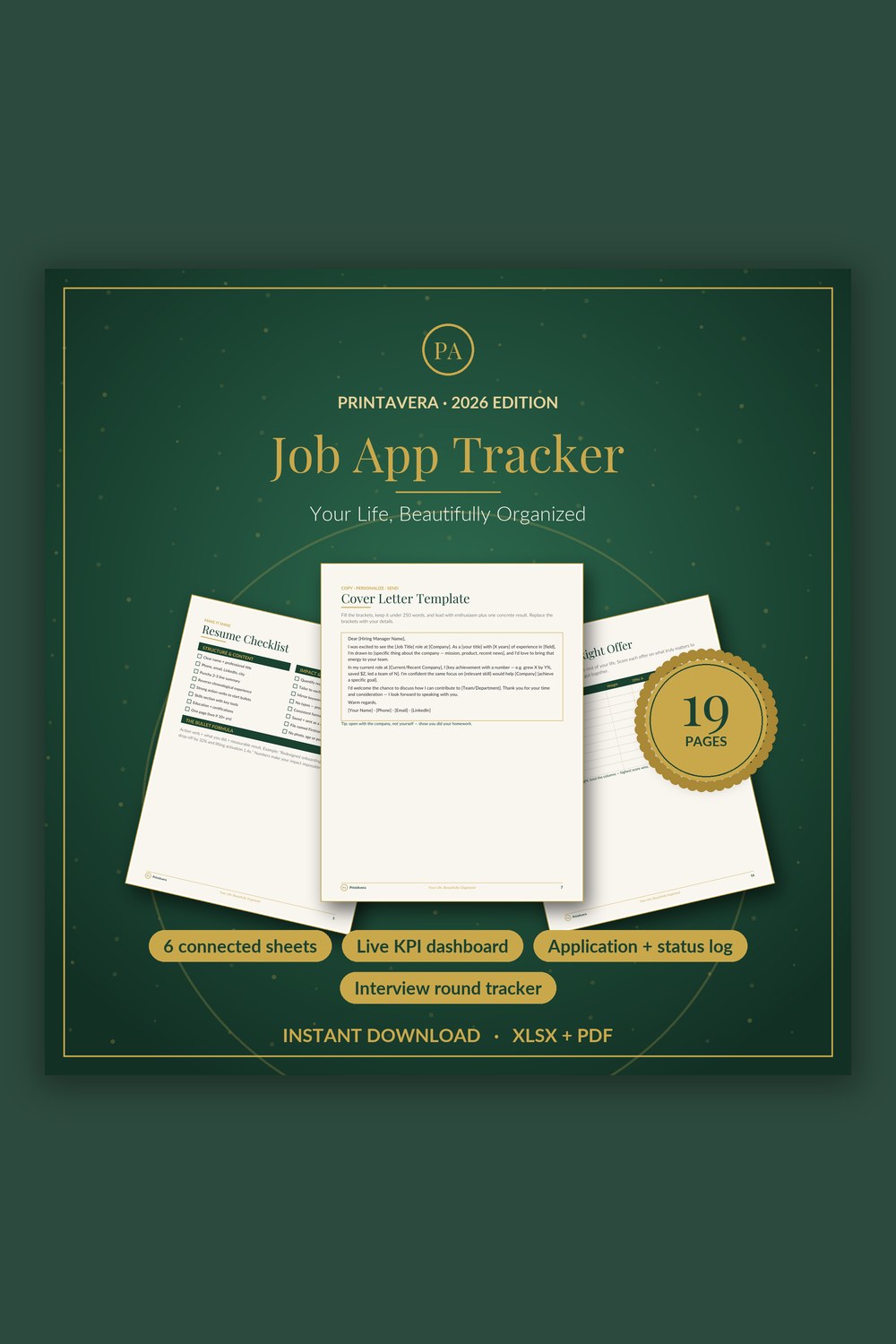
Job Application Tracker Spreadsheet
A 6-sheet job application tracker with a live dashboard – count applications, interviews, offers and your response rate automatically, then nail every step with a 19-page career toolkit of templates and scripts.
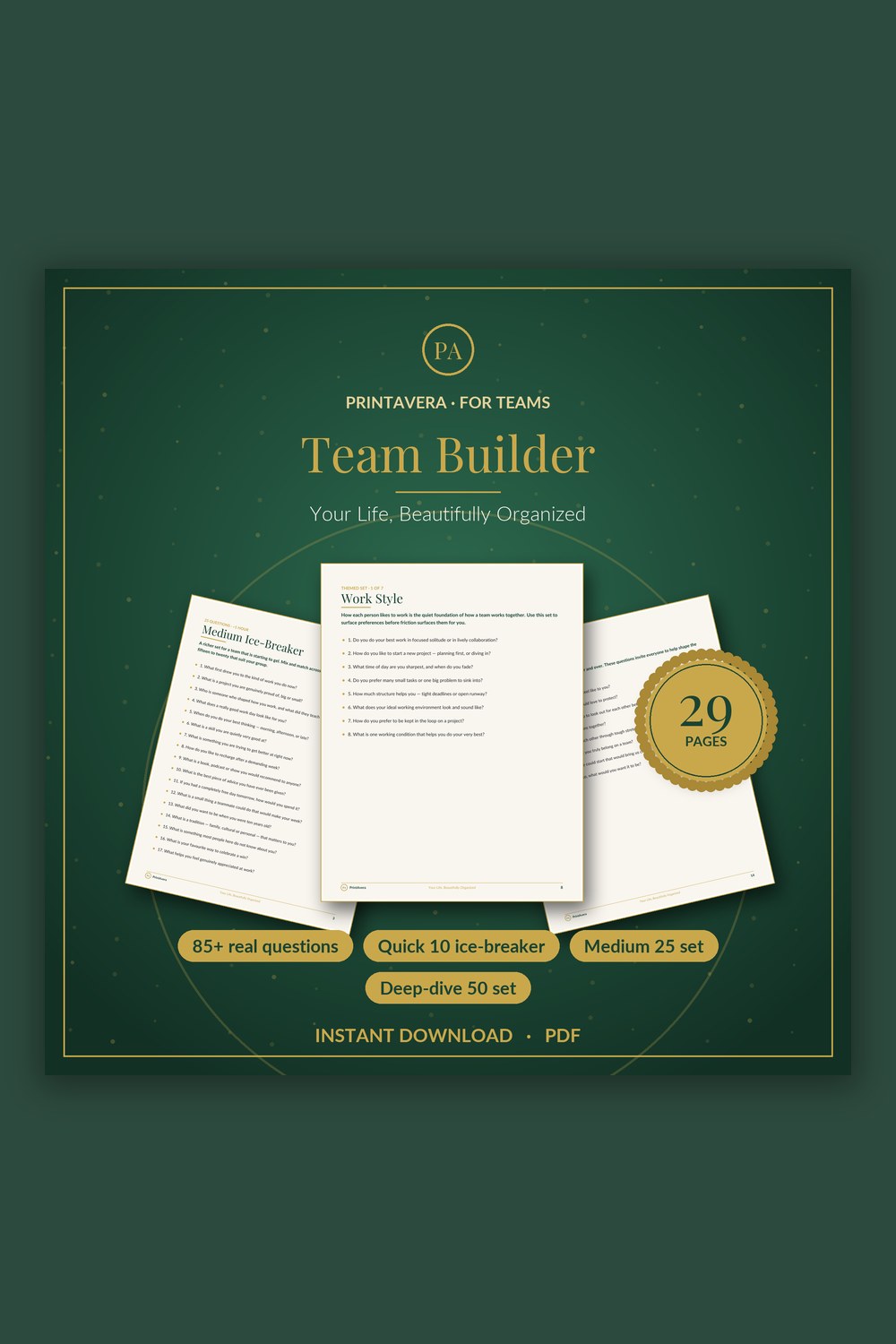
Team Building Questionnaire Printable
Eighty-five thoughtful questions, ready-to-run exercises and a complete facilitator guide that turn a roomful of colleagues into a team that actually knows — and trusts — each other.
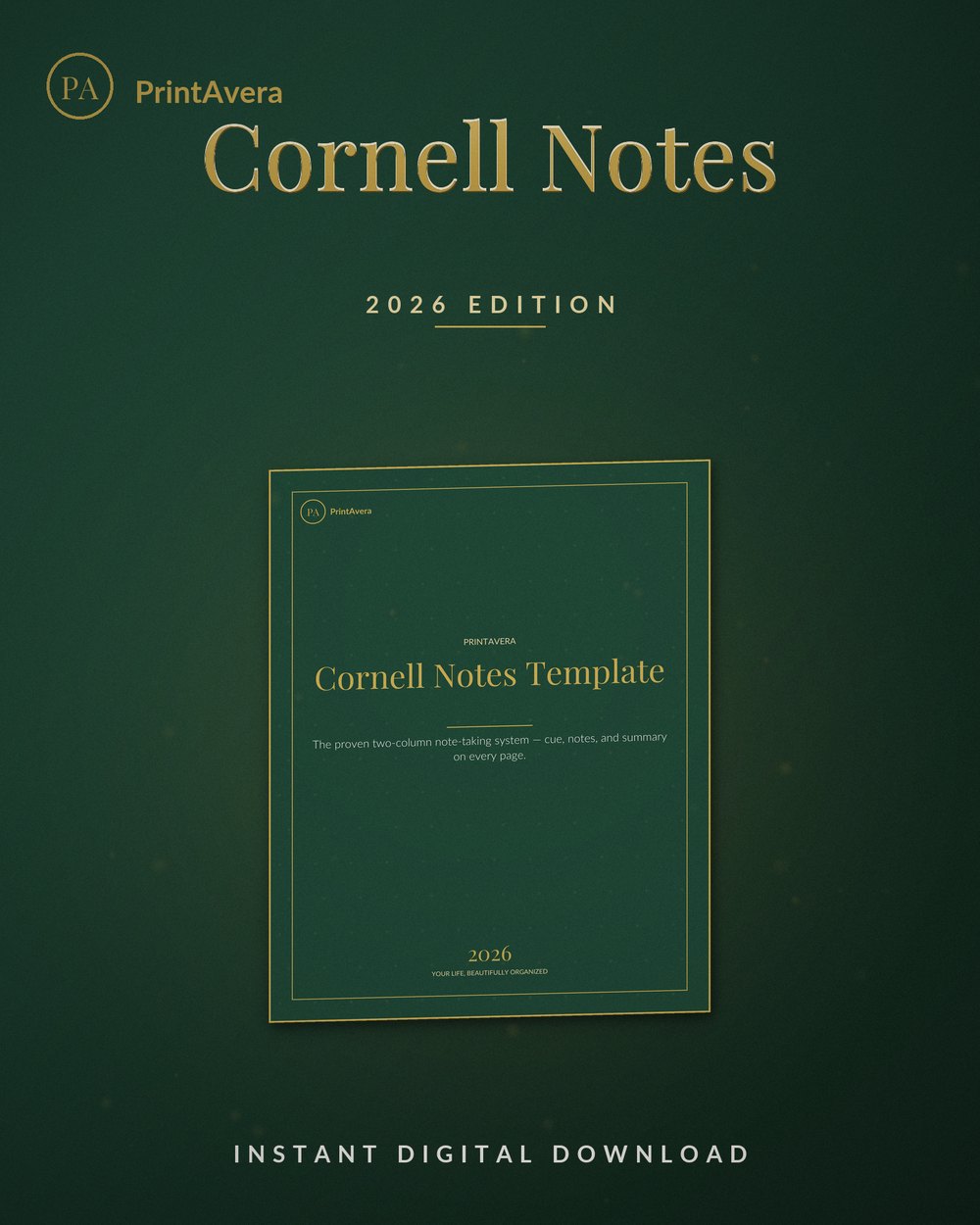
Cornell Notes Template
A complete Cornell notes template that turns every page into a ready-made revision tool — cue column, notes area, and summary band…
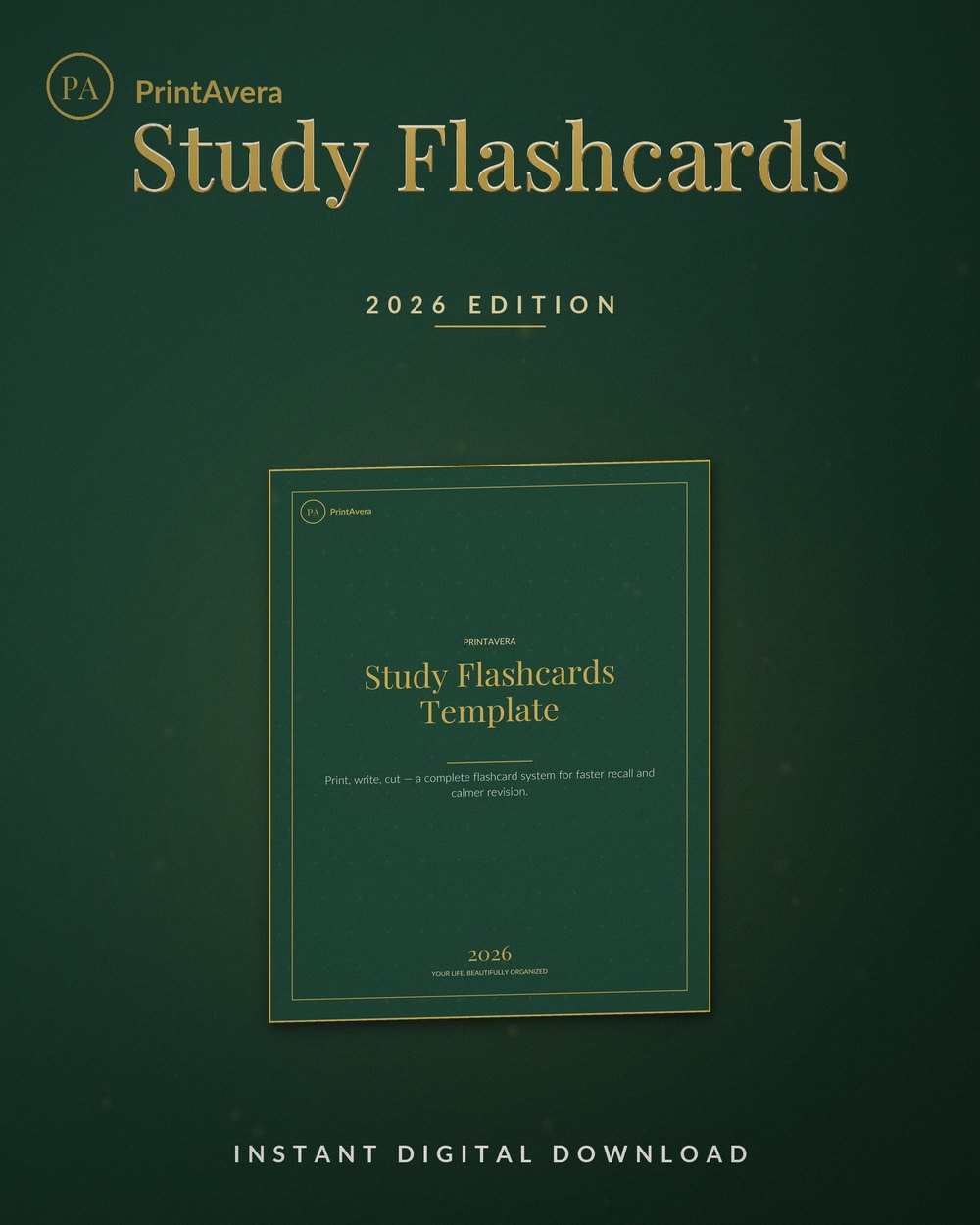
Study Flashcards Template
A complete flashcards template printable that takes you from blank card grids to a spaced-repetition deck you actually revise from
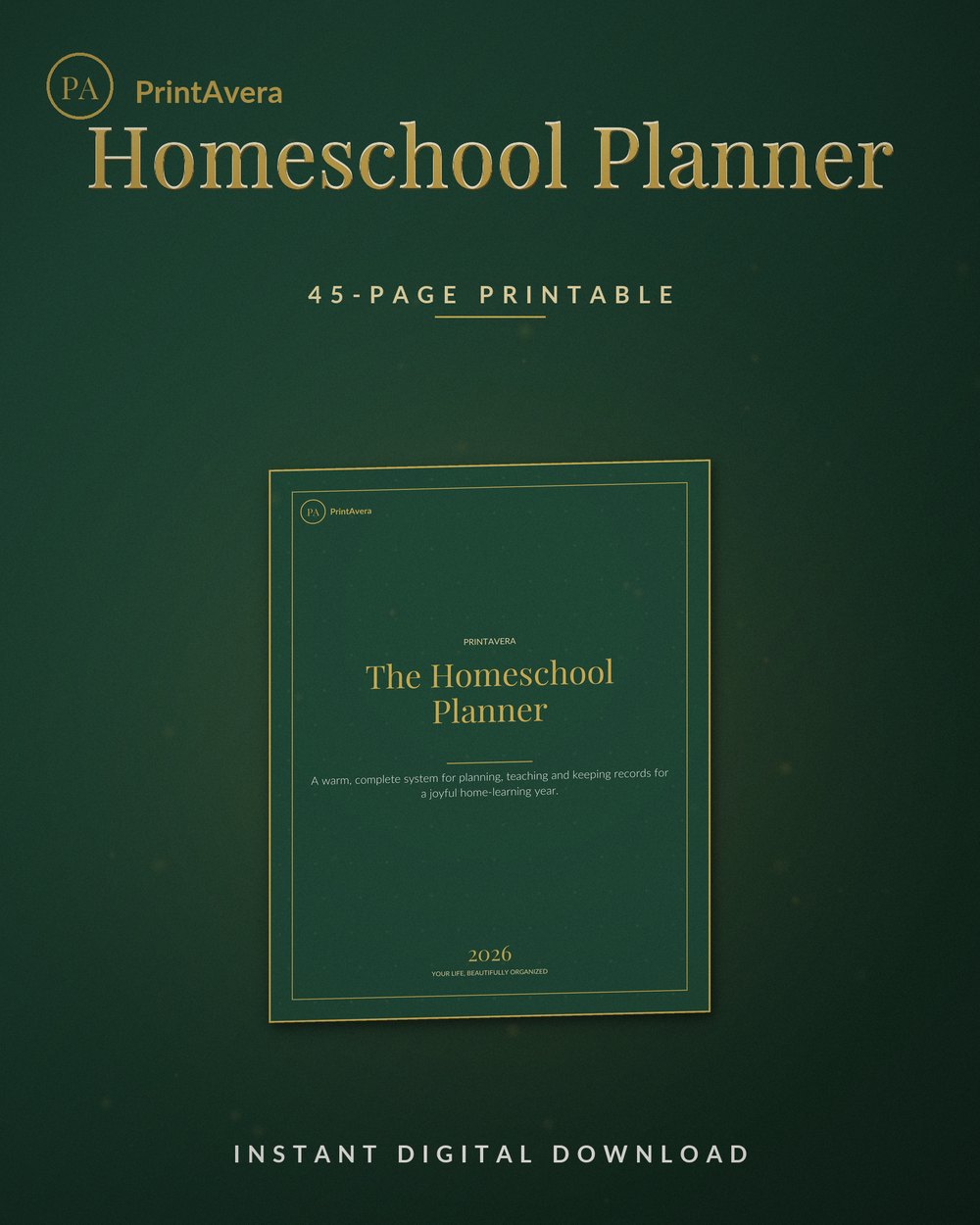
Homeschool Planner
A complete homeschool planner printable that holds your whole year, from year-at-a-glance and curriculum planning to weekly lesson…
Teacher Planner Printable
A complete teacher planner printable that gathers your whole teaching year into one calm system: weekly and daily lesson planning,…
The Complete Guide
Build an Assignment System You Will Actually Trust
The reason assignments feel overwhelming is rarely the volume. It is that they live in too many places: a syllabus PDF, a learning-management notification, a comment your professor made out loud, a group chat. Your brain, sensing that something might be falling through the cracks, keeps half-checking all of them, which is exhausting and still unreliable. The single most useful habit you can build is capture: the moment an assignment exists, write it down in one trusted place, with its real due date and a rough sense of how much effort it will take.
The tasks are usually manageable. It is the holding of them all in your head, all day, that wears you down.
Once everything is captured, the work becomes about sequencing rather than remembering. Large projects are where most people stumble, because a line that says research paper due in three weeks feels like one impossible boulder instead of the eight small stones it actually is. Break it down the day it is assigned: choose a topic, gather sources, outline, draft, revise, format, proofread, submit. Give each step its own mini deadline, and the paper writes itself in the sense that you always know the single next action.
An assignment tracker exists for exactly this, holding every task, due date, and status in one view so nothing depends on memory. Pair it with a quick daily habit of asking what is due soonest, and a slightly longer weekly review where you look at the whole landscape and reshuffle. That weekly look-ahead is the quiet superpower, because it catches the project due in ten days while you still have ten calm days to work on it.
- Capture every assignment the moment it appears, with its true due date and a rough effort estimate.
- Break any project larger than one sitting into named steps, each with its own mini deadline.
- Run a five-minute daily check of what is due next, so today has a clear shape.
- Hold a longer weekly review to spot what is coming and rebalance before it becomes urgent.
Study Structure When No One Is Setting the Schedule
Traditional classrooms hand you a rhythm whether you want one or not: you show up at a time, in a place, with other people doing the same thing. Online and hybrid learning quietly removes that scaffolding, and the freedom is wonderful right up until it is the reason nothing gets done. When every hour is theoretically available for studying, no particular hour feels claimed by it, and the week dissolves. The remedy is to build the structure the classroom used to provide, on purpose.
Start by anchoring study to things that already happen at the same time every day. A focused block after your morning coffee, a short review before dinner, a Sunday-evening look at the week ahead; these borrow stability from routines you already keep. Protect those blocks the way you would protect a class you had paid to attend, because in a real sense you have. It also helps to give your study a physical home, even a corner of a table, so sitting there signals to your brain that this is work time.
Within each block, work in focused stretches with genuine breaks rather than long, blurry, half-distracted hours that leave you tired and unsure what you accomplished. An online student planner printable gives this invisible structure a place to live, mapping your weekly study blocks, deadlines, and review sessions onto a single page so an unstructured program finally has a backbone you can see and follow.
- Anchor study blocks to existing daily habits so they inherit a reliable time.
- Give studying a consistent physical spot that signals focus the moment you sit down.
- Work in focused stretches with real breaks instead of long, distracted sessions.
- Reserve a weekly look-ahead so an online course keeps a rhythm the classroom would have provided.
Reader Favourite
Assignment Tracker
Stay on top of every deadline with a calm, beautiful assignment tracker – a 20-page printable planner plus an auto-calculating Excel workbook.
The College Application Timeline, Demystified
College applications frighten people because they arrive as a swarm. Each school has its own deadline, its own essay prompts, its own recommendation and transcript requirements, and its own financial-aid steps, and somewhere in the middle sits a separate universe of scholarships. Seen all at once, it is genuinely a lot. Seen as a timeline, it becomes a sequence of small, finite tasks, most of which are not hard, only easy to forget.
Seen all at once, it is a lot. Seen as a timeline, it becomes a sequence of small, finite tasks.
Work backward from the earliest deadline and the picture clears. Many months out, you are researching schools and building a balanced list. The summer before is ideal for drafting your main essay while you have time and quiet. Early autumn is for requesting recommendation letters, which means asking teachers kindly and early, because they are writing for many students at once. Then come the supplemental essays, the form-filling, the financial-aid paperwork, and finally the submissions, each with its own date. None of it is overwhelming when it is spread along a line instead of piled in a heap.
Essays and scholarships deserve special respect because both take far longer than anyone expects. A good essay needs a first draft, then distance, then fresh-eyed revision, ideally more than once, so starting early is not perfectionism but simple math. Scholarships reward persistence: keep a running list of opportunities, their amounts, requirements, and deadlines, and treat applying for them as its own small habit rather than a someday task. A college application tracker keeps every school, essay draft, recommendation, and scholarship lead side by side, so instead of lying awake wondering what you have forgotten, you can look at one page and see exactly what comes next.
- Build a balanced list of schools and record each one's deadline and specific requirements.
- Draft your main essay over the summer, then revise it more than once with time in between.
- Request recommendation letters early and politely, well ahead of any deadline.
- Keep scholarships on their own running list and apply to them as a steady weekly habit.
A Job Search That Does Not Live in Your Head
A job search quietly turns to chaos for a predictable reason: applications go out into the world and then vanish from view. You apply on a Tuesday, hear nothing, apply somewhere else on Thursday, and within two weeks you genuinely cannot remember who you contacted, which version of your resume you sent, or whether that promising company ever replied. The effort is there; what is missing is a record. A simple log of every role, the date you applied, the contact, the resume version, and the current stage turns a foggy ordeal into a calm dashboard.
That dashboard quietly solves the hardest part of any search, which is follow-up. Most opportunities are lost not to rejection but to silence on both sides; a polite nudge a week or so after applying, or a thank-you note after an interview, sets you apart simply because so few people do it consistently. When your whole search lives on one page, you can see at a glance which conversations have gone quiet and deserve a gentle check-in, and you stop relying on a flash of memory in the shower to remember them.
Keeping notes from each interview is the other half of the system. Jot down who you spoke with, what they emphasised, and any question that caught you off guard, so your next conversation builds on the last instead of starting cold. A job application tracker spreadsheet holds all of this, the roles, dates, contacts, stages, and notes, so your search has momentum and direction rather than the demoralising sense of shouting into a void.
- Log every application with the date, role, company, contact, resume version, and current stage.
- Schedule a follow-up for each promising lead so it never goes cold from silence.
- Send a brief thank-you note after interviews; it is rare enough to make you memorable.
- Keep notes from each conversation so the next one builds on what you learned.
Find your perfect School, Career & Workplace printable
Each design is an instant digital download — buy it, download it, and start today. Print at home or use it on any tablet.
Leading a Team That Actually Feels Like One
Managers spend most of their attention on tasks, because tasks are visible and measurable, but the thing that quietly determines whether a team thrives is connection. People do their best, most honest work when they feel safe, known, and able to speak up, and that kind of trust does not appear on its own, especially with new hires, remote colleagues, or anyone who tends to stay quiet. It is built in small, repeated moments, most of which take only a few minutes.
Trust is built in small, repeated moments, most of which take only a few minutes.
One of the simplest tools is a thoughtful icebreaker at the start of a meeting. Not the forced, cringe-inducing kind, but a genuine, low-pressure question that gives everyone, including the introverts, an easy on-ramp into the conversation. A good opening question lowers the temperature of a room, surfaces the human being behind the job title, and makes the harder discussions later in the meeting noticeably easier because people are already warmed up and talking.
The aim is steady, not staged. A few well-chosen questions sprinkled across your meetings build familiarity over weeks, and familiarity is what lets people disagree productively, ask for help, and admit when something is not working. A team building questionnaire printable gives managers a ready bank of these prompts, so you are never scrambling for an opener and quieter team members always have a gentle, structured way to be heard.
- Open meetings with a genuine, low-pressure question that gives everyone an easy way in.
- Pay special attention to new hires, remote staff, and quieter voices who need an invitation.
- Aim for small, repeated moments of connection rather than occasional big team events.
- Keep a ready bank of prompts so you are never scrambling for a good opener.
Frequently Asked Questions
How do these planners and trackers work after I buy them?
Most are instant digital downloads, so the file arrives right after purchase with nothing to wait for in the mail. You can print as many copies as you like, at home or at a print shop, and reprint a fresh page whenever you need one. Many people keep a printed copy on their desk for daily glancing and save the original file for reprinting. If a product is offered in an editable format, you can also type directly into it before printing, which is handy for anything you update often.
What is the difference between an assignment tracker and a student planner?
An assignment tracker is narrow and task-focused: it holds every piece of work and its due date so you always know what is outstanding. A student planner is broader, usually offering weekly layouts, study blocks, and space for notes, goals, or reflections. The two work beautifully together, with the planner holding the shape of your week and the tracker holding the running list of work inside it. If you only want one to start, choose the planner for structure or the tracker for pure deadline control, depending on which problem feels louder right now.
When should I start using a college application tracker?
Earlier is almost always better, ideally before deadlines begin arriving so you can map the whole timeline out calmly rather than reactively. That said, if you have already started applying, beginning now is still genuinely worthwhile, because it helps you catch anything missed and prioritise what is most urgent. The real benefit is seeing every school, essay, recommendation, and scholarship in a single view instead of tracking them in your head. Even a few weeks of clear oversight can take a surprising amount of late-night worry off your shoulders.
Can a simple printable really make a difference in a job search?
Yes, because the biggest job-search problems are usually organisation and follow-through, not lack of effort. Logging each application and its stage keeps you from losing track of conversations or accidentally applying to the same role twice. Seeing your whole search on one page also makes it far easier to follow up at the right moment, which is where many opportunities are quietly won or lost. It will not write your resume for you, but it makes sure the work you do put in never disappears into the fog.
How do I keep up with follow-ups without being annoying?
The key is timing and tone rather than frequency. A polite check-in roughly a week after applying, or a short thank-you note within a day of an interview, reads as professional interest, not pestering. Space your follow-ups out and keep them brief and warm, and you will land on the right side of persistent. A tracker helps enormously here because it shows you at a glance which conversations have gone quiet and when you last reached out, so you nudge at sensible intervals instead of guessing.
Are team building questionnaires only useful for big companies?
Not at all, and in many ways small teams benefit even more. A group of three, a remote pod, or even a single recurring weekly meeting can be transformed by a few well-chosen questions that help people connect as humans. The goal is gentle, low-pressure conversation that builds trust over time, and that matters just as much in a tiny team as in a large department. Because the moments are short and repeatable, they fit easily into the meetings you are already having.
I am a student, a job seeker, and lead a small team. Can I use all of these together?
Absolutely, and many people genuinely wear all three hats at once. The underlying skill is the same across them: get commitments out of your head and into a trusted system, then review that system regularly so nothing slips. You might run an assignment tracker for coursework, a job application tracker for your search, and a questionnaire to warm up your meetings, all sharing one weekly review habit. Keeping them in consistent formats means switching between roles feels less like juggling and more like turning a page.
Why PrintAvera?
Every PrintAvera design is created in-house to a five-star standard — considered layouts, calm forest-green and gold styling, and typography chosen to make every page feel intentional. Each one is an instant digital download you can print at home or use on any tablet in minutes. Beautiful enough that you will actually want to use it, every single day.
Explore More Collections