PrintAvera Collection
The First Year After Birth, Beautifully Documented
Journals and trackers for the postpartum journey and new mom life.
No one quite prepares you for the first hours at home with a new baby, when the visitors have gone quiet and the house feels both fuller and stranger than before. The pregnancy had a shape to it, a countdown, a due date circled somewhere on the calendar. Then the baby arrives and time dissolves into a blur of feeds and naps and small astonishments, and you find yourself wide awake at three in the morning, wondering if anyone else has ever felt quite this tender and this tired at once. This is the fourth trimester, the season no one talks about nearly enough, and it deserves the same gentleness and attention the nine months before it received.
A postpartum journal will not make any of this easier in the way a full night's sleep would. What it can do is give the days somewhere to land. When everything feels formless, a few written lines turn the blur into something you can hold and, eventually, look back on. It is a way to notice the tiny firsts before they slip past, to track the feeds and the sleep so the patterns become visible, and to be honest on paper about the parts of new motherhood that are wonderful and the parts that are simply hard. A new mom journal is not another task on an already impossible list. It is a small kindness you offer yourself.
This guide is written for exactly this season, with all its beauty and its weariness held together. We will talk about what the fourth trimester actually asks of your body and heart, how to rest and recover when every eye is on the baby, how to document those early firsts without turning memory-keeping into pressure, and how gentle tracking can help you spot patterns in feeding and sleep. Along the way you will meet tools made for this work, from the Postpartum Journal and My Pregnancy Journal to The Busy Mom's Planner and a Self Care Tracker Printable, each designed to carry a little of the load so you can spend your attention where it matters most, on the baby and on yourself.
Shop the Collection
Postpartum & New Mom Printables
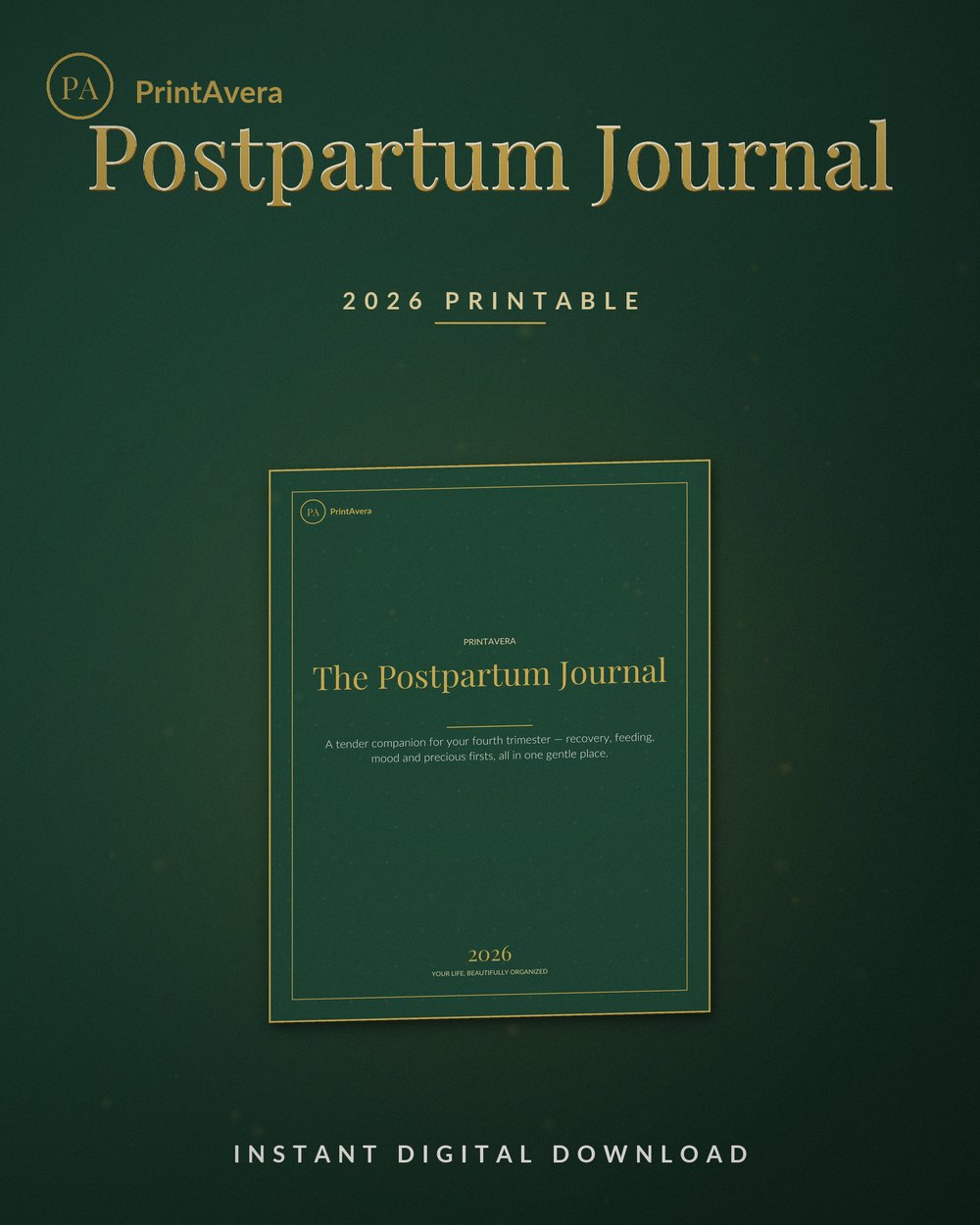
Postpartum Journal
A tender postpartum journal printable for the fourth trimester, with recovery, feeding, nappy and baby sleep logs plus daily mood…
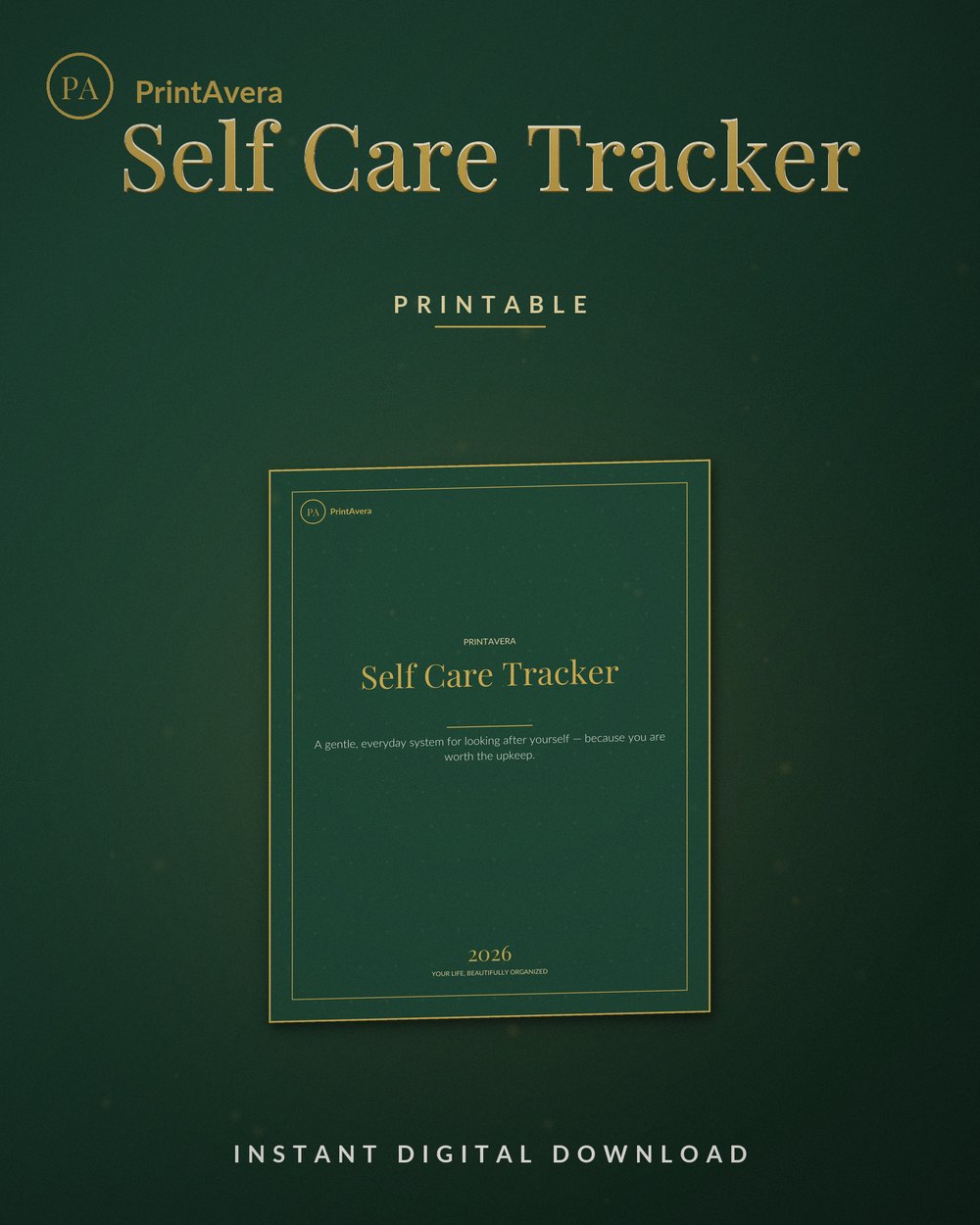
Self Care Tracker Printable
A warm, complete self care tracker printable that turns looking after yourself into a gentle daily habit
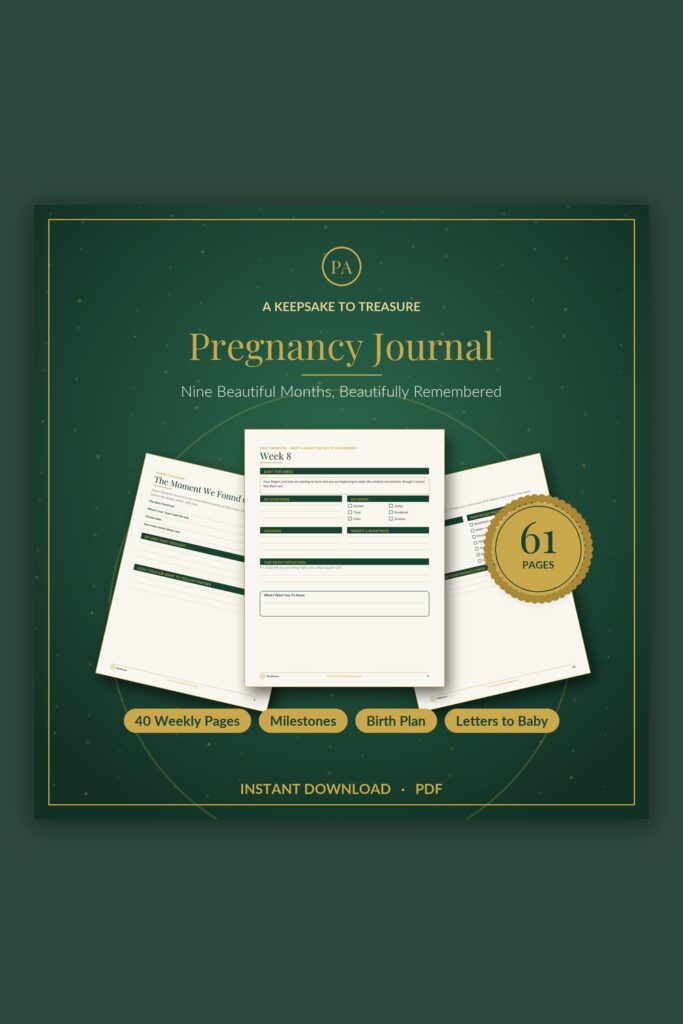
Pregnancy Journal Printable
A warm, joyful keepsake that holds every feeling, flutter and milestone of all nine months — so your baby knows how deeply they were loved before you ever met.
Busy Mom Planner Printable
Your whole family in one calm, beautiful command center – from chaos to calm, mama.
The Complete Guide
The fourth trimester, and what no one warns you about
The phrase fourth trimester describes the roughly twelve weeks after birth, when your baby is adjusting to life outside the womb and you are adjusting to a body, a home, and an identity that have all quietly changed overnight. It is a real and recognised period of transition, though it rarely gets the same careful preparation as the pregnancy itself. Your baby is learning that the world is safe. You are learning to read a person who cannot yet tell you what they need. Both of you are doing something genuinely enormous, mostly in the small hours, mostly without applause, and often on very little sleep at all.
The fourth trimester deserves the same gentleness the nine months before it received.
What no one quite warns you about is the gap between how you imagined this feeling and how it actually feels. The photographs suggest calm and glow; the reality includes leaking, aching, weeping for no reason you can name, and a love so fierce it frightens you a little. All of that can be true in the same afternoon. Reading about postpartum support before you need it helps, but living it is different, and there is nothing wrong with you if the early weeks feel less like a greeting card and more like the hardest, tenderest thing you have ever done. It is not a sign you are failing. It is the fourth trimester, doing what it does.
This is where a postpartum journal earns its place. Not as a record to be kept perfectly, but as somewhere to put the feelings down so they stop rattling around unspoken at two in the morning. Writing a single honest line, even I am exhausted and I would not trade this, helps you recognise what you are carrying. A new mom journal gives shape to days that otherwise dissolve, and reading back over them weeks later, you begin to see how far you and your baby have already travelled. The point is never a beautiful page. The point is being witnessed, even if the only witness for now is you.
- Let the fourth trimester be its own season, with recovery expectations to match.
- Write one honest line a day rather than aiming for a full, tidy entry.
- Name the hard feelings on paper so they stop circling in your head at night.
- Read back weekly to notice how far you and your baby have already come.
Rest and recovery when every eye is on the baby
In all the understandable delight over a new baby, it is remarkably easy for the person who gave birth to slip to the bottom of the list. Yet whether your birth was straightforward or complicated, your body has been through one of the most significant physical events a human can experience, and recovery takes far longer than the two weeks most people imagine. Tissues heal, hormones swing, sleep is broken by design, and none of it runs to a neat schedule. Treating your own recovery as something that matters, rather than an afterthought once the baby is settled, is not indulgent. It is the foundation everything else is built on.
A rested, nourished mother is not a luxury for the baby. She is the whole point.
The trouble is that rest is hard to claim when every visitor, every message, and sometimes your own inner voice is focused on the baby. It helps to decide in advance that being cared for is part of the plan, not a weakness. A Self Care Tracker Printable can make the invisible basics visible again: have you eaten something proper today, taken any medication you were given, drunk enough water, been outside for five minutes of daylight. A wellness tracker sounds almost too simple to matter, and yet on the foggy days it is often the difference between a need remembered and a need quietly ignored until it becomes a bigger problem.
Keep the bar gently low. Self-care in the fourth trimester is rarely a long bath and a face mask; more often it is a glass of water within reach, a nap taken without guilt, and a short walk around the block while someone else holds the baby. Tracking these small things is not about optimising yourself. It is about noticing, on the days when everything blurs, whether you have met your own most basic needs, and letting the pattern nudge you when you have not. Ask for help and accept it without apology. A rested, nourished mother is not a luxury for the baby. She is the whole point.
- Plan for your own care in advance, the way you planned the nursery.
- Track the basics: food, water, any medication, daylight, and rest.
- Treat naps as recovery, not laziness, and take them without guilt.
- Accept every offer of help, and let people bring meals and hold the baby.
Reader Favourite
Postpartum Journal
A tender postpartum journal printable for the fourth trimester, with recovery, feeding, nappy and baby sleep logs plus daily mood…
Documenting baby's firsts without the pressure of perfect
The early months are strangely paradoxical: the days feel endless, and yet the whole season is gone before you can quite believe it. The first proper gaze, the first time those tiny fingers curl around yours, the first gummy almost-smile that might just be wind, they arrive without warning and fade from memory faster than anyone expects. Documenting these firsts is not vanity. It is a gift to the tired-but-happy version of you who, a year from now, will struggle to remember exactly how small this all once was. Sleep steals the details, and a few dated lines rescue them before they go for good.
The point is to catch the moment, not to curate a museum.
The catch is that memory-keeping can quietly turn into one more thing to feel behind on. A perfect baby book, a colour-coded scrapbook, a beautifully lettered milestone for every single week, that is a lovely idea and an unkind expectation to set for someone running on three hours of sleep. Let it be imperfect. A baby milestone chart you fill in when you remember is worth infinitely more than an exquisite one you abandon by week two. Snap the photo, jot the date, note the tiny thing that made you laugh, and move on. The point is to catch the moment, not to curate a museum.
If you kept a My Pregnancy Journal through the months of waiting, the Postpartum Journal picks up the thread where the story continues, so the whole arc from bump to baby lives in one gentle place. If you did not, it is genuinely never too late to begin. Start today, from wherever you are, with what you can remember. A single honest entry now is better than a perfect one you keep meaning to write. Over time these pages become something quietly precious: a baby book in the truest sense, less about milestones hit on schedule and more about the ordinary, extraordinary texture of the life you are all learning to live together.
- Capture firsts in a dated line or two rather than a full, finished page.
- Keep the journal where you feed, so writing rides a moment you already have.
- Let go of the perfect scrapbook; a filled-in imperfect one wins every time.
- Note the ordinary details, not only the headline milestones, they fade fastest.
Feeding and sleep, and the quiet power of noticing patterns
Newborn feeding and sleep can feel utterly random, a fog of cluster feeds and cat naps with no discernible logic to any of it. Tracking them, at least loosely, is one of the few things that turns that fog into information. When you jot down roughly when your baby fed, for how long, and when they slept, patterns you could never hold in a sleep-deprived head begin to surface on the page. You might notice the longer stretch tends to come after the evening feed, or that the fussy hour is fairly predictable, or that a growth spurt is passing. None of this is about rigid schedules. It is simply about seeing what is actually happening.
Notice the pattern, then let the pattern serve you, never the other way around.
A baby tracker also earns its keep at appointments and in the small hours, when a tired brain cannot recall whether the last feed was one hour ago or three. Noting feeds, diaper changes, and sleep gives you a simple record to glance at, and something concrete to share with your doctor or care provider if a question comes up. The aim is never to feed the numbers or to compete with anyone else's baby. It is to lighten the mental load of remembering, and to spot early when something has shifted, so you can respond gently rather than guess. Notice the pattern, then let the pattern serve you.
As the weeks pass, a faint rhythm usually emerges from the chaos, and life beyond the baby, the meals, the appointments, the older children, the endless small admin, needs somewhere to live too. The Busy Mom's Planner is built for exactly this widening circle, a place to hold the household's moving parts when your working memory is fully occupied elsewhere. Pairing it with a simple daily routine planner helps the day find a loose shape without forcing your baby into a timetable they are not ready for. The goal is a container calm enough to hold real life, and flexible enough to bend when, inevitably, the baby has other plans.
- Log feeds and sleep loosely to reveal patterns you cannot hold in your head.
- Note diapers, feeds, and naps so appointments and night wakings are easier.
- Watch for shifts that signal a growth spurt rather than chasing a rigid schedule.
- Use a wider planner for the household admin that piles up beyond the baby.
Find your perfect Postpartum & New Mom printable
Each design is an instant digital download — buy it, download it, and start today. Print at home or use it on any tablet.
Journaling as a way to process it all
Beyond memories and feeds, there is the simple, steadying act of writing to understand what you are living through. New motherhood stirs up more than most seasons of life: love and grief for your old freedoms, gratitude and resentment, confidence and pure bewilderment, sometimes all before lunch. Journaling gives those tangled feelings a way out of your head and onto the page, where they are easier to look at and far less frightening. You do not need to write well, or write much. Postpartum journaling is less about producing anything and more about processing, about hearing your own thoughts clearly for a moment in a very noisy season.
The baby will not remember these days. You deserve to.
If a blank page feels like too much, prompts do the gentle work of starting for you. A few good postpartum journal prompts, or journal prompts for new moms, can unlock more in three minutes than an hour of staring at nothing. Try: what surprised me about today, what do I want to remember, what did I find hard and how did I get through it, what would I tell another new mother tonight. Journaling for moms works best when it is small and forgiving, a line here, a paragraph there, whenever the baby finally sleeps. There are no marks for length, and there is certainly no failing at it.
Over months, these entries quietly become a map of your motherhood journey, evidence of a version of yourself who was doing something hard and doing it with love. Reading back, you will be astonished at what you had already forgotten, and moved by how much you grew without noticing. This record is not only for your child to read one day, though that is a lovely thought. It is for you: proof, in your own handwriting, that you showed up in the tenderest and most tiring season, again and again. The baby will not remember these days. You deserve to.
- Write to process, not to perform; no one is grading the page.
- Lean on prompts when the blank page feels like one demand too many.
- Capture the hard moments too, then note how you got through them.
- Read back over the months to see the growth you missed in real time.
Frequently Asked Questions
What should I actually write in a postpartum journal?
There is no right way, which is both freeing and a little daunting. If you are staring at a blank page, lean on prompts: what surprised you today, what you want to remember, what felt hard and how you got through it. Some days you will jot a single dated line about a first, and some days you will pour out a full page because you needed to. Postpartum journal prompts and journal prompts for new moms exist precisely to take the pressure off starting. Mix the record-keeping with the reflection, the feeds and firsts alongside the feelings, and let it be as short as it needs to be. A messy, honest line beats a perfect entry you never write.
I have a newborn and barely a spare minute. How do I keep this up?
Gently, and imperfectly, is the honest answer. The trick is to shrink it until it fits the life you actually have, not the one the glossy photos imply. Keep the journal where you feed, so writing rides a moment you already spend sitting still, and let a single line count as a complete entry. Missing days is not failing; it is having a newborn. The Busy Mom's Planner and a simple daily routine planner can hold the wider admin so your journal stays a small pleasure rather than another chore. Aim for good enough, done often, over perfect and abandoned. Three honest minutes when the baby finally sleeps is plenty, and far more than most of us manage some weeks.
What is the difference between a pregnancy journal and a postpartum journal?
They cover two chapters of the same story. My Pregnancy Journal is for the months of waiting: the bump photos, the kicks, the scans, the slow anticipation of someone you have not met yet. The Postpartum Journal picks up after the birth, when the focus shifts to recovery, feeds, firsts, and finding your feet as a new mother. Many people love using both, so the whole arc from expecting to holding lives in one continuous place. If you only start now, that is completely fine; the postpartum chapter stands perfectly well on its own. Choose based on where you are, and know it is never too late to begin from today.
How do feeding and sleep trackers help without making me anxious?
Used well, a baby tracker reduces anxiety rather than feeding it. The goal is not to hit numbers or to compare your baby to anyone else's, but to lighten the mental load of remembering and to make patterns visible that a tired brain cannot hold. Noting roughly when your baby fed and slept helps you answer the three in the morning question of when the last feed was, and gives you something concrete to mention at appointments. If tracking ever starts to feel like pressure rather than relief, loosen it or set it down for a while. It is a tool to serve you, not a test to pass. Notice the pattern, then let it quietly guide your day.
Is it normal to feel low or overwhelmed after having a baby?
Yes, mood changes after birth are very common, and you are not alone or doing anything wrong. The early weeks bring huge hormonal shifts and very little sleep, and many new mothers feel tearful, anxious, or flat at times. Journaling can be a genuinely supportive way to notice and process how you are feeling, but it is a gentle self-care and organising tool, not a substitute for care. If low or anxious feelings persist beyond a couple of weeks, feel overwhelming, or you ever have thoughts of harming yourself or your baby, please reach out to your doctor or care provider, or contact a postpartum support helpline. Asking for help is one of the strongest, most loving things you can do, for you and for your baby.
How are these journals and planners delivered, and can I print them at home?
Most items are instant digital downloads, so once you have checked out you receive a file straight away, with nothing to wait for in the post, which matters rather a lot when you have a newborn. Printables can be printed at home or at a copy shop as many times as you like, so you can run off fresh pages whenever you need them or reprint a section that filled up faster than expected. Because the file stays yours, you can reuse it for a second baby down the line without buying again. Whether you prefer to write by hand on printed pages or keep things on a device, the format bends to fit how you actually live right now.
I did not journal during pregnancy. Is it too late to start now?
Not in the slightest. The best time to begin is simply today, from wherever you and your baby currently are. You do not need to reconstruct the weeks you missed or feel guilty about them; a new mom journal works perfectly well starting in the middle of the story. Write down what you remember of these days, then carry on from here, one honest line at a time. In a year you will be grateful for whatever you captured, however late you began, and you will not be counting the pages you skipped. Motherhood is full enough of quiet guilt already. Let this be one place that only ever asks you to begin again, gently, from now.
Why PrintAvera?
Every PrintAvera design is created in-house to a five-star standard — considered layouts, calm forest-green and gold styling, and typography chosen to make every page feel intentional. Each one is an instant digital download you can print at home or use on any tablet in minutes. Beautiful enough that you will actually want to use it, every single day.
Explore More Collections