PrintAvera Collection
Build Better Habits, Reach Bigger Goals
Habit trackers, goal-setting systems and reading logs to help you grow a little every day. Designed around small, sustainable steps so new routines actually stick – and you can watch your progress add up.
There is a quiet kind of progress that does not announce itself. It looks like the same small action repeated on an ordinary Tuesday, then again the following week, until one day it feels less like effort and more like who you are. Whether you are trying to read before bed instead of scrolling, move your body most mornings, or finally make headway on a goal that has been waiting in the wings, the path is rarely paved with willpower. It is paved with days designed to gently carry you forward, even when your motivation has quietly left the building.
Most of us do not need another reason to feel behind. What helps is a calmer system: a way to see the next small step, to notice the streak you are quietly building, and to break a big ambition into pieces small enough to actually begin. The problem is almost never that you are lazy or lack discipline. It is that you have been asking yourself to rely on memory and mood, two of the least reliable tools you own, to carry plans that deserve real structure underneath them.
This guide is built around that gentler idea. We will look at how habits genuinely form, why identity matters more than any streak, how to break a goal into a season you can actually finish, and how to protect the hours where real life happens. Along the way you will find tools made for exactly this work, from a habit tracker printable to a 90 day goal planner, so the structure does the remembering and you get to focus on the only thing that ever really mattered: showing up one more time.
A Peek Inside
See the Quality for Yourself
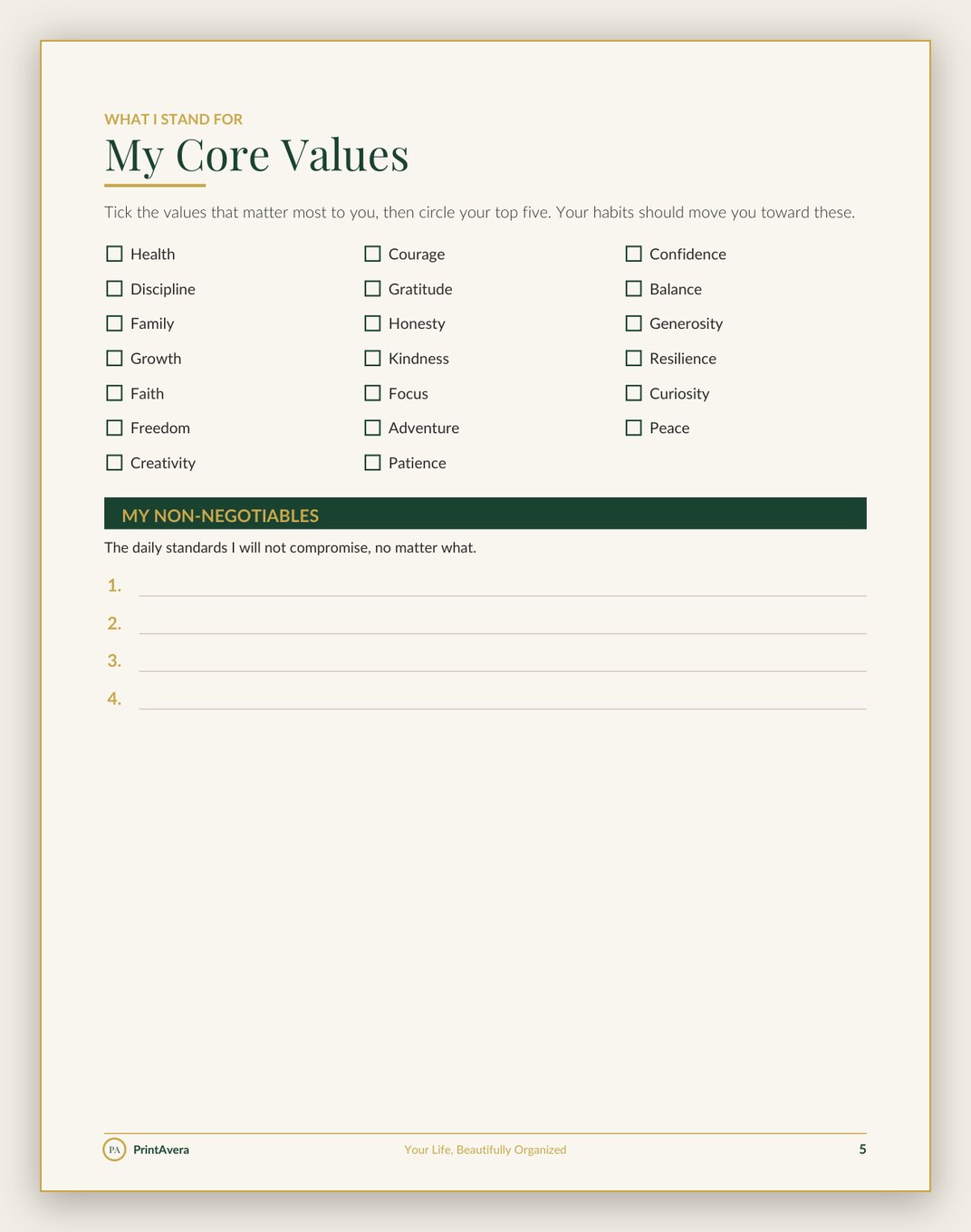
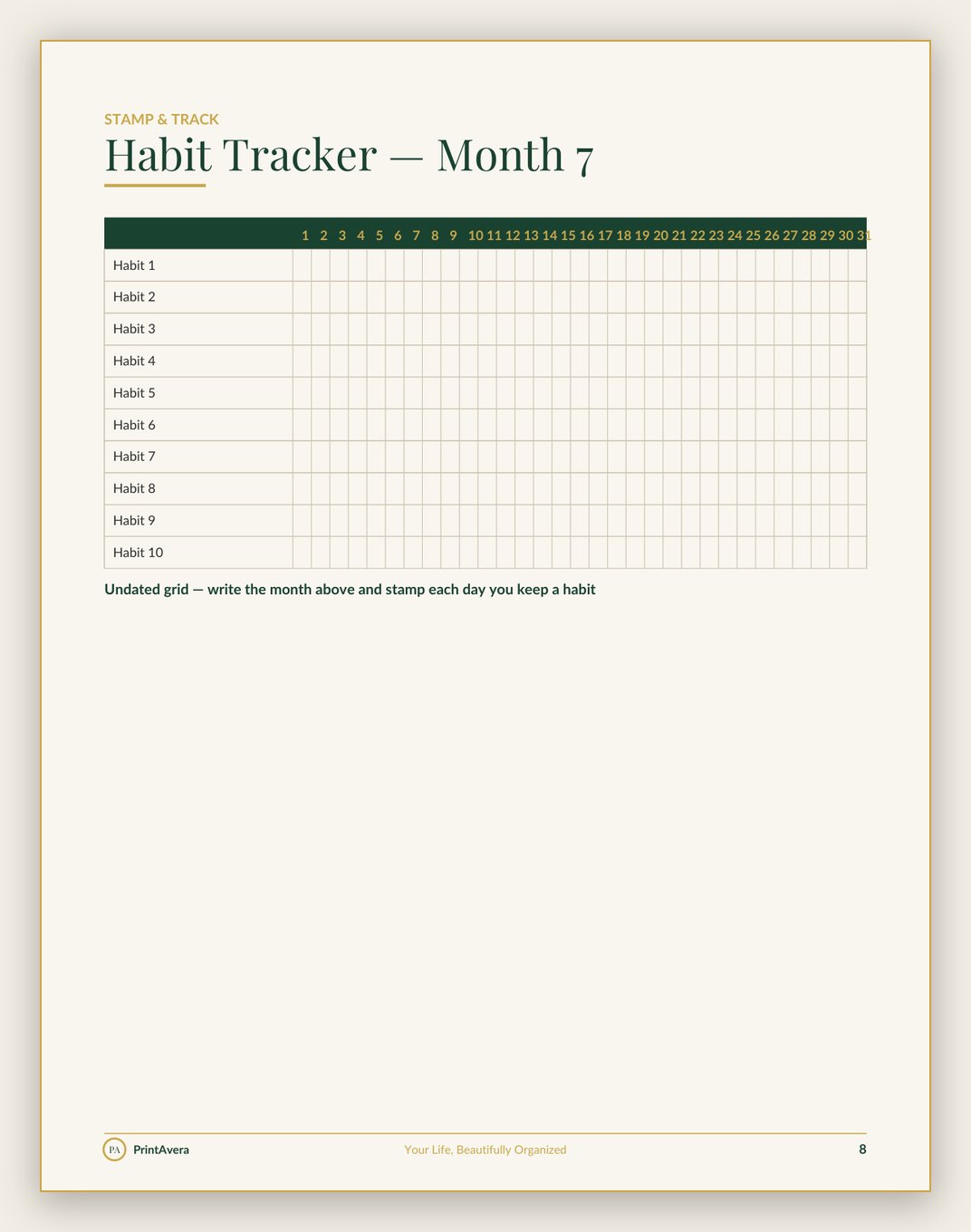
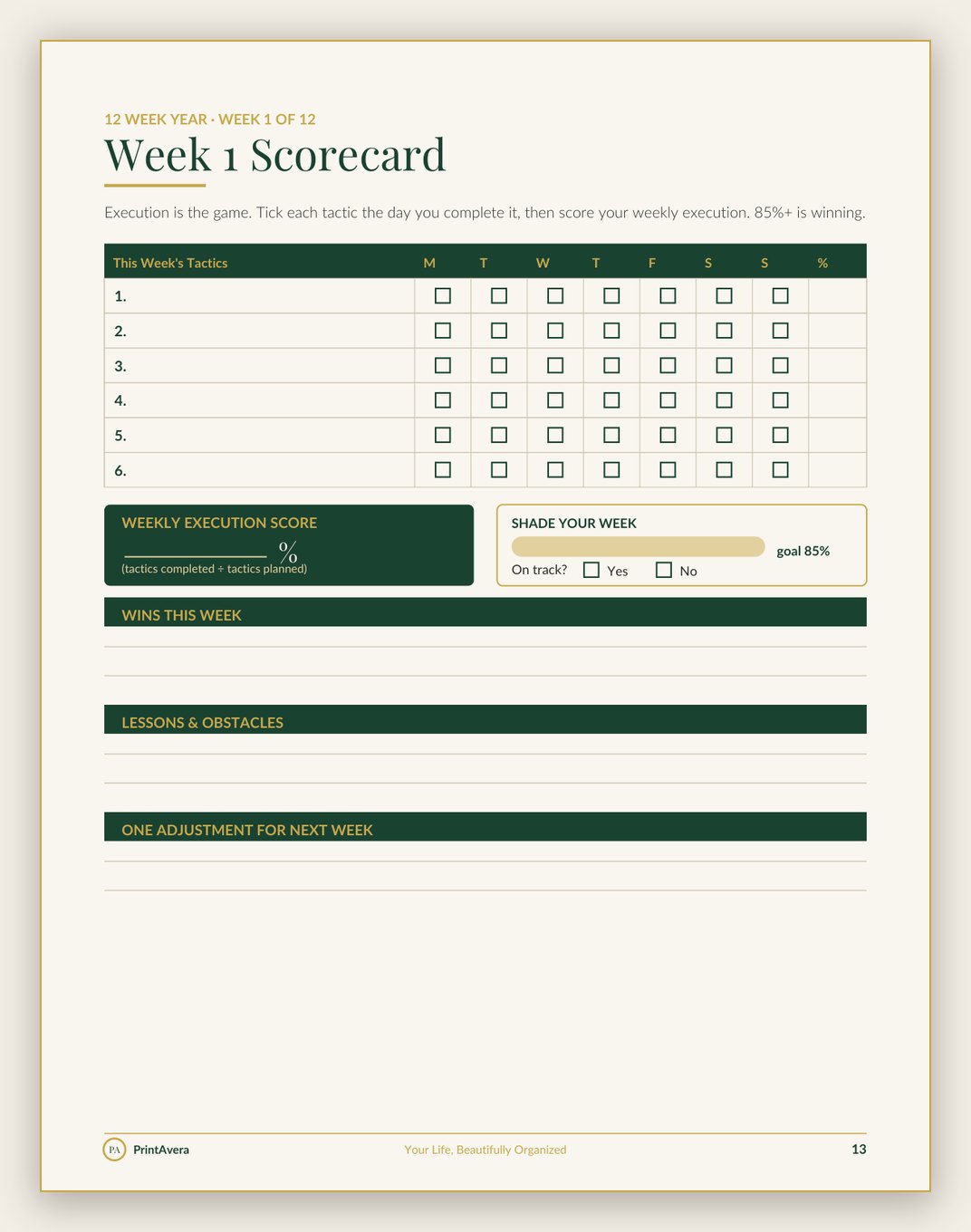
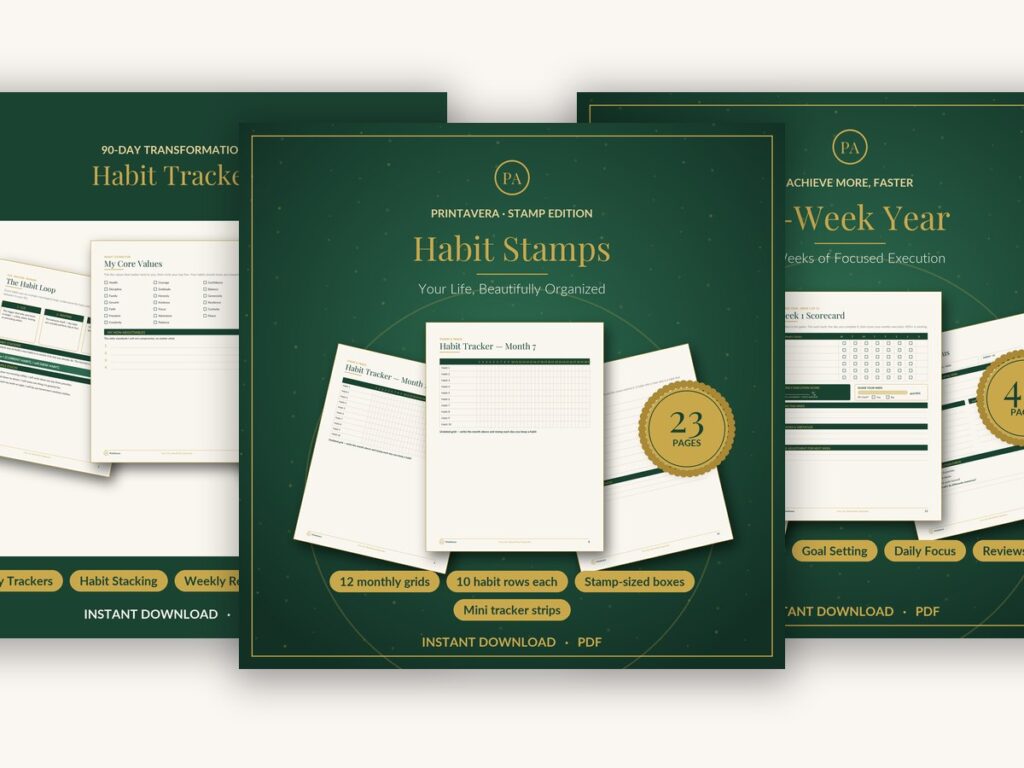
Real pages from this collection — every spread designed in our signature forest-green and gold style. See them all on Etsy →
Shop the Collection
Goal, Habit & Personal Growth
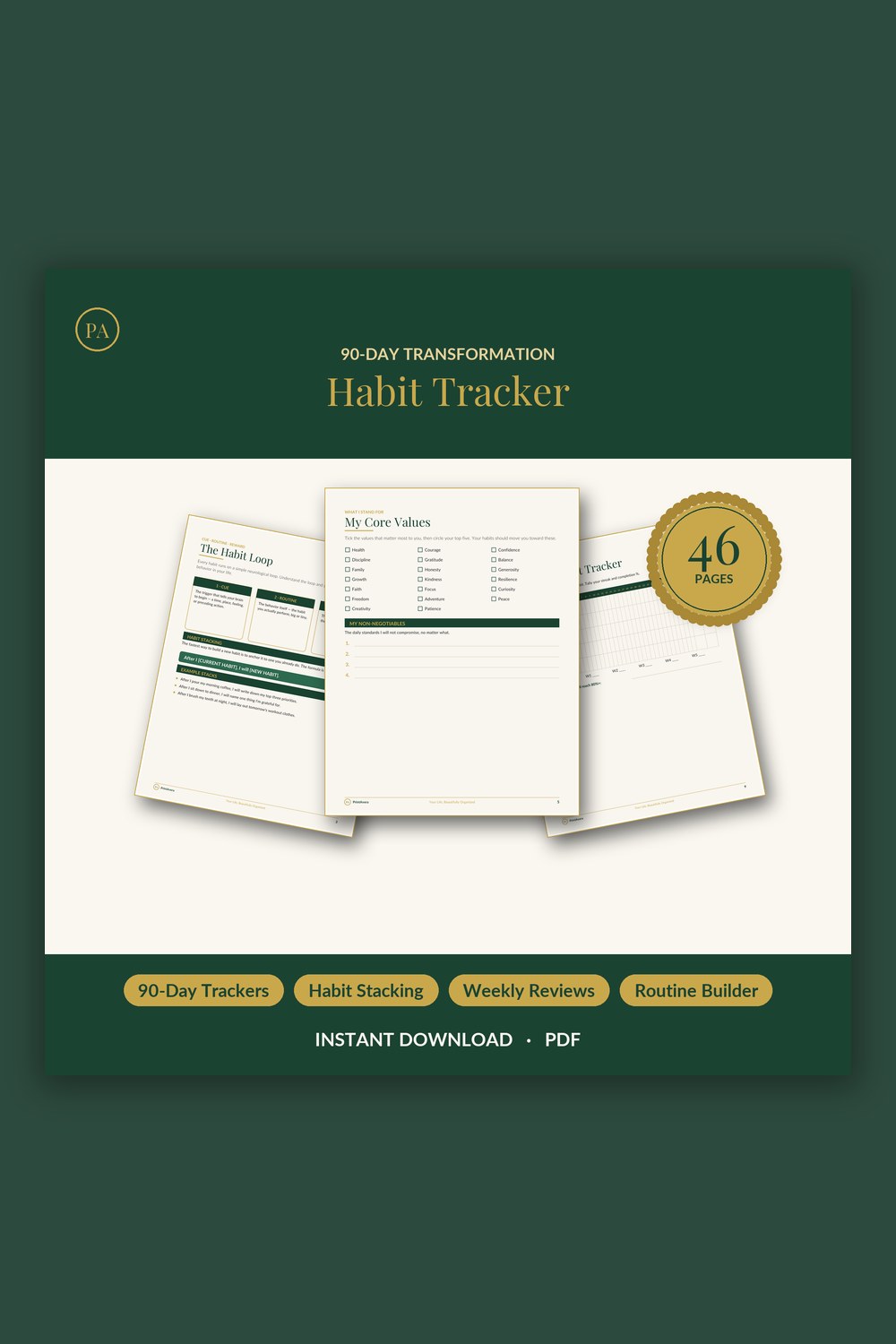
Habit Tracker Printable
Build life-changing habits in 90 days with a calm, beautiful tracking system you'll actually want to use.
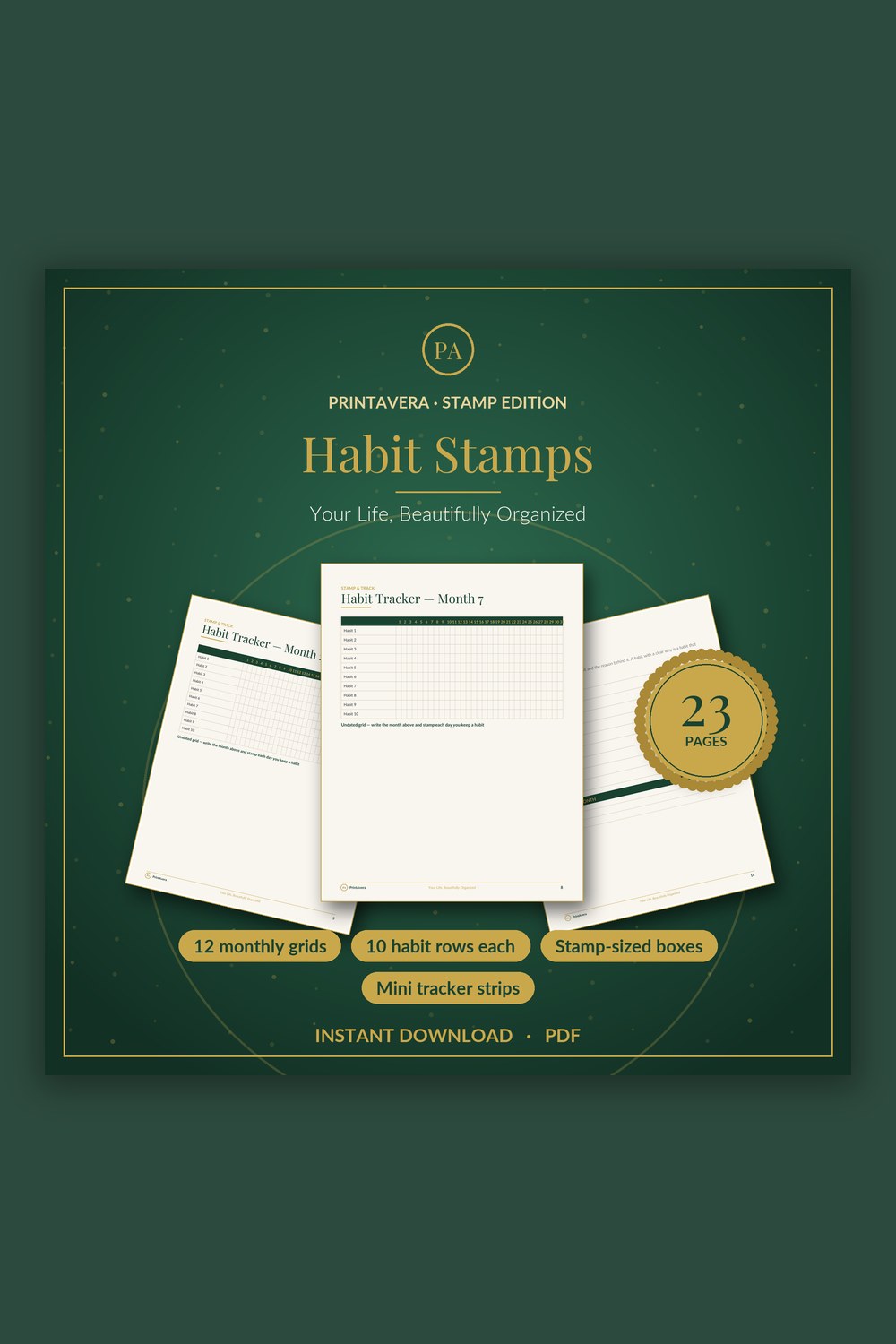
Habit Tracker Stamp Printable
A clean, minimalist habit tracker designed for your favourite rubber stamps — generous boxes, twelve monthly grids and mini strips that turn building good habits into a satisfying daily ritual.
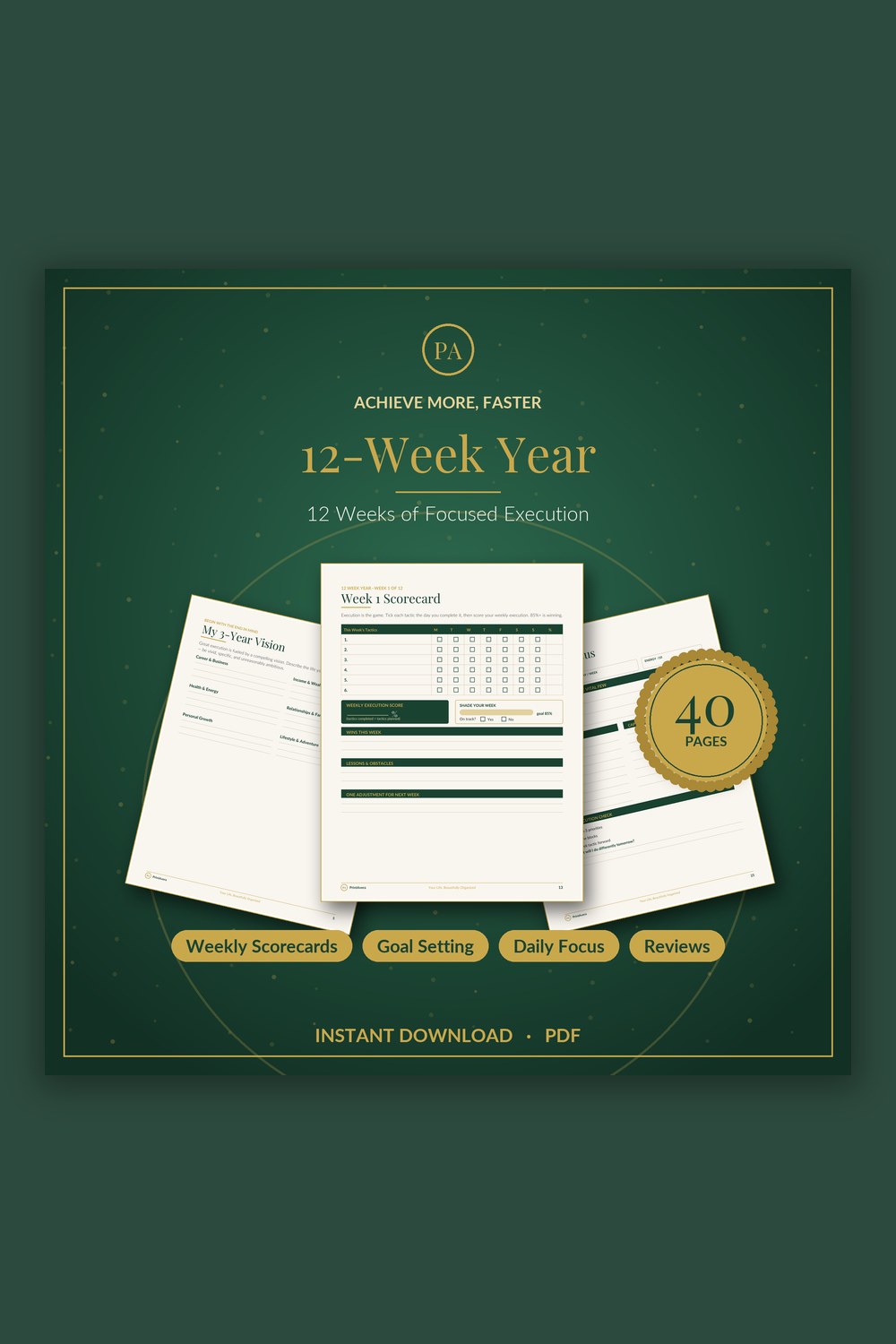
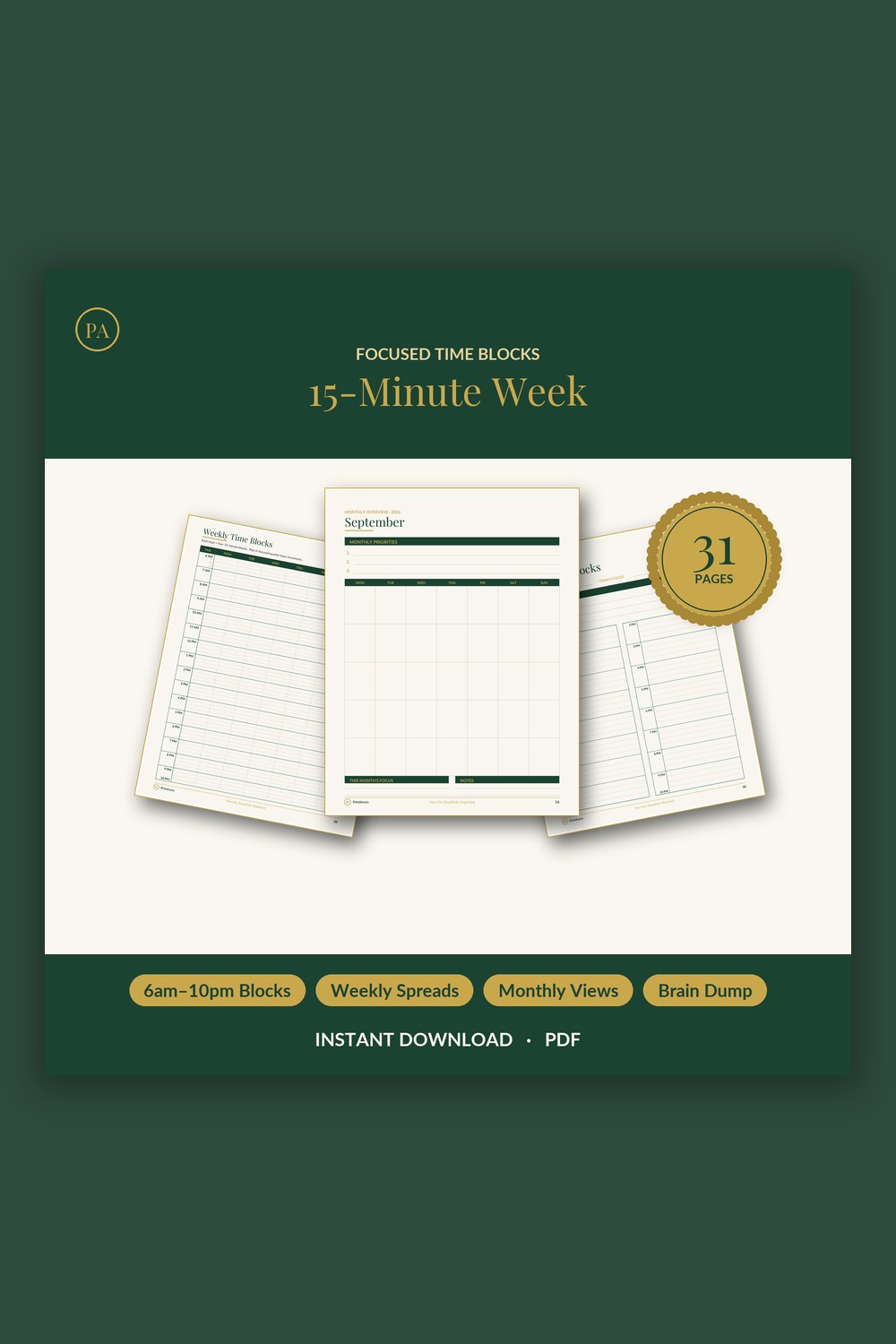
15 Minute Weekly Planner
Plan your days in focused 15-minute blocks — and finally see where your time really goes.
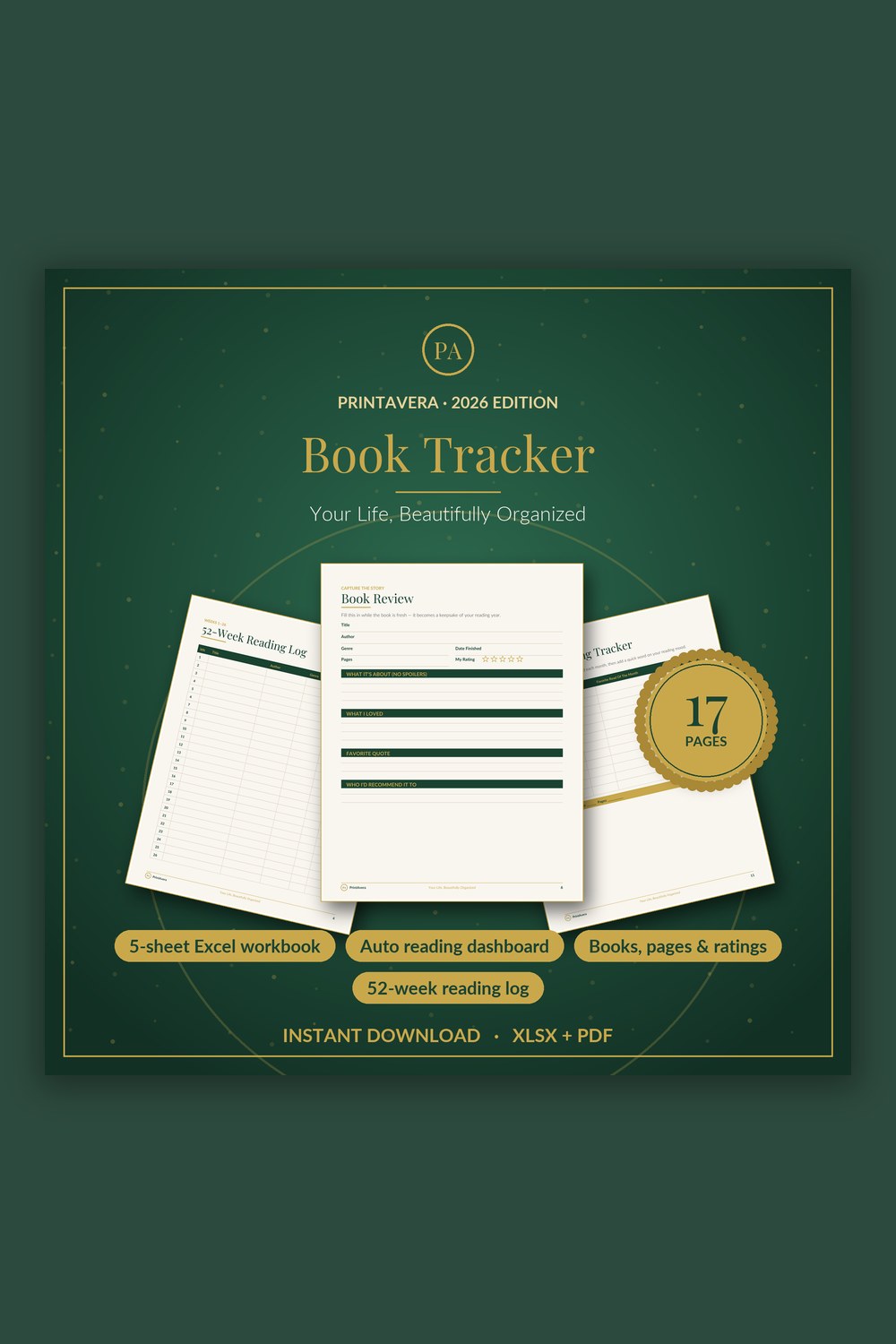
Book Tracker Spreadsheet
Track every book you read, watch your reading goal fill up automatically, and remember the stories you loved — all in one beautiful spreadsheet plus a printable reading journal.
Vision Board Printable Kit
A vision board printable kit that goes beyond the picture: a whole-life board, seven life-area boards, goal-setting worksheets, a…
Gratitude Journal Printable
A warm, complete gratitude journal printable that turns noticing the good into a gentle daily habit
100 Day Challenge Tracker
A motivating 100 day challenge printable that turns one big goal into a daily habit you can actually see
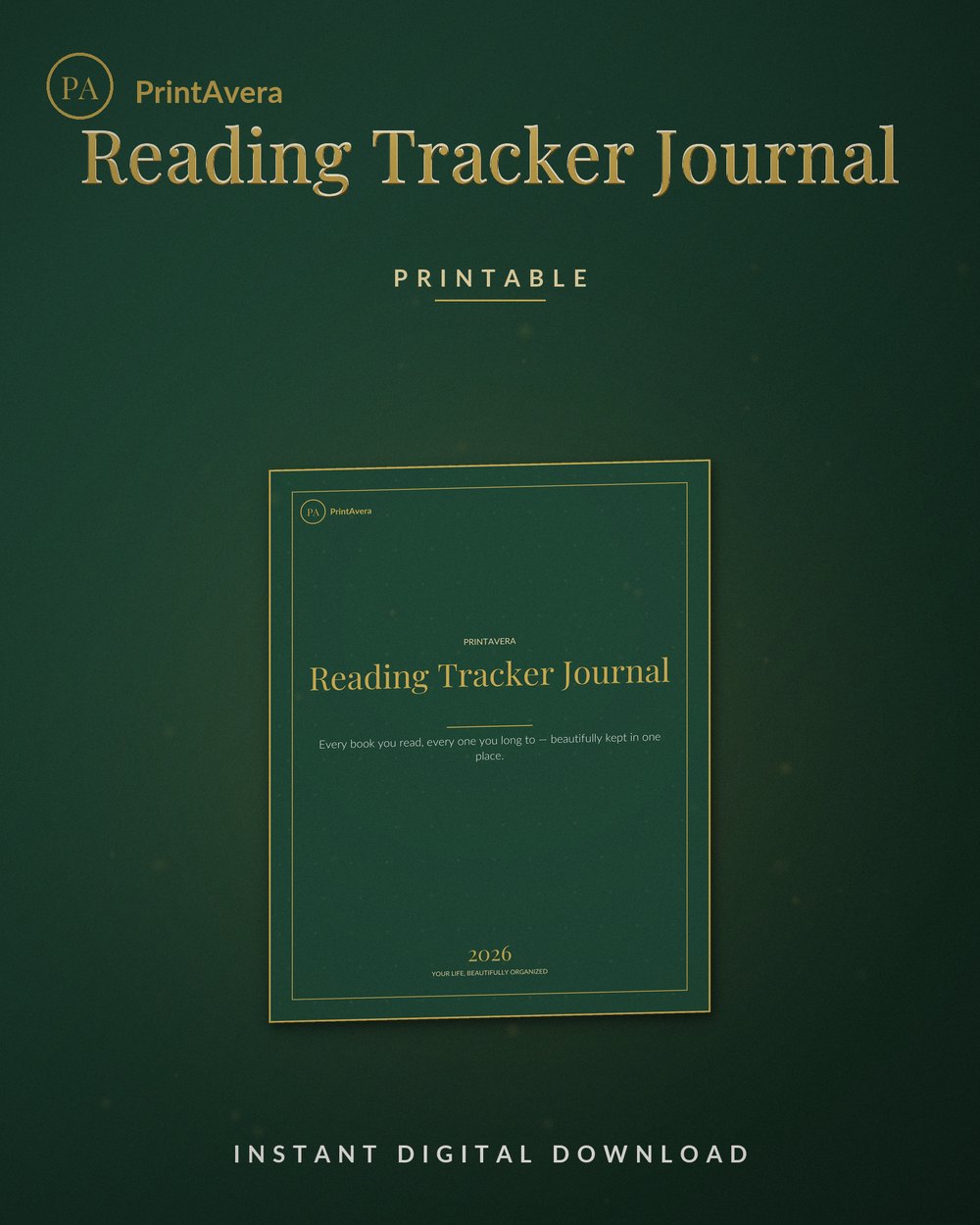
Reading Tracker Journal
A complete reading tracker printable that keeps every book you read and every one you're longing to read in one beautiful place
The Complete Guide
How habits really form, minus the myths
You have probably heard that it takes twenty one days to build a habit. It is a tidy number, and it is also not true. That figure traces back to an old observation about how long patients took to adjust to surgery, not to rigorous habit science. The honest answer is that the time varies enormously depending on the person, the behaviour, and how consistent your surroundings are. Something simple, like drinking a glass of water after you wake, settles in quickly. Something demanding, like a daily writing practice, can take months. Counting days is far less useful than reducing friction and repeating the action in a steady context.
Counting days matters far less than reducing friction and showing up in the same steady context.
What actually drives a habit is the loop of cue, routine, and reward, repeated until your brain stops asking whether you feel like it. The cue is the trigger, the routine is the action, and the reward is the small payoff that tells your brain this was worth doing again. When you want a habit to stick, make the cue obvious, the routine easy, and the reward immediate. When you want to break one, do the opposite: hide the cue, add friction to the routine, and remove the payoff. Most stalled habits are not a character flaw. They are simply a loop with a weak cue or a reward that arrives too late to register.
This is also why a visible tracker helps more than people expect. A habit tracker printable is not a report card you are graded on. It is an external cue that catches your eye, and the small satisfaction of marking the box becomes a reward in itself. A habit tracker stamp printable makes that moment a little more tactile and pleasing, which sounds trivial until you notice you are looking forward to it. The streak you can see becomes something you do not want to break, and that gentle momentum often does more than any burst of New Year resolve.
- Make the cue obvious by placing a visible reminder where the habit should happen.
- Make the routine easy by shrinking it until starting feels almost effortless.
- Make the reward immediate so your brain registers the payoff right away.
- Track it where you will see it, so the chart itself becomes a cue and a small win.
Habit stacking and becoming the kind of person who
One of the most reliable ways to start something new is to attach it to something you already do without thinking. This is habit stacking, and the formula is delightfully simple: after I do this thing I already do, I will do this new small thing. Your existing routine becomes the reminder, so you are no longer leaning on memory or a perfect mood. The trick is to choose an anchor that is genuinely automatic and to keep the new habit tiny at first. After I pour my morning coffee, I will write one line in my journal. After I close my laptop, I will lay out tomorrow's to-do list. Small, specific, anchored.
Every small action is a vote for the person you are quietly becoming.
Underneath the mechanics sits something deeper that determines whether any of it lasts: identity. There is a meaningful difference between saying I am trying to read more and saying I am a reader. Outcome-based habits chase a result. Identity-based habits ask who you wish to become, then let each small action cast a vote for that person. Every time you read one page, you are not just inching toward a number. You are quietly proving to yourself that you are someone who reads. That shift, from chasing outcomes to embodying an identity, is what carries a habit through the weeks when the novelty has worn off.
Practically, this means starting from the person rather than the goal. Decide who you want to be, then ask what that person would do today, and make the smallest version of it impossible to fail. A habit tracker becomes a record of votes cast for your new identity, not a streak you are anxious about losing. Miss a day and nothing is ruined, because identity is built over hundreds of small choices, not a perfect chain. The aim is never to never miss. It is to never miss twice.
- After I brush my teeth at night, I will read one page of my book.
- After I sit down at my desk, I will write my single most important task for today.
- After I finish dinner, I will put my workout clothes by the bed.
- After I pour my coffee, I will note one thing I am grateful for.
Reader Favourite
Habit Tracker Printable
Build life-changing habits in 90 days with a calm, beautiful tracking system you'll actually want to use.
Setting goals in 90 day seasons
Big goals fail less often because they are too ambitious and more often because they stay vague. To leave a goal undefined, somewhere out in next year, is to leave it to chance. A useful shift is to work in shorter horizons. The 90 day, or 12 week, approach treats roughly three months as one complete cycle with a clear finish line. It is close enough to feel real and long enough to make meaningful progress, which creates a healthy sense of urgency without the overwhelm of a twelve month plan that quietly drifts past March.
Ninety days is close enough to act on now and long enough to truly change something.
Start by naming just one or two outcomes that genuinely matter for this season. Resist the urge to fix your entire life at once, because a goal list with ten priorities has no priorities at all. Once you have your one or two, work backwards. What would need to be true at the end of the ninety days? What is the milestone for each month, and what is the very next action you could take this week? A 90 day goal planner gives you one place to hold the big picture and the weekly steps side by side, so you always see both the destination and the small move in front of you.
When a plan stalls, it is almost always a sign that the next step is still too big or too fuzzy. The fix is not more pressure, it is more clarity: shrink the action until it feels almost too easy to begin, then begin. At the end of the cycle, you start a new one, which means a missed target is never a final verdict. It is simply information you carry into the next ninety days, and most people find that running several focused seasons across a year beats any single grand January plan.
- Choose no more than two priorities so your focus stays sharp.
- Define what success looks like at day ninety in plain, concrete terms.
- Set one milestone per month, then identify this week's single next action.
- If a step keeps getting skipped, it is too big; cut it in half and try again.
Protecting your time with weekly blocks
Good intentions tend to lose to a full calendar unless they have a place to live. Time blocking is the practice of giving each part of your day a job in advance, so deep work, errands, rest, and the things you keep meaning to do all have reserved space rather than fighting for whatever scraps are left. You do not need to schedule every minute, and you should not try. Even loosely protecting a couple of focused blocks each week can transform what you finish, because a plan with a home on the calendar is far harder to skip than a plan that lives only in your hopes.
The simplest rhythm is a short weekly planning session, often on a Sunday, where you map the shape of the week before it starts. Decide your top three priorities first, then place your most demanding work in the hours when your energy is genuinely highest rather than whenever a gap appears. A 15 minute weekly planner is built for exactly this: enough structure to sketch the week and slot your priorities in, without turning planning itself into another overwhelming chore. Fifteen unhurried minutes on Sunday routinely saves hours of Monday drift.
Leave white space on purpose. The most common time-blocking mistake is packing the calendar so tightly that one unexpected phone call topples the whole day like dominoes. Build in margin, keep one short block for the small tasks that otherwise pile up, and treat your plan as a flexible guide rather than a contract. A week that bends survives. A week scheduled to the minute breaks the moment real life arrives, which it always does.
- Decide your top three priorities before the week begins, not in the middle of it.
- Block your most demanding task for the time of day your energy is highest.
- Keep one short, easy block for the small tasks that otherwise pile up.
- Leave white space on purpose so an unexpected day does not derail everything.
Find your perfect Goal, Habit & Personal Growth printable
Each design is an instant digital download — buy it, download it, and start today. Print at home or use it on any tablet.
Reading more and reviewing your progress
Reading more is a lovely example of a goal that thrives on small systems and withers under pressure. Rather than aiming for a number that quietly turns reading into homework, attach it to a moment you already have, keep a book where you will see it, and let a few pages count as a genuine win. Swap one scroll for one page and the habit builds itself. Tracking what you finish turns reading into something you can look back on with quiet pride, and a book tracker spreadsheet makes it easy to log titles, notice the patterns in what you love, and gently nudge yourself toward the next one.
The people who reach their goals are not the ones who never wobble, but the ones who begin again.
Whatever the goal, the part most people skip is the review, and it is the part that quietly compounds. A weekly reflection takes only a few minutes and answers three honest questions: what went well, what got in the way, and what is the one thing worth adjusting next week. This is not about grading yourself. It is about steering. Without reflection you repeat the same friction over and over; with it, you make one small correction at a time, and small corrections add up to a very different year.
Build the review into a moment you already have, the same way you would any habit. Sunday evening with a cup of tea, your planner, and your trackers open is plenty. Look at whether your daily habits actually served the goal you set, celebrate the streak you can see, and forgive the days that slipped without making them mean anything about you. The people who reach their goals are rarely the ones who never wobble. They are the ones who notice the wobble early and gently begin again.
- Swap one habitual scroll for one page so reading rides an existing moment.
- Log finished books to spot what you love and choose your next read with ease.
- Run a five minute weekly review: what worked, what blocked you, what to adjust.
- Forgive the missed days quickly; beginning again is the entire skill.
Frequently Asked Questions
How long does it really take to build a habit?
There is no single magic number, despite the popular twenty one day claim, which actually came from an old observation about recovery after surgery rather than habit science. The honest answer is that it varies widely depending on the person, the habit, and how consistent the context is. A simple habit can settle in within a couple of weeks, while a demanding one may take several months. What matters far more than counting days is reducing friction and repeating the action in a steady setting. Focus on keeping the streak alive in small ways and the timeline will take care of itself.
What is habit stacking and why does it work so well?
Habit stacking means attaching a new habit to one you already do automatically, using the formula after I do this thing, I will do this new small thing. It works because your existing routine becomes the reminder, so you no longer rely on memory or motivation to prompt you. The key is choosing an anchor that is genuinely automatic and keeping the new habit tiny at first. Over time the stack feels like a single smooth sequence rather than two separate efforts. It is one of the most reliable ways to start something new without adding willpower.
What does identity-based habit building actually mean?
It means starting from who you want to become rather than only what you want to achieve. Instead of saying I am trying to read more, you decide I am a reader, and then let each small action serve as evidence for that identity. Every page you read becomes a quiet vote for the person you are building, which makes the habit far more durable than chasing a number. It also softens the sting of a missed day, because identity is formed over hundreds of choices rather than a perfect streak. You become the kind of person who does the thing, and the results follow naturally.
What is the difference between a 90 day plan and a yearly plan?
A yearly plan sets direction, but twelve months is long enough that urgency fades and goals quietly slip. A 90 day, or 12 week, plan compresses your focus into a single season with a visible finish line, which keeps momentum high and progress measurable. Many people run several 90 day cycles across a year, reviewing and resetting each time, so a missed target becomes information rather than a final verdict. It is a way to make a big ambition feel close enough to act on right now. The shorter horizon is precisely what keeps you moving.
I keep starting habits and giving up. What am I doing wrong?
Usually nothing about your character and everything about the size of the step. When a habit does not stick, it is often too big, too vague, or not attached to an existing routine. Shrink it until it feels almost too easy, anchor it to something you already do, and let a tracker give you a visible cue. Missing a day is completely normal, so the real skill is simply starting again the next day without making it mean anything about you. Aim never to miss twice, and you remove most of the pressure that causes people to quit.
Can I use a habit tracker and a goal planner together?
Absolutely, and they work beautifully as a pair. A goal planner holds the bigger outcome and the milestones that lead there, while a habit tracker keeps the daily actions that quietly move you toward it. Think of the planner as the map and the tracker as the steady footsteps that actually cover the ground. Reviewing both during a short weekly check-in helps you see whether your daily habits are genuinely serving the goal you set. When they drift apart, you adjust one small thing, which is exactly how steady progress is made.
How are these planners and trackers delivered?
Most items are instant digital downloads, so after checkout you receive a file you can save and use right away, with no waiting for shipping. Printables can be printed at home or at a copy shop as often as you like, which makes them easy to refresh each new season, and spreadsheet or stamp templates open in the relevant app. Because you keep the file, you can reprint or reuse it across future planning cycles for years. It is an easy way to set up a calmer system the very same day you decide to begin.
Why PrintAvera?
Every PrintAvera design is created in-house to a five-star standard — considered layouts, calm forest-green and gold styling, and typography chosen to make every page feel intentional. Each one is an instant digital download you can print at home or use on any tablet in minutes. Beautiful enough that you will actually want to use it, every single day.
Explore More Collections